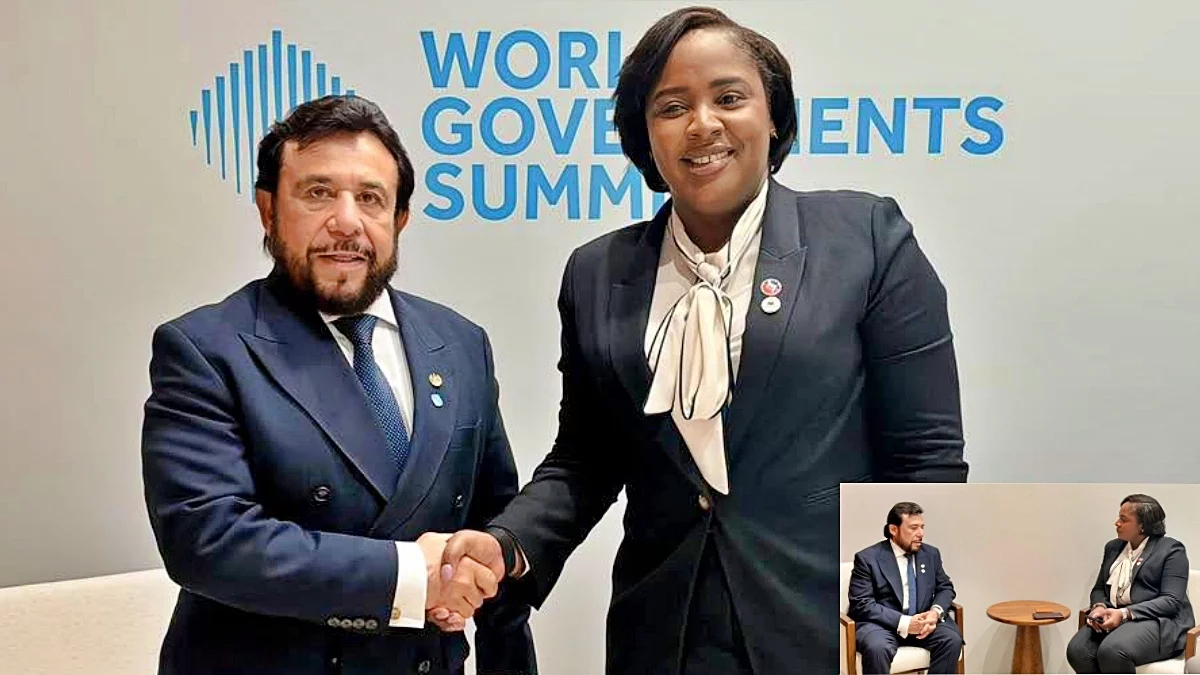
On November 21, 2026, high-level representatives from Haiti and El Salvador convened for a productive bilateral discussion on the margins of the World Government Summit for Latin America and the Caribbean, marking a major step forward in long-running collaborative efforts between the two Caribbean and Central American nations. Leading the Haitian delegation was Sandra Paulemon, Minister of Planning and External Cooperation, who met face-to-face with El Salvador’s Vice President Félix Ulloa to align priorities and formalize next steps for their growing partnership.
Opening the discussion, Minister Paulemon extended formal, heartfelt condolences on behalf of Haitian Prime Minister Alix Didier Fils-Aimé and his entire administration to El Salvador’s governing bodies, honoring the Salvadoran peacekeeping contingent that suffered devastating losses while deployed on duty in Haiti. The two delegations jointly observed a minute of silence to pay tribute to the three Salvadoran soldiers confirmed killed in a recent armored vehicle attack, and to stand in solidarity with the four additional service members who remain unaccounted for following the incident.
Minister Paulemon went on to recognize Vice President Ulloa’s decades of personal leadership in nurturing diplomatic ties between the two nations, efforts that culminated in the first set of formal bilateral cooperation frameworks signed back in 2023. She highlighted a key recent milestone: Haiti’s Council of Ministers formally signed off on the updated bilateral cooperation agreement on November 17, 2026, a unanimous administrative approval that codifies the full Haitian government’s institutional commitment to expanding cross-national collaboration. The Haitian minister laid out specific priority areas for expanded technical partnership, with a central focus on security sector capacity building and targeted training for Haitian national security forces. She specifically noted El Salvador’s globally recognized expertise in operating high-security penitentiary facilities, referencing recent productive talks between El Salvadoran officials and Haiti’s Minister of Justice and Public Security Patrick Pélissier during his visit to El Salvador’s high-profile Terrorism Confinement Center (CECOT). Paulemon also reaffirmed the Haitian administration’s overarching policy goal of restoring nationwide public safety to allow displaced residents to return to their home communities, clearing the path for long-overdue national democratic elections a full decade after the country’s last round of formal balloting.
For his part, Vice President Ulloa expressed enthusiasm for the newly approved bilateral agreement, and offered full support for all the collaborative priorities laid out by Minister Paulemon. Drawing directly from El Salvador’s years-long public security turnaround, Ulloa emphasized that sustainable, long-term stability cannot rely solely on targeted law enforcement operations: it requires parallel, complementary investments in social reintegration programs, expanded equitable access to education, and targeted policy interventions to reduce extreme poverty and dismantle systemic social exclusion.
Minister Paulemon outlined that Haiti is already rolling out coordinated cross-agency economic and social recovery plans in alignment with this holistic framework, led jointly by her Ministry of Planning and External Cooperation, the Ministry of Economy and Finance, and the country’s National Commission for Disarmament, Demobilization, and Reintegration. These multi-pronged plans center on youth reintegration support, large-scale job creation through labor-intensive public infrastructure projects, nationwide infrastructure upgrades, and regulatory reforms to mobilize increased domestic and international private investment. As the bilateral meeting concluded, Vice President Ulloa formally reaffirmed both his personal commitment and the Salvadoran government’s full willingness to provide ongoing, multi-faceted support to Haiti, spanning not just security sector training and expertise sharing, but also targeted technical guidance on national post-crisis social and economic recovery.