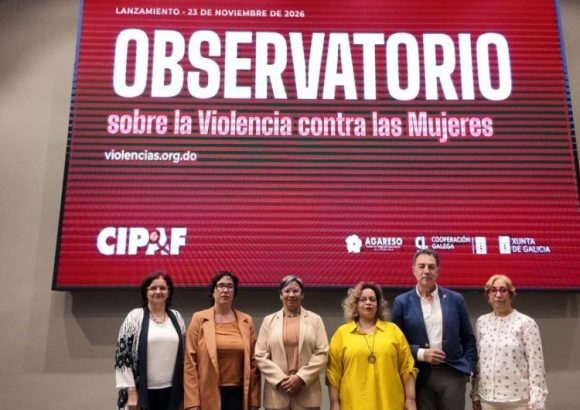
Santo Domingo, Dominican Republic — The Center for Research for Women’s Action (Cipaf) has officially rolled out a free, interactive public observatory dedicated to tracking gender-based violence across the Dominican Republic, a groundbreaking resource built in partnership with the Galician Association for Communication for Social Change (Agareso) and the regional government of Xunta de Galicia. Designed to serve as a centralized, transparent data hub for ordinary citizens, journalists, academic researchers, and government policymakers, the platform is engineered to enable consistent, rigorous monitoring of violence against women and lay the empirical foundation for targeted, evidence-driven public safety interventions. The observatory’s initial aggregated data paints a stark, long-term portrait of the country’s femicide crisis: between 2005 and November 2026, a minimum of 2,258 women and girls have been killed in gender-related homicides, translating to an average of one fatal victim every 84 hours. Demographic breakdowns of these killings reveal deeply entrenched patterns of intimate partner and domestic harm: 75% of alleged perpetrators are current or former romantic partners of the victim, nearly 60% of fatal attacks take place inside the victim’s own home, and 25.3% of assailants die by suicide immediately following the murder. Disturbingly, the dataset also documents 182 femicides allegedly committed by active members of the Dominican Republic’s National Police or Armed Forces, 164 of which involved the use of state-issued institutional firearms. Beyond fatal outcomes, the platform records 1,666 documented attempted femicide incidents, with more than 1,158 children left orphaned as a direct consequence of gender-based killings. The observatory also spotlights the extreme vulnerability of adolescent girls and minors, a demographic long overlooked in partial official reporting. Between 2015 and September 2026, Dominican public hospitals recorded 287,039 live births to girls under the age of 20, including 12,933 births to girls 14 or younger — a rate of roughly three underage births per day. Separately, Dominican Public Prosecutor’s Office figures from 2014 to 2024 show 21,614 formal reports of sexual abuse against girls, with incest case data showing 41.3% of victims are between 10 and 14 years old, and fathers or stepfathers identified as the alleged perpetrators in 70% of those incest incidents. A notable paradox emerges in recent trend data: while formal complaints filed with public prosecutors dropped 23% between 2019 and 2025, the national 9-1-1 emergency response system logged 52,759 domestic violence calls in 2025 alone, equal to one distress call every 10 minutes. Cipaf researchers emphasize that these conflicting metrics point to systemic gaps in official data collection infrastructure, one of the most critical barriers to addressing the gender-based violence crisis. The organization notes that there is currently no unified, government-run national registry for femicides, leading to consistent discrepancies between official government tallies and independent data compiled from verified media reports. Of the 57 core gender violence metrics tracked by the new observatory, 42 have no publicly available official government data at all. Cipaf adds that out of 13 formal information requests submitted under the country’s transparency Law 200-04, only two received fully complete responses from relevant state agencies. Critical gaps also persist in official datasets covering digital gender violence, political violence targeting women, obstetric violence, vicarious violence, and human trafficking targeting women and girls, with no complete public records of protection orders issued by the Dominican Judiciary for the 2023 calendar year. Cipaf Executive Director Syra Taveras stressed that the Dominican Republic urgently needs a standardized, shared national information repository to accurately measure the full scope of violence against women and rigorously evaluate whether government prevention and support policies are delivering measurable results. The organization is now calling for targeted updates to the longstanding 1997 Law 24-97 governing domestic violence, and is advocating for the passage of the pending Mirabal Bill currently under review in the Chamber of Deputies. The proposed legislation would create a coordinated, cross-agency comprehensive support and response system for gender violence survivors, alongside a mandatory unified national case registry that standardizes data reporting across all government institutions. Cipaf has already shared the full observatory dataset with the Dominican Congress and all state agencies tasked with responding to gender-based harm, and is actively encouraging journalists, independent researchers, and grassroots civil society groups to leverage the open-access platform to hold authorities accountable and push for more effective, survivor-centered public policy.
Cipaf launches Observatory tracking violence against women in Dominican Republic