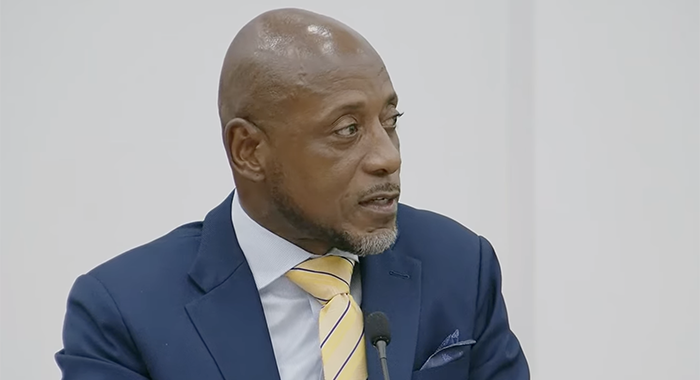
St. Vincent and the Grenadines is putting the finishing touches on its first ever formally documented national foreign policy, a landmark strategic framework that top government officials say will anchor the small island nation’s international engagements amid unprecedented global volatility. Foreign Affairs Minister Dwight Fitzgerald Bramble, who unveiled details of the ongoing policy drafting during a Monday appearance on NBC Radio, emphasized that the initiative was born from a pressing need for deliberate national direction at a time of rapid geopolitical and economic upheaval. “We see things are changing so fast, and the future becomes more and more uncertain. So, we have to be certain of what we want and the direction we want to go,” Bramble stated. The policy is being crafted to center a whole-of-government economic diplomacy agenda, reorienting the country’s participation in regional blocs and multilateral institutions to deliver tangible, direct benefits for local residents. The announcement comes just days ahead of the New Democratic Party administration’s first anniversary in office, with Bramble noting the new government has prioritized ensuring every overseas engagement yields practical returns: targeted foreign direct investment, access to specialized technical expertise, and favorable financing terms from key multilateral lenders including the World Bank, Caribbean Development Bank, and Development Bank of Latin America and the Caribbean. As the portfolio holder for foreign trade, foreign investment, and diaspora affairs in addition to foreign relations, Bramble added that all future sovereign borrowing will be structured to be responsible, strictly aligned with long-term national development and inclusive economic growth targets. The East Kingstown Member of Parliament also outlined plans to deepen collaborative action through regional bodies CARICOM and the Organisation of Eastern Caribbean States, while deliberately expanding the country’s network of international allies to move beyond overreliance on longstanding traditional partners. Recent diplomatic outreach has already yielded a series of new formal partnerships, including the establishment of full diplomatic ties with Togo, which Bramble framed as a strategic gateway to unlock trade, shipping, and commercial opportunities across West Africa. The government has also signed separate memoranda of understanding for bilateral cooperation with Austria and Peru, alongside a travel facilitation agreement with Indonesia designed to boost people-to-people exchanges, tourism flows, cross-border trade, and targeted investment. Bramble clarified that these new accords are foundational frameworks for future collaboration, rather than pre-negotiated deals that have already delivered confirmed funding or investment pledges: the Austria agreement creates a formal channel for joint work on climate resilience and sustainable development, while the Peru memorandum establishes a structured, regular bilateral dialogue mechanism to identify shared priority areas for cooperation. Bramble also represented St. Vincent and the Grenadines at a recent World Trade Organization ministerial summit hosted in Cameroon, where he was selected to chair a high-level working session focused on global investment facilitation. He explained that the discussions were centered on integrating investment more firmly into global trade governance structures, arguing that targeted capital inflows are a critical prerequisite for expanding local productive capacity to enable small island economies to participate more equitably in global trade. During the negotiations, Turkey formally backed the proposed investment facilitation framework, while India maintained its longstanding opposition to the measure. Domestic investment promotion efforts have also delivered early results: Invest SVG’s recent targeted outreach missions to Toronto, New York, London, and the British Virgin Islands secured a large export order for locally produced assorted snack chips from Vincentian food manufacturers following BVI stakeholder meetings. Other local promotion initiatives include the well-attended Independence Night Market, which drew over 50 participants from the agro-processing, creative industry, and local service sectors, and the country’s official debut at the World Island Expo in South Korea, where officials showcased Vincentian products and national investment potential to a global audience. The administration has also overhauled its diaspora engagement infrastructure, upgrading a previously small informal diaspora unit into a fully staffed standalone Department of Diaspora Affairs, and appointing New York-based Vincentian community leader Stephen “Scombo” John as the country’s first ambassador-at-large dedicated exclusively to diaspora affairs. The new department’s mandate covers expanded consular service delivery, alongside structured programs to encourage overseas Vincentians to contribute to national development via direct investment, sharing of specialized professional skills, medical volunteer missions, and cross-border cultural and educational exchange initiatives. Early diaspora-led programs include a higher education partnership with Georgetown University in Washington D.C. that is supporting 16 Vincentian students with a combined value of over US$100,000, a Montreal-based Vincentian community organization’s school supply donation drive for students at Clare Valley and Questelles Government School, and a separate donation of 50 tablet devices distributed to students at Sion Hill and Dorsetshire Hill government schools. A national diaspora investment needs assessment is also currently underway to map and eliminate regulatory and administrative barriers that prevent overseas Vincentians from investing in local development projects. Bramble also outlined other concurrent public-facing and diplomatic updates: the national Consumer Affairs Department has finalized a formal legal framework document to educate local residents on their consumer rights, with department staff running ongoing public outreach workshops across all parts of the country. The government has also appointed a new cohort of diplomatic and consular representatives, including new resident envoys in Taiwan and Cuba, a new High Commissioner posted to London, and new Consuls General for New York and Toronto. On the longstanding bilateral dispute between the United States and Cuba, Bramble reaffirmed St. Vincent and the Grenadines’ unwavering support for the annual United Nations General Assembly resolution calling for an immediate end to the decades-long U.S. trade embargo on Cuba, noting that the country has remained a consistent supporter of the resolution even as some former co-sponsors have shifted their voting positions in recent years. He argued that ordinary Cuban civilians should never be forced to bear the disproportionate humanitarian consequences of unrelated geopolitical political disputes. Looking ahead, Bramble confirmed he would travel to Morocco later that same week to deliver a keynote address at an international summit focused on strengthening Africa-Caribbean relations, with the goal of forging mutually beneficial new commercial and cultural ties between the two regions. Bramble acknowledged that many of the foreign policy ministry’s early wins are less immediately visible than large-scale infrastructure projects or direct budgetary allocations, noting that the government is navigating a constrained domestic economic environment and must strike a careful, balanced path between addressing near-term fiscal pressures and laying long-term groundwork for inclusive, sustainable national development.
SVG nears its first written foreign policy as Bramble outlines ministry’s first-year work