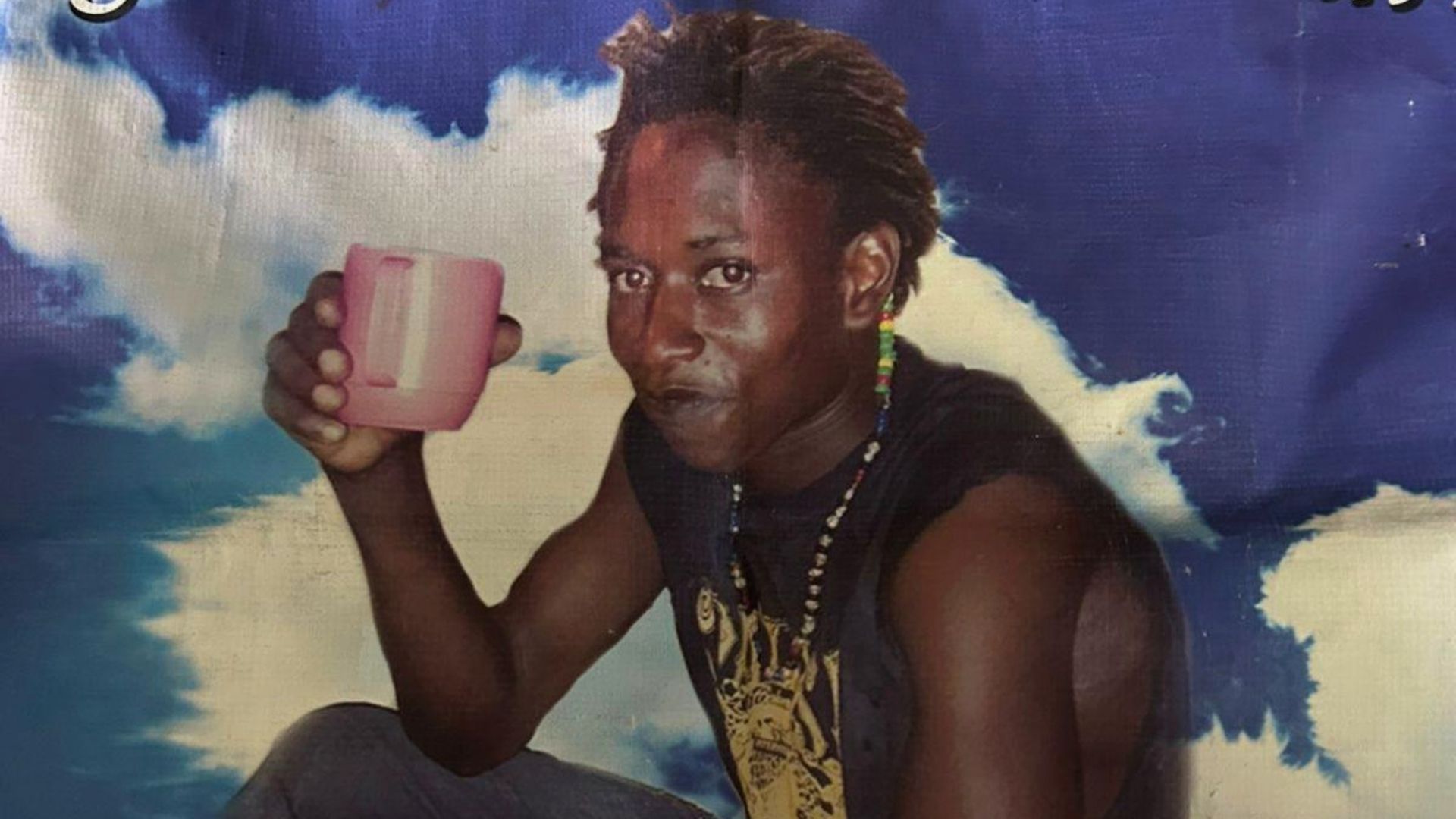
Thirteen years after 21-year-old Chacadan Daniel was found dead in his cell at Micoud Police Station in Saint Lucia, the long-stalled case is facing renewed scrutiny as local law enforcement signals intent to formally close the investigation, while inquest records compiled from 26 witness statements reveal deeply contradictory accounts of his final hours in custody. For his mother Frances Daniel, who raised 13 children (a mix of biological and step children) and relied on Chacadan to assist with their family farming work, the decades-long wait for transparency has been a relentless source of grief: the family has spent years demanding formal accountability and closure to lay their loved one to rest in peace, while the wider Saint Lucian public remains frustrated by the persistent lack of definitive answers about how a healthy young man in police custody lost his life. Though newly installed Police Commissioner Verne Garde has publicly pledged to see the case through to its official conclusion, major unresolved gaps and conflicting expert findings have left widespread public uncertainty over what that final outcome will entail.
Initial 2013 autopsy results confirmed Chacadan’s official cause of death on October 23, 2013, was asphyxia by hanging, with a fresh blunt-force head injury noted on his scalp. At the time his body was discovered suspended from a strip of white cloth tied to his cell’s burglar bars, investigators flagged three possible scenarios: self-inflicted hanging, a staged suicide, and homicidal hanging. A recent peer review of the original autopsy conducted by independent pathologist Dr Alfredo E. Walker, however, has formally concluded the death was a case of self-inflicted hanging — a finding that directly contradicts the 2015 coroner’s inquest jury ruling that Chacadan was the victim of unlawful killing, a legal designation for a death caused by another party without lawful justification. While coroner inquests are strictly fact-finding proceedings with no authority to assign criminal or civil liability, the cascade of conflicting witness accounts from the 2015 hearings has cast a persistent, murky shadow over the circumstances of Chacadan’s death while in state custody.
Chacadan’s troubled interactions with local police began weeks before his 2013 death. His mother Frances recalled that he had previously been detained alongside a friend during a marijuana-related search, though that incident was never formally linked to the October 2013 custody that preceded his death. She stated that in the weeks leading up to his passing, Chacadan grew increasingly fearful of law enforcement, reporting repeated instances of police intimidation. Court and inquest records show that two weeks before his death, plainclothes officers detained Chacadan on the roadside alongside his cousin, claiming they held an active bench warrant for his arrest — a detail Frances later learned was disputed in some inquest testimony, and which local media was unable to corroborate with the Royal Saint Lucia Police Force (RSLPF) at time of publication.
During that first October 2013 detention, the only other prisoner in the station at the time, Chacadan asked to retrieve personal items from a locker, only to discover some of his belongings were missing. When he begged the on-duty female officer to let him leave, a physical scuffle broke out in which the officer was kicked in the stomach and face, allowing Chacadan to escape custody. A second officer fired multiple shots as he fled. When Frances visited the station two days later to inquire after her son, that same officer warned her: “funeral they making for him” — a statement he later denied making, initially claiming he was not even on duty at Micoud Police Station that month before being confronted with conflicting testimony and admitting he had been present. Police eventually re-arrested Chacadan at his late father’s property in Micoud, with witnesses offering clashing accounts of the arrest: one cousin reported an officer slapped Chacadan on the back of the head as he was led away, while arresting officers claimed the young man offered no resistance at all. By October 21, 2013, Chacadan was back in a Micoud police cell; 48 hours later, he was dead.
The timeline of Chacadan’s final moments alive is riddled with conflicting statements from on-duty officers. Station log books show Frances arrived at the police station at 7:35 a.m. on October 23, 2013, asking to see her son, and his body was discovered just five minutes later. The assigned station orderly claimed he saw Chacadan alive at 7:30 a.m., escorting him to the bathroom before returning him to his cell and informing him he would be transported to court that morning. A second officer on duty that day claimed the orderly told him at 7:15 a.m. that Chacadan had just finished bathing in preparation for his court appearance, while a station cleaner testified she saw that same second officer holding a pair of wet slippers near the station kitchen at exactly 7:15 a.m. No two accounts of who first discovered Chacadan’s body align either: one officer claimed he went to the cell alone to retrieve Chacadan after Frances’ arrival, while Frances testified both the orderly and the second officer walked to the cell together, a detail the second officer later confirmed. A first-aid trained firefighter who responded to the scene noted that Chacadan’s body was far colder than any of the 750 corpses he had previously examined, a sign he had likely died hours before 7:40 a.m. — a detail that contradicts the timeline of him being alive at 7:30 a.m. The original 2013 autopsy by pathologist Dr Stephen King noted the fresh head contusion and four scalp scratches, consistent with a blunt force injury sustained in the eight hours before death.
Records of routine cell checks in the hours leading up to Chacadan’s death also contain clear contradictions. The station orderly claimed he checked the cell at 12:01 a.m. on October 23, entering to ask why Chacadan was awake, then did a second check at 2:00 a.m. where Chacadan confirmed he was unharmed and resting, with no unusual activity noted between 2 a.m. and 6 a.m. But a local postman who stopped by the station to collect keys at 6:15 a.m. testified he saw the orderly and a second officer entering the charge room together, directly contradicting the orderly’s claim he was alone at that time. The second officer, who had served as station orderly for most of October 22, claimed he completed 10 to 15 separate cell checks during his shift, left for drill practice at 4:31 p.m., returned to the station dorms at 7 p.m. and stayed there until after 7 a.m. the next day — but could not name any colleagues he encountered in the dorms that night.
For years, the case was trapped in bureaucratic gridlock. After the 2015 inquest returned an unlawful killing verdict, the case file sat dormant pending a decision from the Director of Public Prosecutions (DPP) on whether to file charges against any officers, but the DPP’s office was crippled by severe staffing shortages and leadership transitions that year, per a U.S. State Department report. When new DPP Daarsrean Greene took office in late 2016, he inherited a massive backlog of unresolved fatal police custody cases — and had previously served as Frances Daniel’s personal legal representative. Compounding the delays, Saint Lucia’s only national forensic lab was closed for nearly two years between 2015 and 2017 over structural and evidence security concerns, halting critical forensic testing on case evidence. It was not until July 2026 that the Eastern Caribbean Supreme Court issued a ruling ordering the investigation completed within six months, and awarding Frances Daniel $75,000 in state compensation — a decision the Attorney General has since appealed.
In late October 2026, the RSLPF hosted a joint press conference with pathologists and the leadership of the now fully operational national forensic lab to announce new findings. Dr Walker, who had been invited by Dr King to conduct an independent peer review of the original autopsy, stated his conclusion that Chacadan’s death was a self-inflicted hanging, a finding that was independently corroborated by a second external peer reviewer Dr James MacPherson. Walker acknowledged, however, that no toxicology testing was ever completed on Chacadan’s bodily fluids, making it impossible to rule out the presence of sedatives, alcohol or illicit drugs in his system at the time of death. Forensic Science Services Director Fernanda Henry also confirmed that key evidence, including DNA swabs from five witnesses, the two strips of cloth that made up the noose, and swabs taken from Chacadan’s hands, had been sent to a specialized Texas forensic lab for testing, with no extraneous human DNA detected on any of the physical evidence.
Frances Daniel has publicly rejected the new suicide finding, arguing that Dr Walker selectively ignored key details from Dr King’s original 2013 autopsy report that acknowledged the possibility of foul play, and that a conclusion based solely on expert opinion cannot justify closing a case that ruled out no other scenarios. No explanation has ever been offered for why Chacadan, who his family described as happy and invested in supporting his mother’s farming work with no history of suicidal ideation, would choose to take his own life in a police cell. Repeated attempts by local media to request further clarification on the unresolved contradictions from RSLPF leadership and DPP Daarsrean Greene went unanswered at time of publication, leaving the Daniel family and the Saint Lucian public still waiting for the full, definitive truth 13 years after Chacadan’s death.