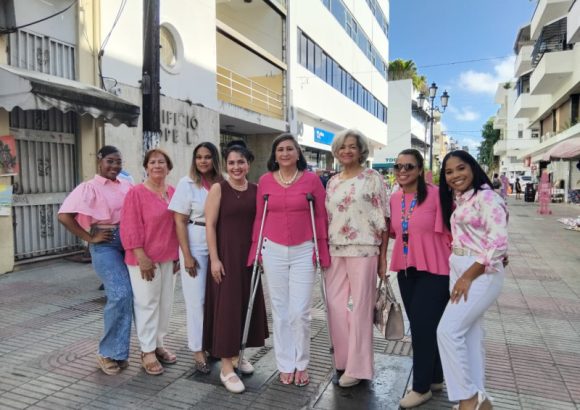
Stretching along the iconic cobblestones of El Conde Street in Santo Domingo’s historic Colonial City, a striking outdoor public art installation of vivid purple and pink statues has turned a popular tourist and community thoroughfare into a public advocacy platform, organized by the non-profit Women in Solidarity Association (AMSI) in partnership with pharmaceutical firm Novartis. The eye-catching display was launched to draw widespread attention to a devastating national public health statistic: nearly 70% of all breast cancer cases in the Dominican Republic are detected at advanced stages, with rural and remote communities bearing the brunt of this preventable crisis. Each statue is etched with unfiltered, firsthand testimonials from Dominican women navigating the country’s fragmented cancer care system: “The only treatment center is hours away from my home,” “Six in ten women learn they have cancer when it is already advanced,” “Outside the National District, you feel completely cut off from the healthcare system,” and “Most of us in rural areas only completed a few years of school, and we have no idea what early warning signs of cancer to look for in our own bodies.” These inscriptions are intentionally framed as both a public education tool for ordinary citizens and a direct, peaceful call to action for local and national health authorities. Dorka Díaz, AMSI’s president and a three-time breast cancer survivor who credits her own survival to early, timely detection, emphasized that delayed diagnosis is just one layer of a deeply entrenched, inequitable healthcare structure that fails marginalized women across the country. “Care access is not equal for all women,” Díaz explained. “For women who rely entirely on public state healthcare, wait times are crippling, because patient demand far outstrips limited available resources. A small subset can afford low-cost private facilities that offer faster, more consistent care, but that option is entirely out of reach for most women living in rural zones, and especially in isolated communities in the country’s deep southern region.” A core structural flaw driving these disparities, Díaz noted, is that nearly all specialized cancer treatment facilities are concentrated exclusively in two urban hubs: the National District (home to the capital Santo Domingo) and the second-largest city, Santiago. She pointed out that a government proposal announced several years prior to build dedicated cancer centers in three underserved regions — the east, northwest, and southeast of the country — has never moved past the planning stage, leaving hundreds of thousands of women with no local access to life-saving care. For women forced to travel for hours from remote communities to reach the two major cancer hubs, the journey itself often becomes a fatal barrier: many arrive at local clinics in their hometowns only to find their diagnostic test results have expired by the time they secure an appointment at a specialized center in Santiago or the capital, forcing them to pay for new, unaffordable rounds of testing that push low-income households into crippling debt. Tragically, Díaz confirmed, a significant number of these women die before they can access full treatment, simply because the cost of travel, repeat testing, and care is prohibitively high. Beyond breast cancer, the AMSI leader also revealed that more than 5,000 patients across the Dominican Republic are currently stuck on national waiting lists for treatment for a wide range of serious pathologies. While the government’s expansion of subsidized health insurance to cover more than 2 million low-income families has successfully broadened basic care access and led to a sharp rise in early diagnoses of multiple chronic conditions including breast cancer, the national budget allocated for high-cost specialty medications has not been adjusted for inflation or rising demand since 2020. This funding freeze has created a critical bottleneck that leaves thousands of newly diagnosed patients unable to access the life-saving treatments they now qualify for under the expanded insurance scheme. For over two decades, AMSI has operated as a community-led support system for Dominican women navigating breast cancer, offering free educational workshops on early detection, one-on-one patient navigation, and limited financial assistance for chemotherapy, radiotherapy, and routine diagnostic tests. However, the organization’s small operating budget cannot cover the cost of the specialized high-cost cancer medications many patients require, which can range from 200,000 to over 600,000 Dominican pesos per patient per course of treatment. The public art installation on El Conde Street is the latest in AMSI’s long-running campaign to push national policymakers to prioritize equitable healthcare access, expand the network of specialized cancer centers across underserved regions, and update the high-cost medication budget to match the growing needs of the country’s patient population, with a core goal of ensuring no woman faces preventable breast cancer death simply because of her zip code or socioeconomic status.
70% of breast cancer cases are detected late in the Dominican Republic