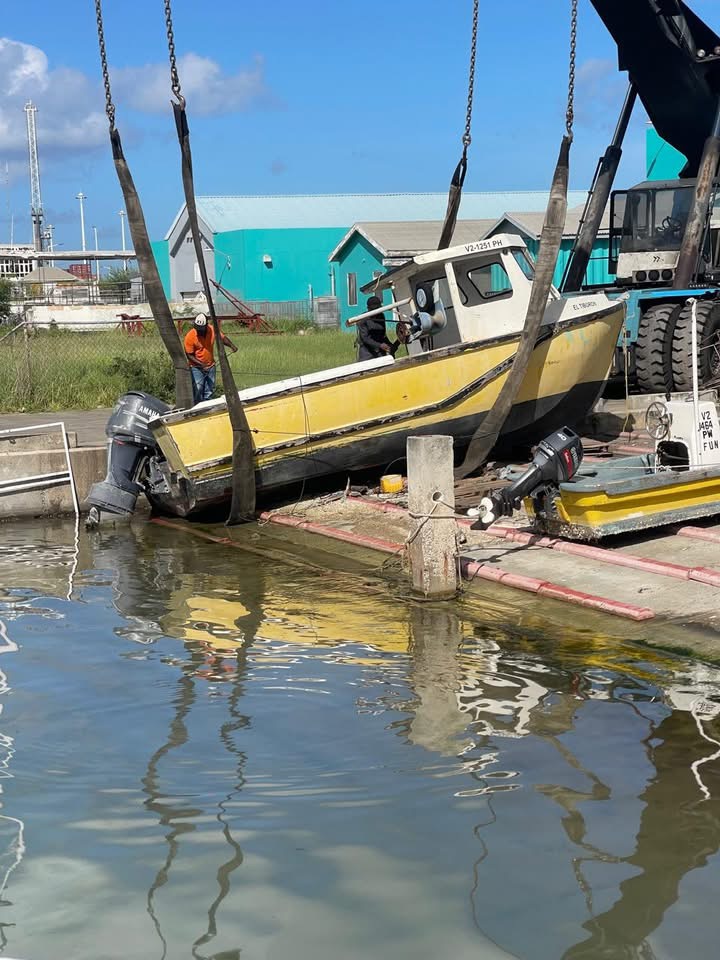
St. John’s, Antigua and Barbuda – November 20, 2026: The Ministry of Agriculture, Lands, Fisheries and the Blue Economy has announced a rolling series of targeted upgrade and sanitation initiatives at two critical local fisheries hubs, the Parham Fisheries Complex and Point Fisheries Complex, designed to eliminate longstanding congestion risks, upgrade public safety standards, and streamline day-to-day operations for hundreds of sector stakeholders. At the Parham site, crews have completed the first phase of debris removal that targeted years of accumulated abandoned assets cluttering high-traffic work zones: derelict, unseaworthy small vessels, decommissioned vehicles, and piles of discarded operational waste that had for years occupied prime work and docking space, creating navigational hazards for working fishers and limiting access to key processing infrastructure. A key milestone in this phase unfolded on a recent Sunday, when a large derelict vessel was carefully winched onto a heavy-duty trailer and towed off-site for proper disposal, marking the first of multiple scheduled removals of unused watercraft. Additional completed upgrades at Parham include the full restoration of a previously stranded work vessel that had been moored idly adjacent to the on-site fish processing plant, which has now been returned to active service for local fishing crews. Teams also removed a large tourism-focused catamaran and a cluster of other non-fishing vessels that had been parked in designated fisheries operational zones, freeing up hundreds of square feet of docking and loading space to cut down on wait times for fishers transporting fresh catch to market. Parallel improvement work is also underway at the Point Fisheries Complex, where maintenance crews are addressing deferred upkeep gaps to create a more organized, hazard-free working environment for small-scale fishers, seafood vendors, cold storage staff, and other regular users of the facility. The ministry framed these localized upgrades as core components of a broader national strategy to preserve the long-term viability of Antigua and Barbuda’s fisheries infrastructure, which serves as a critical livelihood backbone for coastal communities across the island nation. Officials formally recognized the on-site management teams of both complexes for their consistent, hands-on dedication to identifying unaddressed maintenance gaps and coordinating the clean-up logistics amid regular daily operations. The statement also issued a public call to action for all facility users, including independent fishers, private vessel owners, and small business operators based at the complexes, to sustain the progress of the upgrades by adhering to proper waste disposal protocols, keeping work zones clear of unneeded clutter, and registering and managing their watercraft in full compliance with site rules. The Ministry of Agriculture, Lands, Fisheries and the Blue Economy reaffirmed its long-term commitment to ongoing investment in fisheries infrastructure, noting that well-maintained, accessible public facilities are a foundational requirement for supporting equitable livelihoods for fishing communities and advancing the sustainable, long-term growth of Antigua and Barbuda’s blue economy fisheries sector.
Agriculture Ministry Removes Abandoned Vessels, Clears Space at Parham and Point Fisheries Complexes