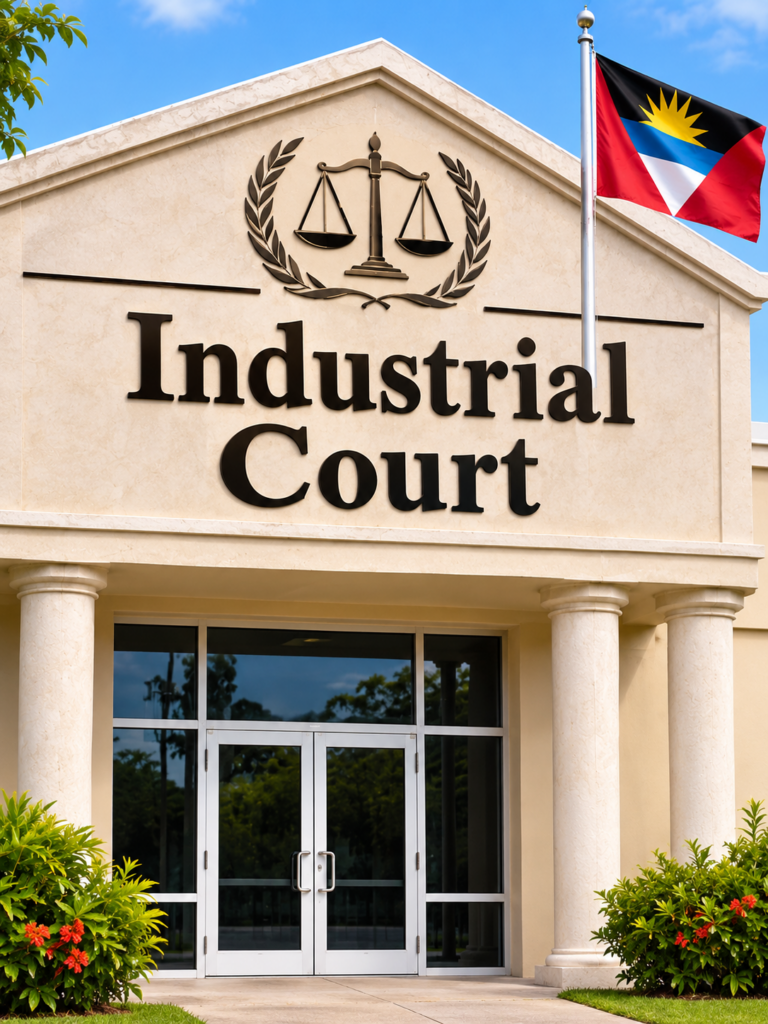
A frustrated Antigua and Barbuda resident has released a public open letter directed at the leadership of the nation’s Industrial Court, sounding the alarm over systemic, years-long backlogs that are stripping ordinary people of their fundamental right to timely dispute resolution. In the widely shared correspondence, the anonymous concerned member of the public poses a searing central question to court administrators and relevant oversight bodies: what is the acceptable maximum wait time a person should endure before their scheduled day in court?
The letter outlines the devastating lived reality for hundreds of petitioners who turn to the Industrial Court seeking redress for workplace disputes, unfair dismissal claims, labor rights violations, and other employment-related conflicts that fall under the court’s exclusive jurisdiction. Many of these claimants, the author notes, have waited multiple consecutive years without receiving a formal hearing date, trapped in a limbo of unresolvable uncertainty that prolongs financial, emotional, and professional strain long after the original incident that prompted their legal filing.
While the author acknowledges that all judicial bodies face inherent administrative bottlenecks, formal procedural requirements, and growing caseload pressures in recent years, they emphasize that multi-year waits for even a first hearing represent a fundamental failure to uphold the core principles of equitable access to justice that Antigua and Barbuda’s legal system is founded upon. The letter explicitly rejects calls for preferential treatment for any individual petitioner, instead demanding full public transparency around the root causes of the crippling backlog, clear accountability for unaddressed administrative failures, and a concrete, publicly shared timeline for reforms that will ensure all future claimants receive a hearing within a reasonable, legally mandated window.
“This is not an effort to target individual court staff or assign blame,” the author clarifies in the closing sections of the letter. “This is a call to action to address a festering systemic gap that erodes public trust in our labor justice system. We as a nation repeatedly affirm our commitment to fairness, worker protections, and the rule of law, but those empty platitudes mean nothing if justice delayed ultimately becomes justice completely denied and forgotten.” The letter has already garnered widespread support from local labor advocacy groups and employment law practitioners, who have echoed the author’s calls for urgent public hearings to resolve the Industrial Court’s growing backlog crisis.