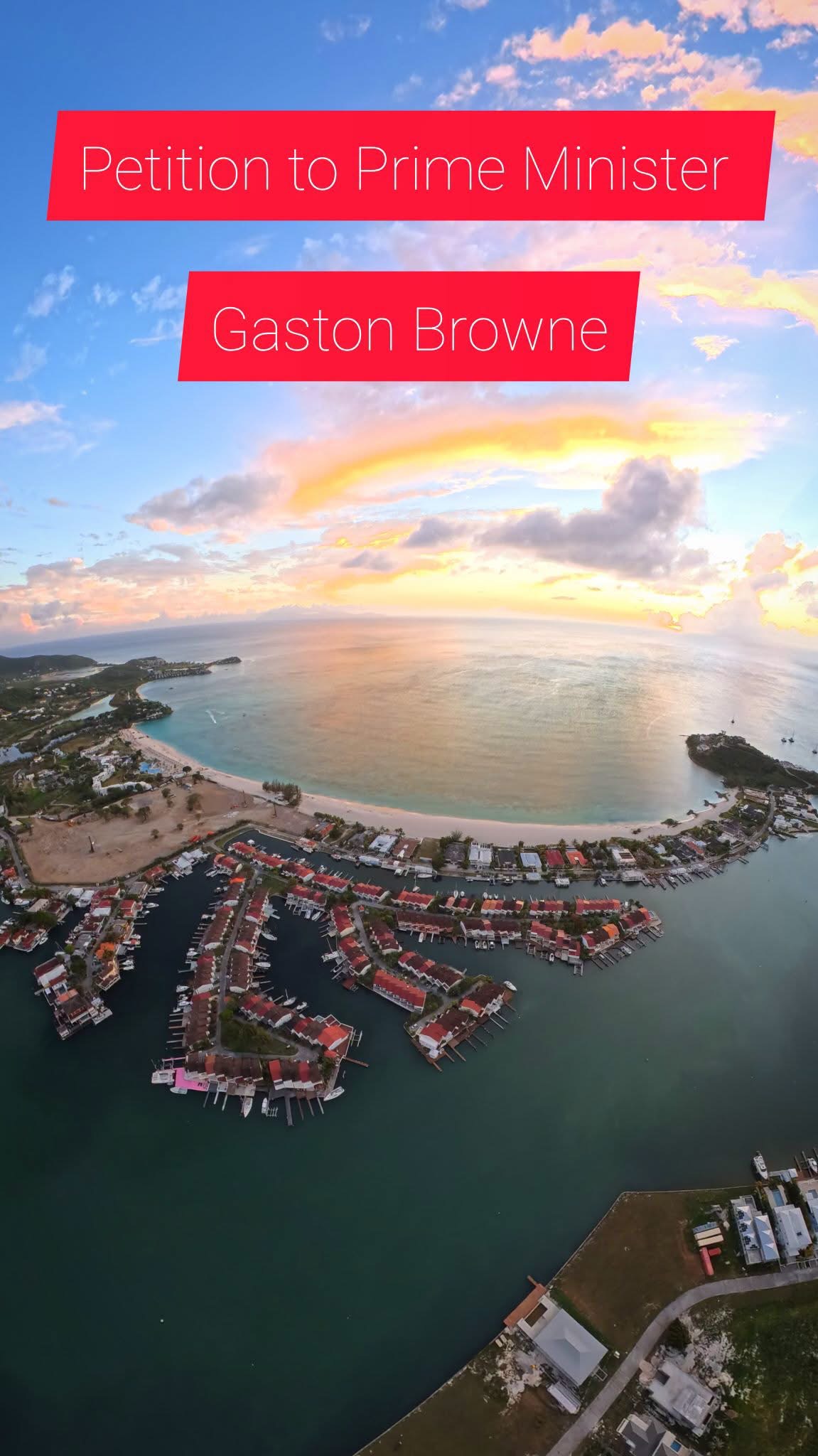
A growing community-led campaign to protect longstanding public access to Antigua and Barbuda’s Jolly Harbour Beach has secured a formal commitment from Prime Minister Gaston Browne to review a citizen petition that has garnered more than 4,100 signatures to date. Local activist Eli Fuller, the lead organizer behind the initiative, confirmed the scheduled meeting with Browne on Thursday, noting that the discussion presents a critical chance to resolve a dispute that he argues should never have escalated to the point of widespread public mobilization.
Prime Minister Browne outlined existing government efforts to find a collaborative solution, disclosing that his administration has been in ongoing talks with Ambassador Calvin Ayre to carve out a dedicated public access route and parking space on a section of the Jolly Beach Hotel property. Parallel to that negotiation, Browne confirmed that developer Daniel Shamoom has been tasked with designing and building a dedicated public beach park at Perns Point for local residents, as part of a broader government framework to preserve unobstructed shoreline access across both Antigua and Barbuda islands in partnership with private real estate developers.
The grassroots petition, formally submitted to Browne and his cabinet, goes far beyond demands for a single parking lot, framing the issue as a foundational test of national coastal governance. It asserts that all future coastal development projects must prioritize safeguarding public beach access and center the interests of local Antiguan and Barbudan residents, rather than prioritizing exclusive private use. Organizers also highlight the unique historical and cultural weight of the Jolly Harbour coastline, citing peer-reviewed archaeological evidence that the stretch of shore has been used by human communities for approximately 5,000 consecutive years. The document further notes that the existing public parking area at the beach has served a diverse cross-section of users for decades, including local residents, regional visitors, international tourists, yacht owners, villa guests, and small local businesses that rely on beach foot traffic to sustain operations.
Petition organizers add that the contested parking lot was originally designated as public amenity space in the initial Jolly Harbour master plan, on land that the government sold to the project’s original Swiss developer for a nominal sum of US$1. The document calls on the administration to formalize permanent protections for public access and adequate parking at the site, and to embed mandatory public beach access requirements into all future coastal development permitting processes across the nation.
Prime Minister Browne emphasized that his administration is fully committed to resolving the long-simmering, decades-old access issue, while issuing a note of caution to the public about actors he claims may attempt to exploit the community’s concerns for personal notoriety or partisan political gain. He stressed that the public deserves full transparency around the government’s ongoing behind-the-scenes work to deliver lasting, inclusive beach access solutions for all residents.
Browne agrees to receive petition on Jolly Harbour beach access