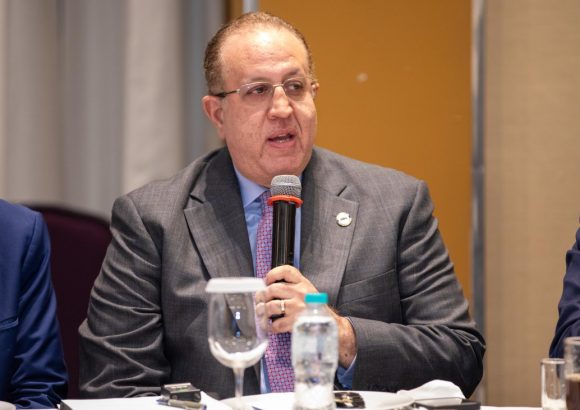
Santo Domingo, Dominican Republic – In a landmark address delivered Wednesday during a business summit hosted jointly by the Dominican Federation of Merchants (FDC) and the Dominican Chamber of Commercial Entrepreneurs, Finance and Economy Minister Magín Díaz revealed the administration’s formal plan to revise the 2024 national budget to boost total public investment by RD$15 billion, lifting the total allocation from the originally projected RD$215 billion to RD$230 billion for the current fiscal year. The announcement, made at a luncheon attended directly by President Luis Abinader alongside hundreds of top domestic business leaders, merchants and industry stakeholders, frames the targeted spending hike as a deliberate policy move to shield the Dominican economic expansion from ongoing cross-border headwinds roiling global commodity markets and supply chains. Díaz walked attendees through a robust set of recent macroeconomic indicators that underscore the Caribbean nation’s unexpectedly resilient performance against widespread regional economic pressure: year-to-date gross domestic product growth clocks in at a solid 4.6%, net international reserves have climbed to a historic US$15 billion threshold, monthly remittance inflows from Dominican communities abroad now consistently top US$1 billion, and export volumes are expanding at a double-digit annual pace even in the face of rising cross-border tariff barriers. Tourism arrivals and foreign direct investment (FDI) are also on a steep upward trajectory, with Díaz projecting FDI will hit an all-time high for the fourth or fifth consecutive calendar year. To insulate ordinary households from the global surge in energy prices, the administration has deployed a phased, targeted subsidy framework over the past 16 weeks, with weekly fuel support averaging more than RD$1.4 billion. Total accumulated fuel subsidies have now crossed the RD$46 billion mark, and liquefied petroleum gas (LPG) prices for residential use have remained completely frozen across 2024 to date. Complementary relief measures for the private sector and individual taxpayers include the full elimination of mandatory advance tax payments for 85% of registered domestic companies, targeted cuts to select tax withholding rates, and inflation-indexed adjustments to personal income tax brackets that prevent wage earners from being pushed into higher tax tiers purely due to cost-of-living increases. Díaz also highlighted a major vote of international market confidence delivered on November 3, when the Dominican Republic became the only nation across all of Latin America to secure a sovereign credit rating upgrade from major global agencies this year. He closed his remarks by confirming that the administration’s core policy priorities for the foreseeable future will continue to center on expanding support for low-income and vulnerable households, scaling high-impact public infrastructure and social investment, and safeguarding long-term fiscal, macroeconomic and social stability even as global geopolitical and economic uncertainty persists.
Dominican government plans to raise public investment to RD$230 billion