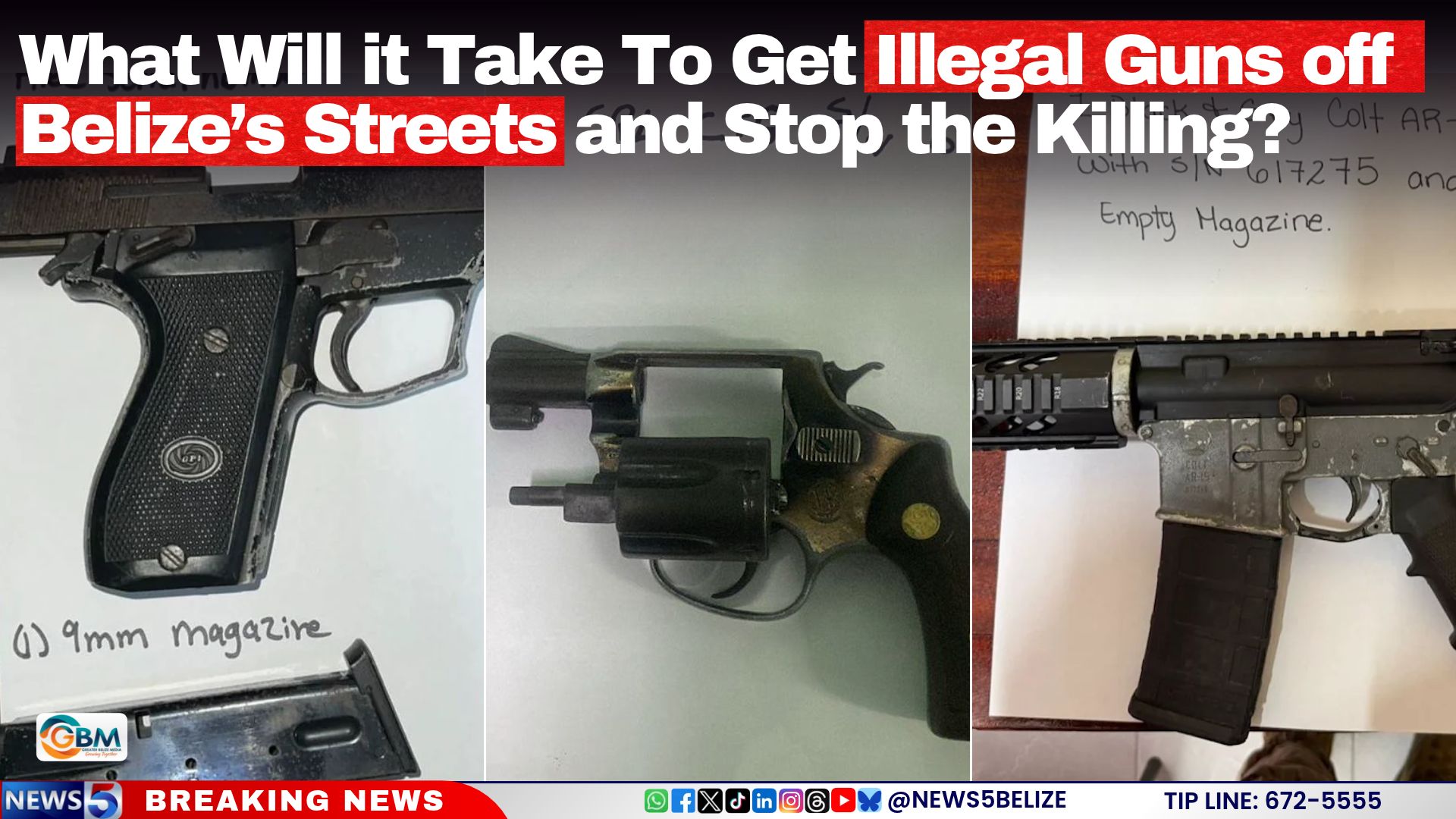
Against a backdrop of persistent, devastating gun-related homicides that have plagued Belize’s communities for years, prominent local attorney Richard “Dickie” Bradley has unveiled a two-pronged community-centered policy framework designed to clear unregistered firearms off public streets and close long-standing gaps in murder investigations. Bradley’s proposal, laid out in a recent public address, rejects overreliance on traditional law enforcement crackdowns alone, and instead calls for two complementary, resourced measures: direct cash incentives for voluntary surrender of illegal weapons, and confidential rewards of up to BZ$15,000 for verified information that leads directly to the arrest and successful conviction of murder suspects. Unlike top-down security strategies that have gained traction in neighboring Central American nations, Bradley explicitly advised the Government of Belize (GOB) against copying the heavy-handed mass incarceration model implemented by El Salvador’s President Nayib Bukele, arguing that local leaders have thus far failed to develop context-specific, practical solutions tailored to Belize’s unique public safety landscape. The proposal outlines a collaborative funding model where local private sector businesses would contribute to a dedicated, independently managed reward pool, with a fully anonymous submission system that ensures informants face zero risk of retaliation for sharing critical evidence. Bradley emphasized that the current environment makes accessing illegal firearms for violent acts trivially easy for perpetrators: borrowing, hiring, or obtaining an unregistered weapon to commit a killing requires minimal effort, a loophole that existing policies have done almost nothing to close. He specifically referenced unsolved homicides along Belize’s Coastal Road as a high-priority area where the new reward system could deliver immediate, tangible results. The proposal also mandates that national security agencies first formalize clear, safe protocols for anonymous gun surrender, as well as robust identity protection safeguards for witnesses, to eliminate barriers to participation. Historical attempts at gun amnesty in Belize have yielded negligible results: a 2010 two-day joint initiative between the Belize Association of Evangelical Churches and local police, which offered clothing and footwear in exchange for unlicensed weapons, only recovered a single .38 revolver and 22 rounds of ammunition. A subsequent 2018 amnesty proposal floated by then-Eastern Division South Police Commander Howell Gillett never moved past the planning stage, leaving the country without a functional, well-respected mechanism to reduce the flow of illegal firearms.
What Will it Take To Get Illegal Guns off Belize’s Streets and Stop the Killing?