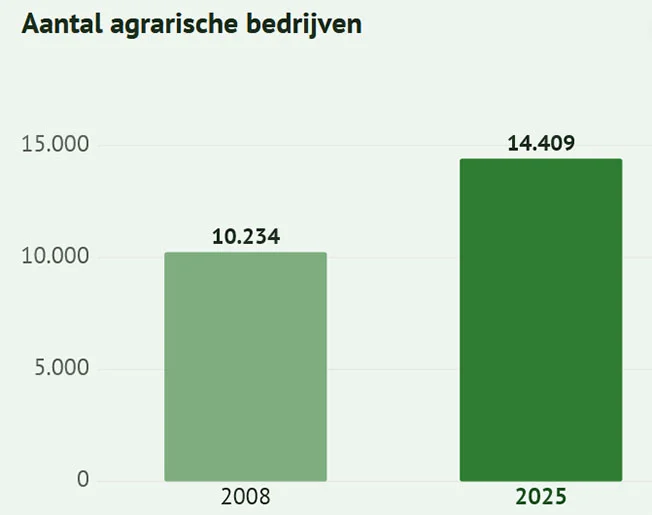
Released on November 18 at 08:55 local time, the Sixth 2025 Agricultural Census published by Suriname’s Ministry of Agriculture, Animal Husbandry and Fisheries (LVV) reveals a 41% rise in the number of registered agricultural enterprises across the country over the 17-year period between the last 2008 census and 2025. The total count of formal farming operations climbed from 10,234 in 2008 to 14,409 at the start of 2025, marking a net addition of 4,175 active agribusiness sites. Field enumerators dispatched by the ministry surveyed every administrative region of Suriname earlier this year to compile a complete, verified dataset of all active agricultural operations, with full findings now hosted on a public digital platform for open access. LVV Minister Mike Noersalim emphasized that granular, up-to-date agricultural statistics are a non-negotiable foundation for designing targeted, evidence-based sector policies, rather than drafting regulatory measures based on outdated estimates. One key trend uncovered by the new census data is a notable aging demographic among the country’s farming population, prompting the ministry to roll out targeted youth engagement initiatives to cultivate new generations of agricultural workers, including the revival of a long-dormant school garden program that introduces primary and secondary students to practical farming skills. Alongside the rise in total farm numbers, the census documents a 22% contraction in total active agricultural land area, which dropped from 63,989 hectares in 2008 to 49,898 hectares in 2025. This shift has driven a steep drop in average farm size, falling from 6.3 hectares per operation in 2008 to just 3.5 hectares in 2025, pointing to widespread land fragmentation and a growing trend toward more intensive, small-scale farming across the country. Minister Noersalim noted that the open census dataset serves a wide range of stakeholders beyond government policy teams: private sector entrepreneurs can leverage localized crop production data to identify high-potential investment opportunities, such as building cassave processing facilities in districts with concentrated high cassava output, or constructing cold storage and distribution hubs for regional vegetable harvests. Individual smallholder farmers can reference the aggregated data to benchmark their operations against regional peers and draft more realistic long-term business plans, while agricultural cooperatives and industry associations can use the verified figures to advocate more effectively for their members’ specific needs. Academic researchers and education institutions also gain a standardized, authoritative baseline to run sector analyses and design relevant vocational training programs. Noersalim clarified that the new digital data portal is designed as a supplementary resource, not a replacement for in-person extension services and direct on-the-ground engagement between ministry staff and farming communities. The full 2025 census was completed with financial and technical backing from three international partners: the Inter-American Development Bank, the Food and Agriculture Organization of the United Nations, and the Inter-American Institute for Cooperation on Agriculture.