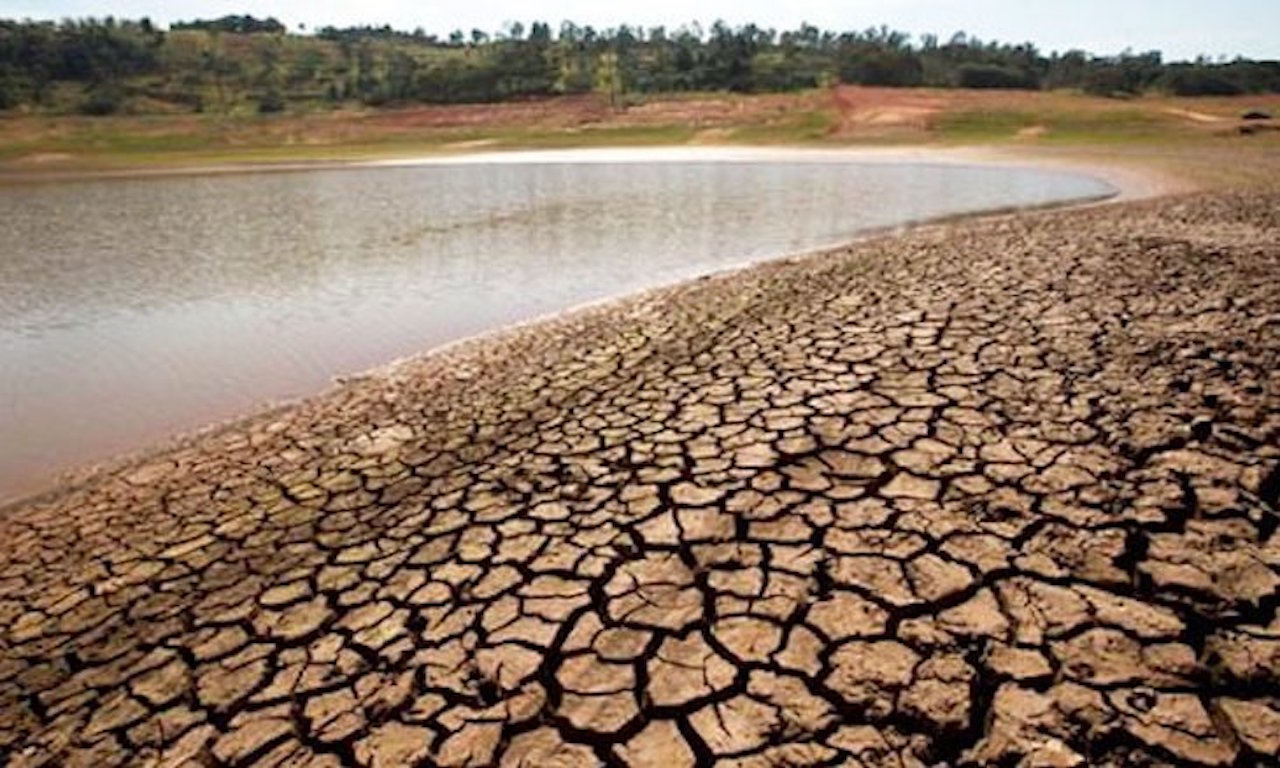
Even after recording its highest monthly rainfall total of 2026 in October, Barbados will remain under an official hydrological drought warning for the coming four months, as intense El Niño conditions threaten to bring extended dry periods and unseasonably high temperatures well into 2027, according to the latest public climate outlook released Tuesday by the Barbados Meteorological Services (BMS).
The October islandwide average rainfall reached 181.5mm, a marginal 1.9mm above the long-term monthly norm, delivering partial reprieve from the months of parched conditions that preceded it. However, precipitation distribution across the small island was extremely uneven, with local totals ranging from a sparse 41mm to a substantial 430.4mm across different parishes. BMS officials noted that a sequence of upper-atmosphere trough systems drove the month’s rainfall, marking it as the wettest of the year so far and breaking the string of prolonged dry spells that defined the early part of the 2026 wet season.
This modest rainfall improvement has not been sufficient to replenish stressed water reserves enough to lift drought alerts, as forecasters had already warned back in September that drought conditions could spill over into the 2027 dry season in the first half of the year. The updated assessment extends the hydrological drought warning all the way through March 2027, with a formal agricultural drought watch scheduled to take effect in January 2027, escalating to a full agricultural drought warning for February and March of that year. BMS confirmed the extension in coordination with the Barbados Water Authority (BWA), citing persistently low stored water levels and long-range precipitation projections as core justifications for the extended alert.
The warning comes on the heels of months of widespread water supply disruptions across multiple Barbadian communities, where Barbados TODAY previously documented extended service outages and low water pressure that forced many households to rely on alternative water sources. While some of these interruptions were initially attributed to pump malfunctions and electrical grid faults, BMS experts have repeatedly cautioned that extended dry periods will slow the natural recharge of the island’s critical reservoirs and underground aquifers, worsening supply strains long-term.
Local agricultural producers have already borne the brunt of the ongoing erratic weather and unseasonable heat. Back in September, Ronald Moore, secretary of the St George Farmers Cooperative, told Barbados TODAY that crop yields had dropped sharply, with many plants suffering direct heat damage, leading some growers to scale back cultivation of water-heavy crops such as leafy greens and root vegetables. Moore emphasized that irrigated water alone could not replicate the growth benefits of natural rainfall, leading to measurable drops in overall farm output.
The latest BMS outlook flags a suite of interconnected challenges for the island running through April 2027, including slow aquifer and reservoir recharge, recurring extended dry spells, and sharply higher irrigation demand for both smallholder farms and large agricultural operations. While the long-term forecast carries some improved rainfall projections compared to the September 2026 outlook — January 2027 is now expected to see near to above-average precipitation, rather than the previously projected below to near-average totals — significant dry risks remain. November 2026 is forecast to see below to near-average rainfall, December 2026 has equal probabilities of below, near, or above-average precipitation, and both February and March 2027 are projected to be drier than the historical norm. BMS noted that confidence in the projection of a relatively wet late 2026 and wetter-than-usual January 2027 is tempered by the anticipated peak of the ongoing strong El Niño event.
Currently, very strong El Niño conditions are confirmed across the equatorial Pacific, and climate models indicate these conditions will persist until at least April 2027. BMS climatologists explained that El Niño weather patterns typically suppress annual rainfall and drive up average temperatures across the Caribbean island nation. The October climate bulletin also highlights an unusual trend of exceptionally warm nighttime temperatures across Barbados, with overnight readings running roughly 2 degrees Celsius above the historical average, ranging between 25°C and 28.5°C. Over 15 days in October, these nighttime temperatures ranked in the top 5% of all recorded data in BMS’s historical dataset. While no formal heatwave or hot spell event was logged during the month, the persistent overnight warmth has eliminated the usual cooling period that helps reduce heat stress for residents, livestock, and crops.
This extended period of unseasonable heat has already prompted public health and education responses across the island. Back in September, multiple school administrators told Barbados TODAY they had implemented or expanded mitigation measures, including installing additional fans in classrooms, scaling back or rescheduling outdoor activities, and distributing extra drinking water to students to reduce heat exposure. The Ministry of Health and Wellness has also issued public advisories noting that children, elderly residents, outdoor manual workers, and people living with chronic illnesses face significantly elevated risk of heat-related illnesses such as heat exhaustion and heat stroke. While daytime temperatures are expected to moderate slightly as the traditional cooler season arrives, BMS forecasts overall above-average temperatures will continue through 2027. All Barbadian residents have been urged to maintain consistent water conservation practices regardless of current alert levels, and to regularly monitor official updates from BMS and the BWA for changes to drought status and public safety guidance.
Drought warning persists despite October rains