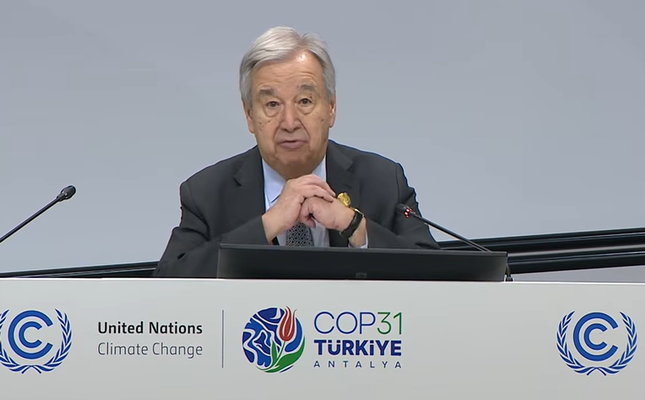
Washington, D.C. – In a candid press briefing held in Antalya, Türkiye on November 13, 2026, outgoing United Nations Secretary-General António Guterres marked his last ever UN Climate Change Conference (COP) as the top global diplomat, looking back on a decade of unflinching advocacy centered on centering peer-reviewed climate science in global policy, even when his blunt assessments drew pushback from world leaders. During his 10-year tenure leading the intergovernmental body, Guterres rejected pressure to soften harsh climate realities to make them more politically palatable, framing his core mandate as a steward of unvarnished scientific fact rather than a negotiator of convenient half-truths for powerful nations. He emphasized that the climate crisis is no longer a niche environmental concern, but a cascading systemic threat that erodes decades of hard-won development gains in vulnerable nations, pushes low-income states deeper into unsustainable debt, intensifies competition for scarce land and water resources, fuels cross-border instability, and in the most extreme cases, threatens the physical survival of entire communities and sovereign nations. Guterres repeatedly framed climate action as interconnected to every core mission of the United Nations, noting that lasting peace, global poverty eradication, intergenerational justice, and a viable future for young people are all impossible on a rapidly warming planet. He drew special attention to the disproportionate harm facing Small Island Developing States (SIDS), which have contributed less than 1% of historic global greenhouse gas emissions yet face existential risks from sea level rise, catastrophic tropical storms, and accelerating coastal erosion. A longstanding advocate for wealthy nations to fulfill their long-overdue climate financing pledges to frontline vulnerable communities, Guterres doubled down on his core message that unmitigated fossil fuel dependence is the root driver of the climate emergency, rejecting half-measures that merely shift fossil fuel suppliers rather than cutting overall consumption. He outlined a clear roadmap for a just, orderly, and equitable energy transition that would massively scale up renewable energy deployment, modernize global electricity grids, expand energy storage capacity, boost energy efficiency, and deliver widespread clean electrification – all paired with targeted policies to cut global fossil fuel production, consumption, and associated emissions in lockstep. Guterres did not sugarcoat near-term challenges, acknowledging that a temporary overshoot of the critical 1.5°C global warming threshold is now effectively unavoidable, and called on the global community to prioritize limiting both the scale and duration of that overshoot to bring temperatures back under the safety threshold as rapidly as possible. As he prepares to step down from his post next year, Guterres’ successor will inherit a UN system facing mounting public pressure to turn 10 years of repeated climate warnings into tangible, enforceable action – a priority that SIDS nations and other frontline communities are urging the incoming leadership to center as a matter of global climate justice.
Guterres reflects on decade-long climate fight as he concludes final COP as UN chief