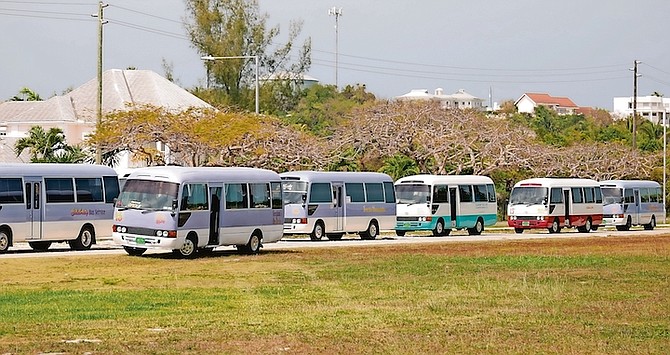
Nassau, Bahamas – The Bahamian government has formalized a sweeping revision to national public bus fare policies, following Cabinet approval of a long-debated adjustment that addresses years of mounting operational cost pressures for transit operators while shielding low-income and vulnerable passenger groups from added financial burden. Transport Minister Leon Lundy publicly announced the revised fare framework yesterday, noting that the January 1, 2026 effective date was selected to allow sufficient time for the regulatory gazettement process required to formalize the new pricing rules.
Under the new structure, standard adult base fares will climb from the current $1.50 to $2, while fares for extended, longer-haul transit routes will rise to $2.50. Critically, the policy delivers targeted relief for demographic groups identified as most financially vulnerable: high school student fares will be reduced from $1.25 to $1, senior citizen fares will be capped at $1, and primary school pupils will retain their existing 50-cent fare with no upward adjustment. “The generation that built this nation will never be asked to pay more to move through the communities they helped develop, and no Bahamian household should ever have to weigh the cost of sending their child to school against other basic needs,” Lundy emphasized, noting that most older residents rely on fixed, limited retirement incomes, while student transit costs place disproportionate strain on working families.
The policy marks the second bus fare increase in less than three years, breaking a 16-year stretch of frozen pricing that left transit operators operating on razor-thin margins amid skyrocketing costs for diesel fuel, commercial insurance, vehicle maintenance, and replacement parts. The prior 2024 fare hike, which raised adult prices by 25 cents to $1.50, was dismissed by operators as insufficient to cover surging overheads, with organized labor groups first formally demanding a $2 base adult fare as far back as 2022. Tensions peaked last month, when the Bahamas Unified Bus Drivers Union threatened coordinated industrial action as local diesel prices neared $10 per gallon, with members staging a targeted sick-out to draw public and government attention to their unsustainable financial circumstances.
Lundy pushed back against public suggestions that the government was pressured into the fare adjustment by labor unrest, framing the policy as the outcome of months of structured, collaborative stakeholder engagement facilitated by the ministry’s open-door consultation framework. Representatives from the two largest transit industry organizations praised the deal as a landmark turning point for the long-struggling sector. Rudolph Taylor, President of the Bahamas Unified Bus Drivers Union, noted the new fare structure was the product of years of sustained advocacy, and thanked Lundy for prioritizing ongoing, transparent communication between the ministry and frontline transit workers. Harrison Moxey, President of the United Public Transportation Company, acknowledged that the fare increase would represent a cost adjustment for many commuters, but pledged that operators would deliver tangible service improvements in return for the new revenue, including enforcing strict standards for clean, roadworthy vehicles, legally compliant driving practices, and respectful passenger treatment. Moxey added that industry leaders would collaborate with the transport ministry to remove any unprofessional, non-compliant operators that fail to meet public service standards.
Stakeholders stressed that the fare adjustment is only the first step in a broader, multi-phase public transport modernization agenda. A joint government-industry committee will be established to address outstanding longstanding sector challenges, including the construction of formal, accessible bus stops, updated industry regulatory frameworks, and standardized driver dress codes. Lundy also confirmed that the ministry is conducting a full, data-backed review of existing bus routes, adjusted for recent residential community expansion and shifting public travel patterns, with revised route maps set to be released in the coming weeks. Additionally, the ministry has launched a comparative study of public transit modernization models across other Caribbean nations and global international jurisdictions, with the goal of designing a tailored pilot modernization program adapted specifically to Bahamian road conditions and commuter travel needs.