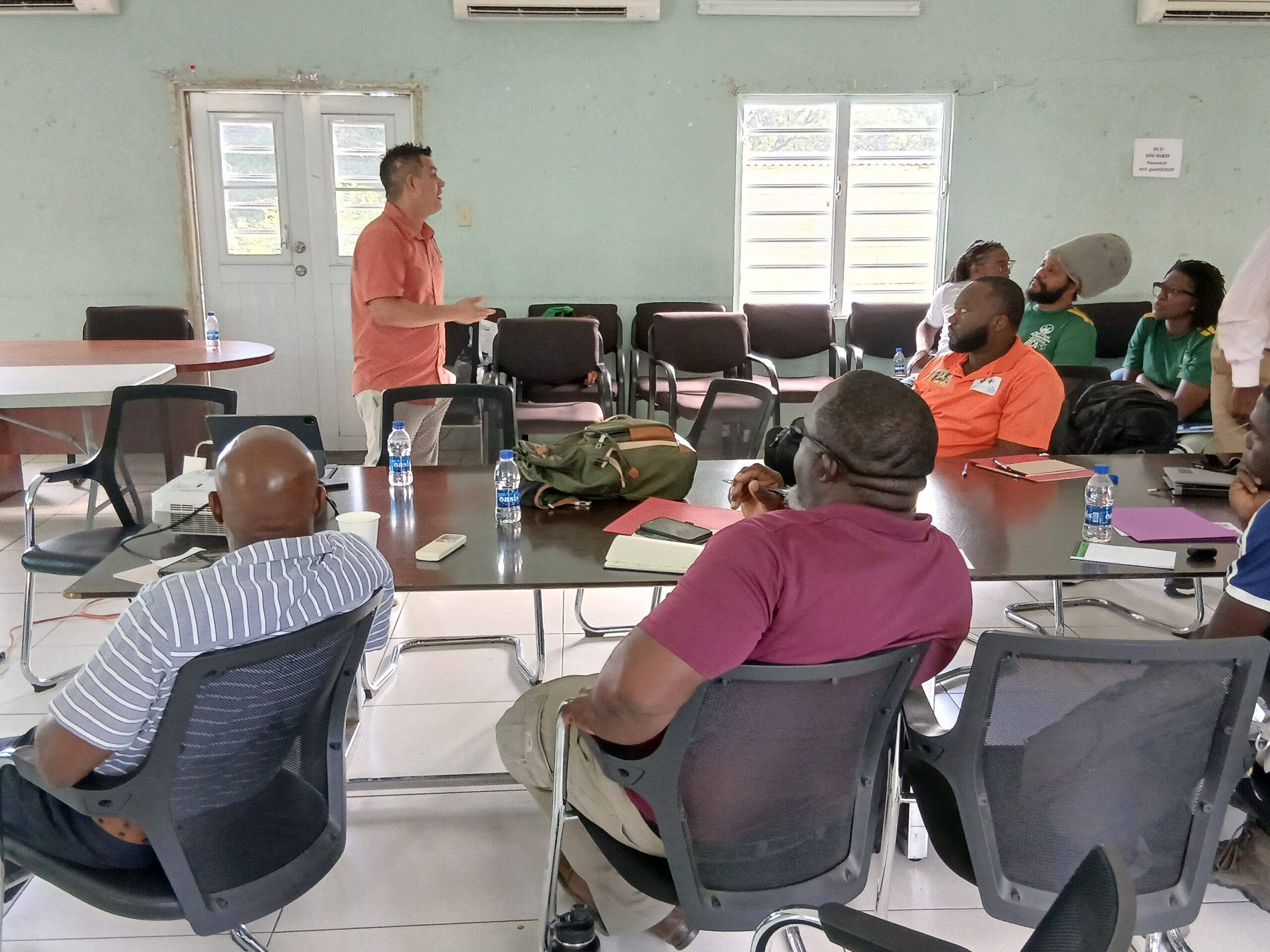
For small island nations in the Caribbean, the aftermath of a hurricane often leaves a lingering, crippling toll on local farming communities: even after storm winds die down and immediate public safety risks recede, many crop producers face months of lost income and disrupted food supplies as they struggle to replant their fields. To directly tackle this longstanding vulnerability, Antigua and Barbuda has rolled out a groundbreaking cross-partner initiative that merges seed preservation, cutting-edge agricultural technology, and targeted emergency response training to slash post-disaster recovery timelines for the nation’s agricultural sector. Unveiled recently during a formal ceremony held at the Department of Environment’s conference room, the Mobile Seed Bank and AGRI-FIRST Responders Initiative brings together a broad coalition of national and regional stakeholders, including the Ministry of Agriculture, the Inter-American Institute for Cooperation on Agriculture (IICA), the Caribbean Agricultural Research and Development Institute (CARDI), CCRAF SPC, and the Caribbean Community (CARICOM), to create a unified, end-to-end support system for local farmers. Speaking at the launch event, the Minister of State within the Ministry of Agriculture emphasized that disruptions to agricultural output do not remain confined to individual farm plots: ripples of crop loss spread to national food security, household livelihoods, and broader macroeconomic stability for the entire twin-island nation. He framed the new programme as a high-impact strategic investment, noting that while extreme weather events cannot be fully prevented, targeted pre-planning can drastically improve the speed and efficacy of post-storm recovery operations. The core of the new programme is a purpose-built mobile seed storage and distribution network, designed to safeguard critical, climate-resilient planting materials and deliver them directly to affected farmers in the immediate aftermath of a disaster. Backed by secure, climate-controlled seed reserves, heavy-lift agricultural drones, and streamlined last-mile logistics, the system eliminates long-standing delays in getting farmers back to planting, even in remote communities where storm damage has washed out roads or crippled regular transport infrastructure. Director of Agriculture Mr. Gregory E. Bailey described the model as a fully integrated last-mile agricultural response framework, built to resolve decades of persistent pain points including disjointed damage assessment processes and bureaucratic logistical bottlenecks that have slowed aid delivery in past crises. “A farmer cannot plant a forecast,” Bailey noted, arguing that early warning systems alone are insufficient to protect agricultural livelihoods, and that tangible, on-the-ground recovery support is required to turn preparedness plans into real results. The initiative’s drone fleet, equipped with LiDAR mapping capabilities, will enable fast, highly precise verification of agricultural losses across hard-to-reach terrain, eliminating the need for slow, on-foot surveys in storm-hit zones. Crucially, this high-tech toolkit will not be reserved exclusively for disaster response: Bailey outlined plans for year-round deployment to support routine agricultural operations, including precision pest and disease monitoring, soil and water resource mapping, large-scale land preparation surveys, livestock tracking, and expanded on-demand agricultural extension services for rural producers. The mobile seed caravans themselves will also double as permanent community hubs, hosting regular farmer training workshops, local seed multiplication programmes, and outreach sessions across all of the nation’s agricultural districts. Complementing this physical infrastructure is the AGRI-FIRST Responders component, which focuses on building the trained workforce and standardized operational protocols needed to deploy the system efficiently. Participating agricultural officers and staff from relevant national emergency management agencies will receive specialized hands-on training, access to standardized digital reporting tools, and take part in full-scale emergency simulations to build a cohesive, coordinated national response capacity. As the Minister of State succinctly framed the two complementary components: “One initiative provides the tools. The other develops the people and systems needed to put those tools into action.” The official launch kicked off a full week of intensive technical capacity-building activities, with agricultural technicians completing hands-on drone operation training through Thursday, November 19. That day, a full-scale disaster response simulation held in the community of Bendals will showcase the real-world application of the new equipment and coordinated response workflows. The week’s activities will wrap up on Friday, November 20, with a formal official handover of the Mobile Seed Bank fleet to the Ministry of Agriculture, followed by certified First Aid and CPR training for all participating technical staff hosted at the local Red Cross Headquarters. Bailey closed his remarks by acknowledging the collaborative contributions of all regional partner organizations, stressing that state-of-the-art equipment alone cannot deliver results without robust operational readiness, a fully trained workforce, and sustained long-term institutional cooperation across all stakeholder groups. The long-term success of the initiative will not be measured by the number of drones deployed or training certificates issued, but by tangible on-the-ground outcomes: faster delivery of planting materials to affected farmers, more accurate damage assessments, and a far faster return to full agricultural production after extreme weather events. For Antigua and Barbuda and its Caribbean regional partners, the overarching goal is to build a proactive agricultural resilience system that does not merely wait for disasters to unfold, but is fully prepared to deliver targeted support, speed recovery, and keep local food supply chains stable no matter what extreme weather challenges arise.
Antigua and Barbuda Launches Mobile Seed Bank to Help Farmers Recover After Disasters