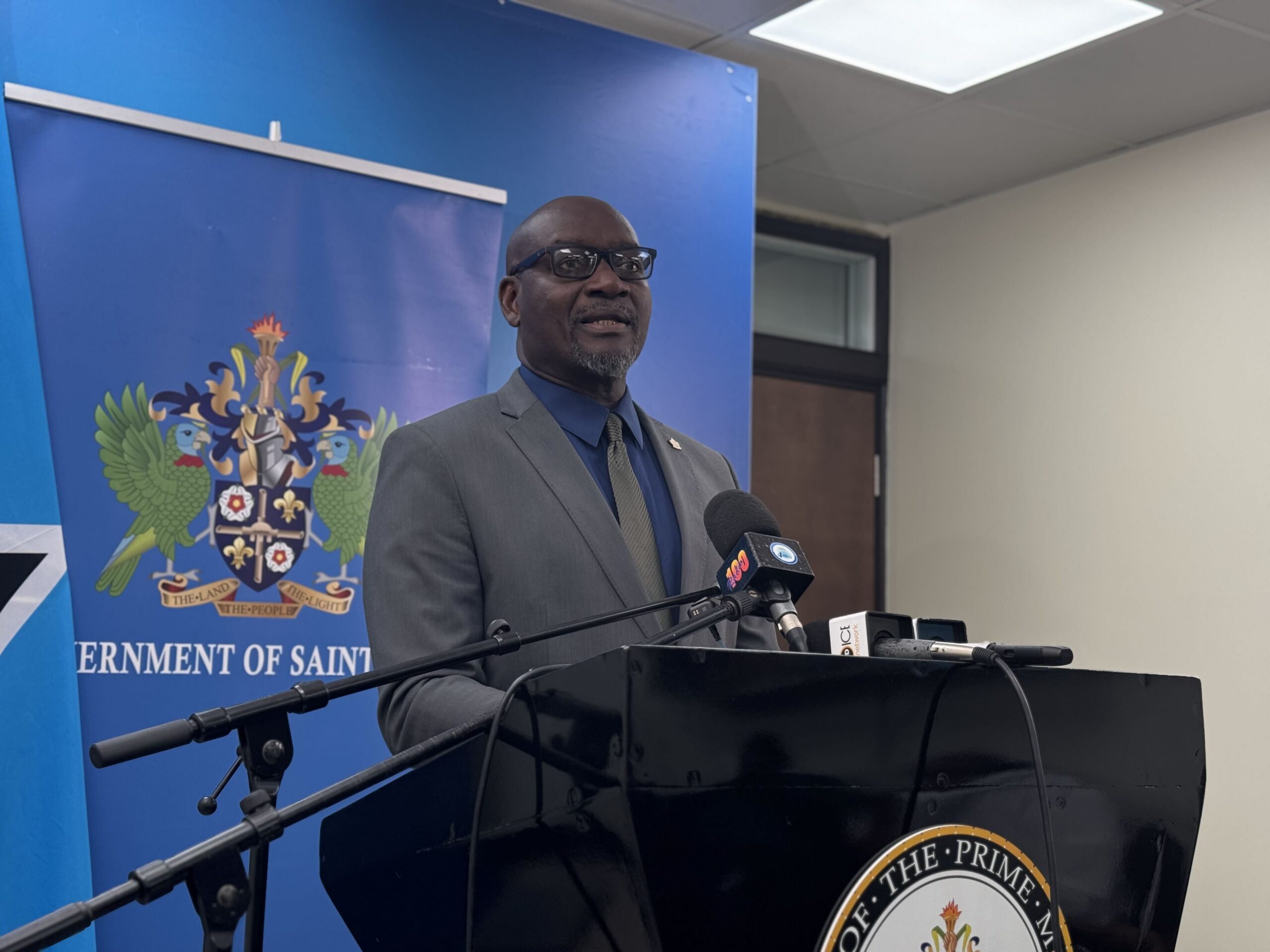
Marking exactly one year since the newly reconstructed St Jude Hospital was formally transferred to Saint Lucia’s Ministry of Health on November 16, government officials have announced that the full operational migration to the long-awaited medical facility will not be completed until sometime in 2027, scrapping earlier pledges to finalize the transition by the end of 2026. The handover a year ago was framed as the official kickoff for a staggered, phased return of healthcare services to the site, and progress in the initial months outpaced early expectations: within the first seven to eight months of occupancy, core support operations including administrative offices, on-site kitchen and laundry services, physiotherapy care, and life-sustaining dialysis treatment were fully up and running at the rebuilt campus. Earlier this year, top health leadership had projected a far swifter timeline for full activation. In April 2026, Health Minister Moses Jn Baptiste told the public the entire transition could be wrapped up in as little as three to four months, targeting a completion date in the summer of 2026. That deadline came and went without a full launch, leaving 12 months of the commissioning process elapsed with partial services only in place. Speaking to reporters at a pre-Cabinet press briefing on Monday, Jn Baptiste confirmed that while no fixed, exact launch date has been locked in, the government is fully committed to completing the full shift to the facility at some point in 2027. “We do not have an exact timeline. I can’t tell you it is two weeks or three weeks,” he noted, “But we are convinced and committed, based on everything we are seeing, that within a reasonable time in 2027 next year, we will completely transition the hospital.” The St Jude reconstruction effort stands as one of the most heavily scrutinized public sector projects in Saint Lucia’s recent history, with a winding, nearly 20-year development timeline that has drawn consistent public attention. The original hospital was gutted by a catastrophic fire in 2009, forcing all displaced medical services to operate out of makeshift accommodations at the George Odlum Stadium for years. Over the intervening decades, the project has been plagued by repeated delays, shifting design blueprints, and a string of previously missed projected opening dates, all of which have kept it under relentless public oversight. Jn Baptiste openly acknowledged that the current final phase of commissioning has dragged on far longer than administrators initially forecast, attributing the extended timeline to rigorous safety and compliance protocols that cannot be cut short. “It is very clear that the full verification, the safety checks and all of that has taken some more time than we anticipated,” he explained. As specialized engineering and medical commissioning teams dug deeper into final system audits, they uncovered a series of additional required adjustments and validation steps that had not been flagged in earlier assessments, all of which must be finalized before the facility can welcome full inpatient and outpatient services. These outstanding tasks include exhaustive, repeated testing and independent third-party verification of electrical grids, potable water distribution networks, medical gas delivery lines, hospital ventilation systems, radiation safety infrastructure for diagnostic imaging equipment, and a full suite of specialized medical devices. Frontline clinical and support staff also need to complete mandatory, role-specific training on the new high-tech equipment, unfamiliar ward layouts, and updated emergency safety protocols tailored to the new building. Jn Baptiste emphasized that no outstanding construction work remains at the site, and the delays are entirely tied to the rigorous pre-launch validation process, not unfinished building works. He stressed that the government will not rush the transition at the risk of patient harm, prioritizing full safety compliance over arbitrary, previously announced deadlines. “What we don’t want to do is to rush a transition that is not safe for the patients and to rush a transition that does not have full verification,” he stated.