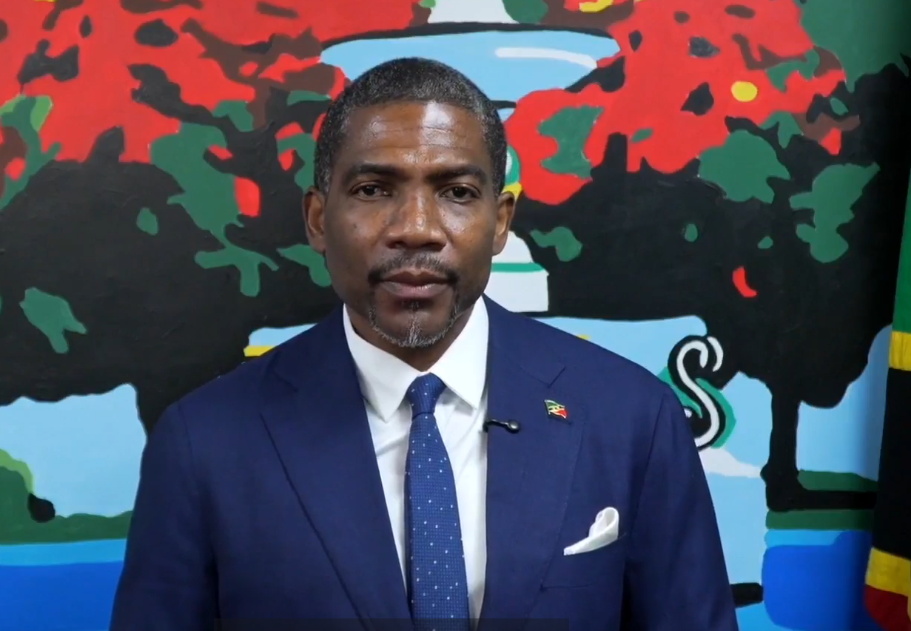
In a nationally televised and radio broadcast late Friday, Prime Minister Dr Terrance Drew of the twin-island Federation of St Kitts and Nevis formally announced the gradual, responsible winding down of the country’s 42-year-old Citizenship by Investment (CBI) Programme, framing the decision as a proactive, pre-planned step to insulate the nation’s long-term socio-economic stability rather than a reactive last-minute compromise.
The landmark announcement comes in response to a binding European Union mandate that requires all Organisation of Eastern Caribbean States (OECS) member states operating CBI schemes to terminate the programmes by June 1, 2028, or face the revocation of visa-free access to the EU’s Schengen Area. St Kitts and Nevis joins Antigua and Barbuda, Dominica, and St Lucia in publicly committing to phase out their respective CBI frameworks, with regional counterparts already engaging in separate negotiations with EU officials to tailor transition timelines and secure targeted support for their domestic economic shifts.
Prime Minister Drew emphasized that the government had been laying the groundwork for this transition as early as 2022, when CBI revenue accounted for 70% of total government income. Through deliberate, multi-year reforms, that share has already dropped to less than 20% by 2026, a deliberate structural shift designed to avoid sudden economic shock. He warned that failing to comply with EU requirements would expose the small island nation to the risk of being placed on global financial grey or black lists, which would trigger correspondent banking withdrawal, cutting off the country from the global financial system, crippling core sectors including tourism, offshore education, and financial services, and halting routine transactions from credit card payments for visitors to cross-border remittances for local families. “No responsible leader would gamble with that. I will not gamble with that. You are too important,” Drew stated during the 30-minute address.
Under the planned transition, no changes will apply retroactively to any individual who has already lawfully obtained St Kitts and Nevis citizenship, with all existing travel privileges for domestic and overseas nationals remaining fully intact. The CBI programme will continue operating under the strictest regulatory standards in its history for the duration of the negotiation period, with no rushed approvals, discounted investment thresholds, or “fire sales” of citizenship status, overseen by a newly established regional independent regulator. The dedicated staff of the national CBI unit, who led recent reforms to restore the country’s global reputation, will be redeployed to a new foreign direct investment division to leverage their investor engagement experience for broader national development.
Drew outlined a comprehensive, multi-stakeholder sustainable development roadmap that will replace CBI revenue streams, centered on positioning St Kitts and Nevis as a net clean energy exporter. The plan includes ongoing development of geothermal projects across both islands, six planned geothermal well drillings, a new 50-megawatt solar farm, and a regional inter-island power connection that will sell surplus renewable energy to neighbouring territories including Antigua and Barbuda and St Martin. Additional pillars of the strategy include a new undersea fibre optic cable to boost digital connectivity for remote work and global digital service exports, home-porting agreements for two P&O Cruises vessels starting in the 2027 winter season, targeted investment in the local “orange economy” covering music, carnival events, film, and creative industries, expanded food security initiatives, and widespread upskilling programmes for the local workforce across all career stages.
The prime minister confirmed that the government has already secured preliminary partnership commitments for these projects from a wide range of international stakeholders, including the European Union’s Global Gateway strategy, the Republic of China (Taiwan), the United States, Saudi Arabia, Italy, the Caribbean Development Bank, the Inter-American Development Bank, and the Green Climate Fund. He cited a May 2025 International Monetary Fund review that confirmed the country’s debt sustainability, stable banking system with improved capital ratios and reduced non-performing loans, and projected positive economic growth for the year even as CBI revenue has already fallen to just 6% of total GDP. Drew explicitly ruled out tax hikes as part of the transition plan, noting that recent governance reforms including a new Anti-Corruption Act, strengthened freedom of information and public integrity legislation, and independent audits of the former CBI unit have laid a robust foundation for transparent, sustainable growth. “We relied on sugar, and the world changed. We relied on CBI, and the world changed again. This time, we saw the change coming, and we prepared,” Drew told the nation, noting that the decades-old CBI scheme played a critical role in the country’s development but was never intended to be a permanent economic pillar.
St Kitts and Nevis to phase out CBI programme