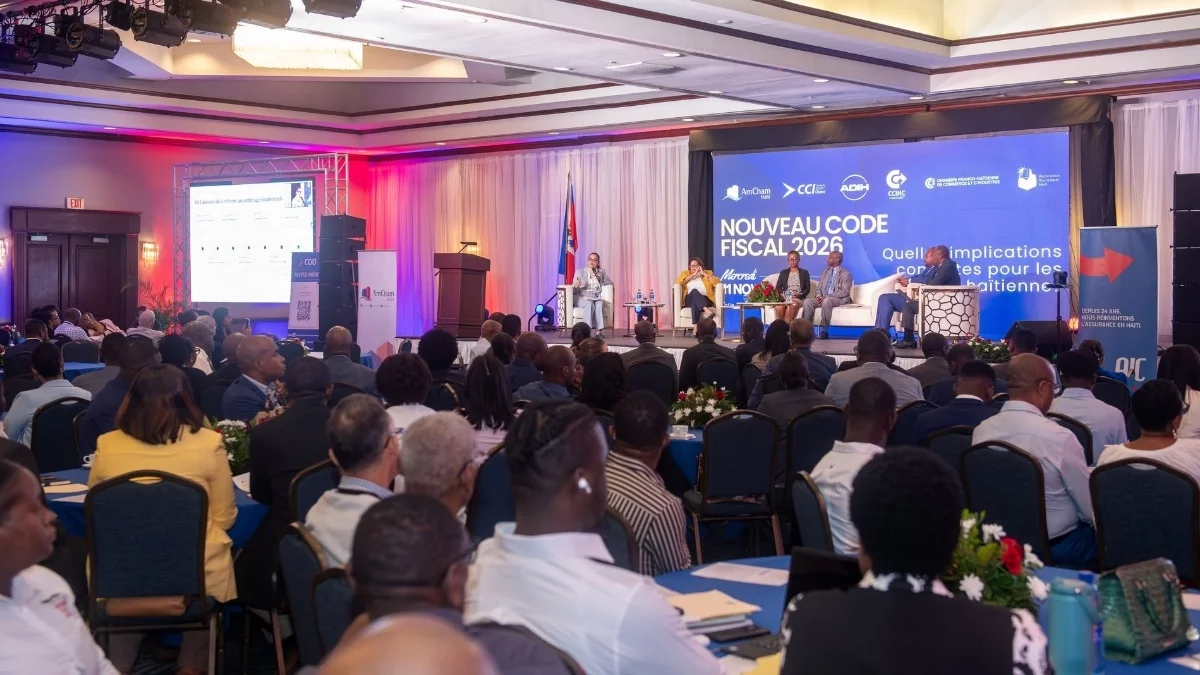
Port-au-Prince, November 15, 2026 — Haitian tax and economic governance officials have kicked off a formal collaborative consultation process with the nation’s private business community to resolve ambiguities and address practical pain points tied to the country’s upcoming new national Tax Code, following a high-profile stakeholder summit hosted this week at Port-au-Prince’s Karibe Hotel. Organized by AmCham-Haïti in partnership with a coalition of local bilateral chambers of commerce and industry professional associations, the panel gathering brought together top leadership from the General Directorate of Taxes (DGI) and the Ministry of Economy and Finance (MEF) alongside independent tax and legal subject-matter experts to unpack the on-the-ground operational impacts of the new regulatory framework for enterprises of all sizes.
Leading the official delegation were DGI Director General Chesnel Francois, DGI Deputy Director General Alfred Pierre, and MEF head Serge Gabriel Collin, who were joined on the discussion panel by certified public accountant Caroline Romain, tax law attorney Genevièvre Michel, MEF senior tax advisor Jean Hervé Alcé, and Ivens Roche, director of the DGI’s Large Taxpayers Directorate. AmCham-Haïti Executive Director Erika Rosenthal framed the event as a deliberate step to move beyond top-down regulatory rollout, noting that the dialogue was designed to surface unforeseen implementation hurdles, deliver clear, actionable clarifications on contested code provisions, and co-design adaptive solutions aligned with the unique operational realities of Haitian private sector operators.
During his keynote address, DGI chief Francois emphasized that the administration’s top priority in the reform rollout is to nurture a trusting, collaborative relationship with taxpayers rather than prioritizing punitive enforcement. He outlined concrete service upgrades in the pipeline to support businesses, including the full rehabilitation and restructuring of the agency’s Infocentre taxpayer support call center, a resource originally launched in 2019 that went offline in 2023 amid broader institutional disruptions. The revamped call center will be staffed with trained tax specialists to walk businesses through their obligations, answer procedural queries, and streamline filing and payment support, Francois confirmed, adding that ongoing structured engagement with chamber of commerce representatives will remain a permanent feature of the DGI’s governance model moving forward.
MEF Minister Serge Gabriel Collin situated the tax code rollout within the government’s wider national economic reform agenda, noting that the policy is engineered to cut red tape for enterprises, create a more predictable, pro-investment business climate, and expand the state’s domestic revenue mobilization capacity to deliver sustained, long-term funding for core public services. Attendees unanimously signed off on a formal agreement at the close of the full-day debate to establish a recurring, structured working group that will continue bilateral consultations between regulators and private sector representatives, to resolve remaining ambiguities and ensure the new Tax Code is rolled out as smoothly and fairly as possible for all stakeholders.