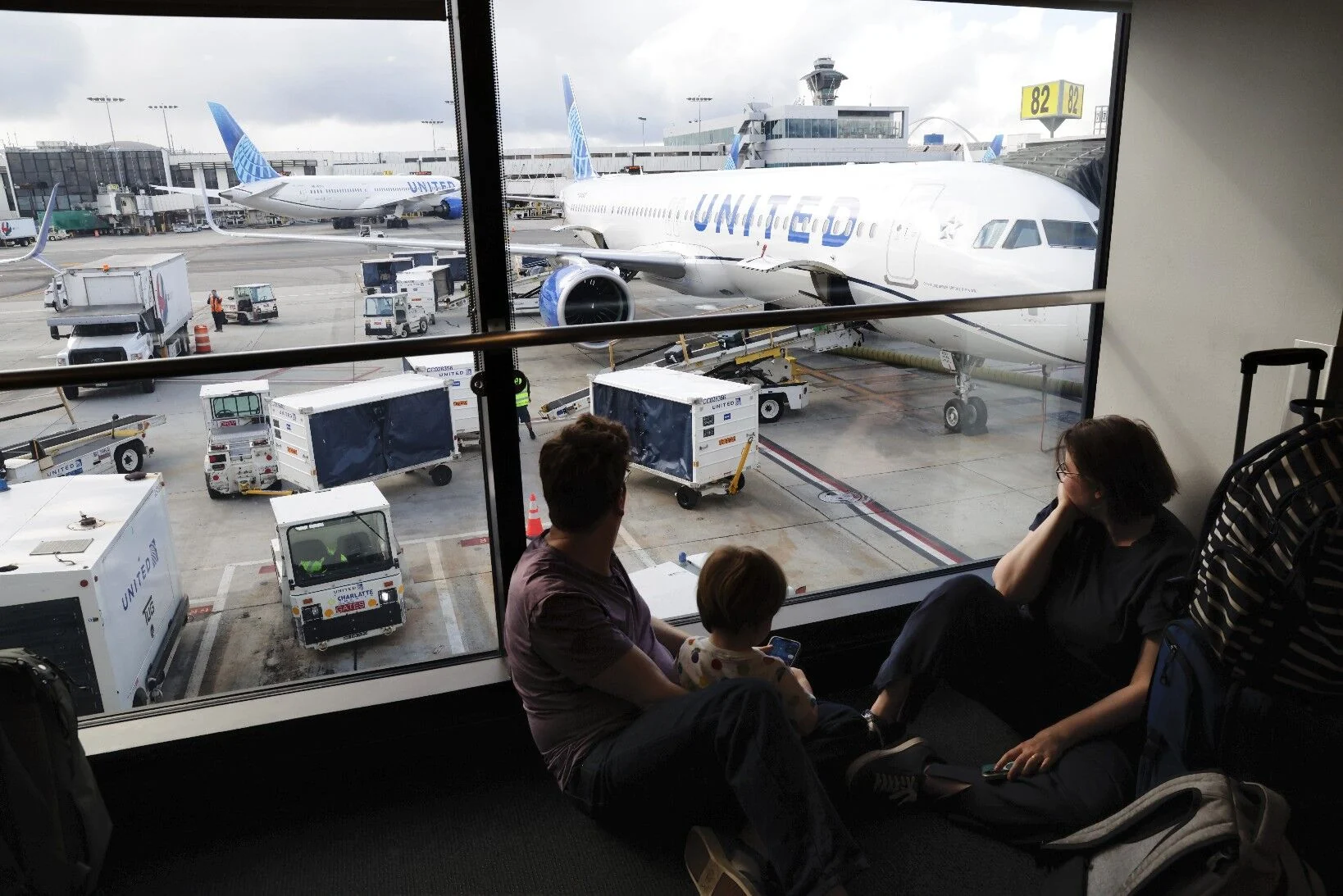
A major nationwide air traffic control communications failure in the United States forced the Federal Aviation Administration (FAA) to issue an unprecedented temporary full ground stop for departing domestic flights yesterday, sending ripple effects across international travel networks and causing significant operational disruptions for Caribbean Airlines. In official public advisories issued late Wednesday, the Trinidad-based regional carrier confirmed it was forced to cancel four scheduled transborder flights and impose extended delays on four additional services, with cascading disruptions also spilling over into the following day’s itineraries. The scrapped routes included BW 78 from Toronto to Kingston, Jamaica; BW 617 from Toronto to Georgetown, Guyana; BW 481 from Fort Lauderdale to Trinidad; and BW 526 from Georgetown bound for New York. The delayed services covered BW 520 from Trinidad to New York and BW 601 from Toronto to Trinidad, with knock-on impacts also extending to the subsequent day’s BW 521 service from New York to Trinidad and BW 527 route from New York connecting to Guyana and Trinidad. Caribbean Airlines leadership stated all passengers impacted by cancellations and extended delays would be re-accommodated on the earliest available subsequent flights, and urged all customers scheduled to travel within the 24-hour window following the disruption to verify their real-time flight status via the airline’s official online platforms. The carrier confirmed its operational teams were maintaining continuous real-time coordination with global aviation regulatory authorities to adapt to evolving conditions. Trinidad and Tobago’s Transport and Civil Aviation Minister Eli Zakour formally validated the scale of regional disruptions, noting dozens of cross-border flights operating between Trinidad and Tobago, the wider Eastern Caribbean, and North America had experienced significant hold-ups after the FAA’s national command centre notified local aviation regulators of the sweeping airspace restrictions. Zakour emphasized that the Government of Trinidad and Tobago was closely tracking every update related to the US outage, and pledged to share timely, transparent updates with the public as new information emerged. Crucially, he moved to reassure local travellers that all air traffic management operations within the Piarco Flight Information Region – a vast designated zone covering large swathes of Caribbean airspace where Trinidad and Tobago oversees all flight navigation services – remained fully functional, compliant with global safety standards, and entirely unaffected by the US system failure. Minister of Homeland Security Roger Alexander also released a public statement urging the public to avoid unnecessary panic, confirming his ministry was in active communication with the Ministry of Foreign and Caricom Affairs and relevant US federal security counterparts to coordinate response efforts. For its part, the US FAA confirmed the sweeping ground stop order was implemented after technicians detected widespread communications breakdowns impacting all 22 of the agency’s regional air traffic control centres across the continental United States. The emergency measure permitted all flights already airborne at the time of the outage to proceed safely to their intended landing points, while temporarily pausing all new departures, with international incoming flights assessed and processed on a case-by-case basis. US Transportation Secretary Sean Duffy confirmed no definitive timeline had been established for full restoration of normal communications systems as FAA technical teams worked to diagnose the root cause of the failure. US Homeland Security Secretary Markwayne Mullin moved to ease public concerns, explicitly confirming there was no evidence to suggest the outage was the result of a malicious cyberattack or hostile action, and that all airborne aircraft had been fully accounted for with no reported safety incidents. This marked only the third time in modern US aviation history that a nationwide full ground stop has been implemented: the previous comparable incident took place in January 2023 following a critical malfunction in the FAA’s global aviation notification system, and the only prior full national shutdown occurred in the immediate aftermath of the September 11, 2001, terrorist attacks.