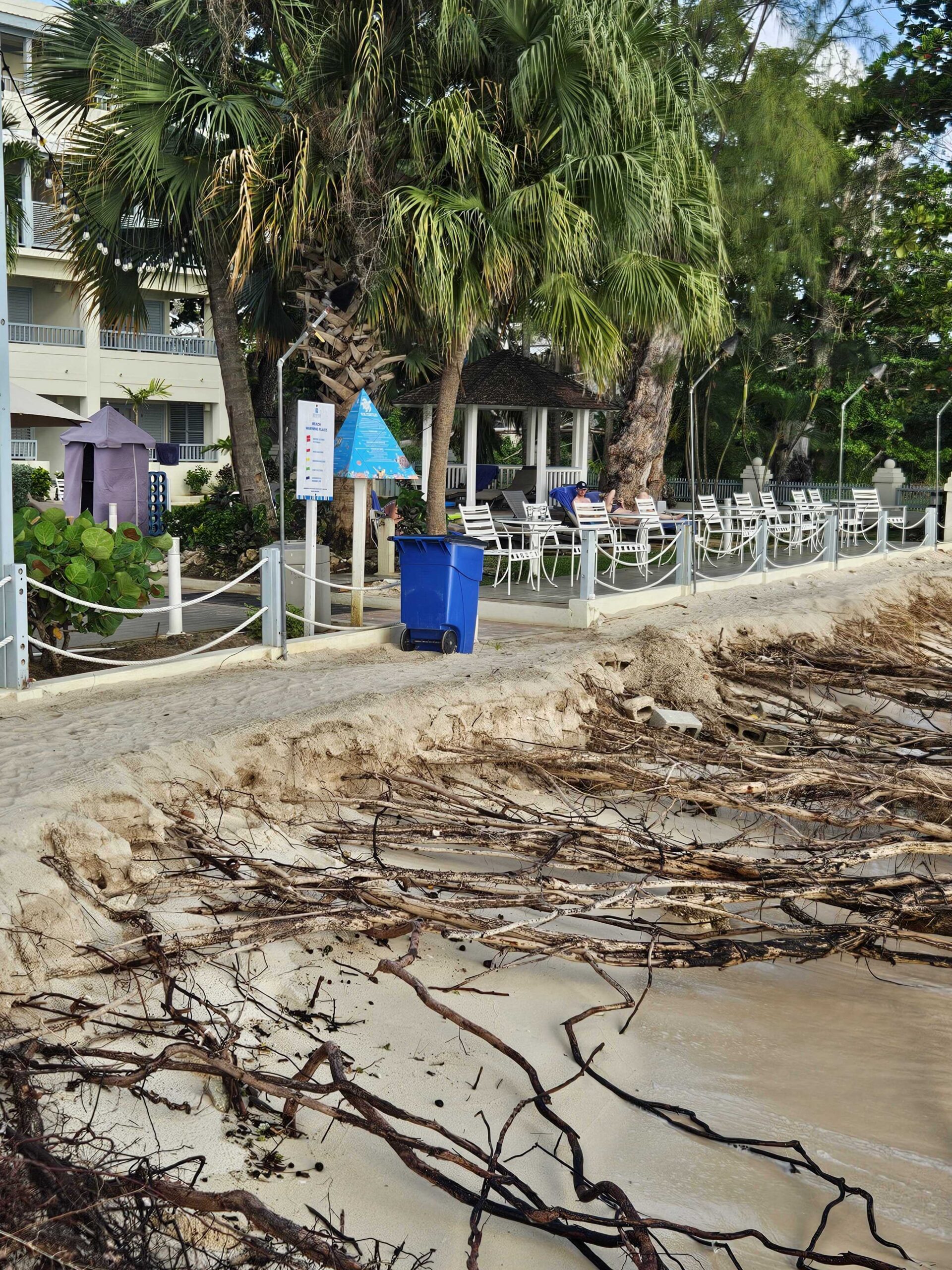
A beloved, centuries-old beachfront hotel nestled within Barbados’ UNESCO-listed Historic Garrison district is teetering on the edge of permanent shutdown, as accelerating coastal erosion and rising sea levels eat away at its shoreline and put its core structural integrity at severe risk. Local environmental regulators at the Coastal Zone Management Unit (CZMU) have formally classified the unfolding situation as a full-blown crisis, leaving the property’s long-time owner warning that he will have no choice but to cease operations immediately if urgent protective interventions are not fast-tracked. Veteran Barbadian hotelier Bernie Weatherhead, who owns the south-coast Savannah Beach Hotel alongside four other hospitality properties across the region, revealed in an exclusive interview with Barbados TODAY that he has already disbursed more than $100,000 in guest refunds over recent months, as the vanishing shoreline has rendered the once-pristine beach unsafe and unrecognizable. Dozens of mature coastal trees that once lined the property’s waterfront have already toppled into the advancing ocean, while 40 feet of sand that formed the hotel’s private beach has been completely washed away in a matter of months. Weatherhead traces the root of the accelerated erosion to a series of groyne structures installed along the coast stretching east toward the nearby town of Oistins, which he says disrupted natural longshore sand drift and starved the Savannah Beach Hotel shoreline of replenishing sediment. He noted that a specialist British coastal engineering firm he retained confirmed these man-made structures as a key contributing factor to the rapid sand loss. The hotel owner explained that he first reached out to CZMU officials weeks ago to request expedited emergency approval to construct a heavy boulder revetment wall along the property’s entire waterfront boundary, a low-impact protective structure designed to absorb wave energy and stop further land loss before the hotel’s foundational sea wall is breached. While CZMU initially advised him to hire a certified coastal engineer to draft a formal intervention study, Weatherhead says critical time is slipping away as he waits for streamlined sign-off, noting that comparable beachfront property owners were granted immediate emergency approval for post-Hurricane Beryl restoration works without lengthy bureaucratic delays. He added that plummeting booking volumes and ongoing unbudgeted costs for guest refunds have pushed the 87-person hotel staff’s jobs into jeopardy, though he has pledged to absorb as many workers as possible into his other local properties and his St. Lucia-based Bel Jou hotel if a closure becomes unavoidable. In response to the hotelier’s public calls for support, CZMU Director Dr. Leo Brewster confirmed that the section of shoreline adjacent to the Savannah Beach Hotel has experienced steady, persistent erosion for roughly 18 months, triggered initially by massive sargassum seaweed inundations that disrupted natural sand accretion patterns, then exacerbated by unusual turbid “green water” storm surges that swept across Barbados’ south coast earlier this year. Dr. Brewster clarified that while the property is approaching a clear crisis threshold, CZMU has not yet received a finalized engineering assessment from Weatherhead’s team to review, and that all proposed coastal protective works require a formal planning submission to the national Town Planning department for formal sign-off, with regulators ready to collaborate on feasible, low-environmental-impact solutions as soon as the technical documentation is submitted. Photographs captured by local journalist Maria Bascombe lay bare the scale of the damage, showing exposed, uprooted tree roots clinging to the last remaining strips of sand and sections of the shoreline where the ocean now laps directly at the hotel’s lower perimeter barriers.