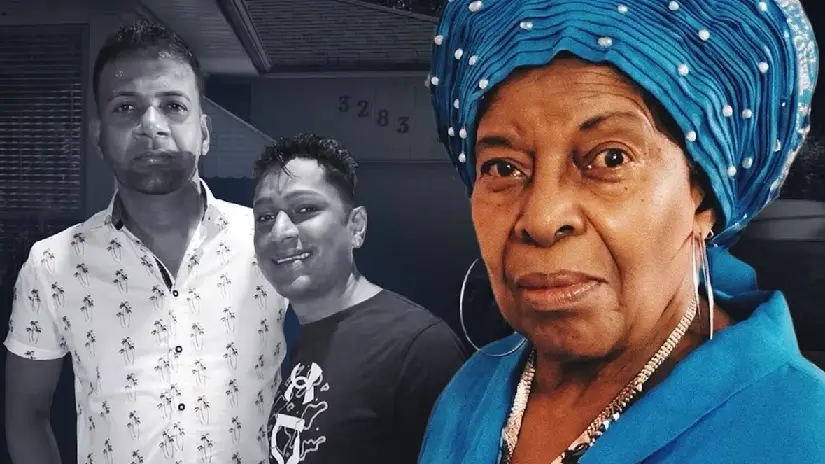
A joint investigative probe from CBC’s award-winning documentary series *the fifth estate* has laid bare systemic failures in Canada’s elder protection frameworks, following the 2026 death of 86-year-old Dorelia Licorish, a long-serving retired Toronto nurse originally from Barbados. The timeline of negligence stretches back years, beginning when Licorish, a fiercely independent, sharp-witted woman who raised her niece Andrea Phillips-Beckles from childhood after her sister’s passing, first noticed mild memory lapses around 2018, per accounts from her 35-year professional colleague Christiana Egi.
In early 2024, Licorish welcomed two men, Daniel Gopie and Elton John Rambarrat, who claimed to have met her at her local church, to move into her basement rent-free in exchange for assistance with household chores and errands. What began as a seemingly informal care arrangement quickly raised alarms for Licorish’s social circle: by June 2024, her landline had been disconnected, and relatives received unconfirmed reports that the two men were claiming full ownership of Licorish’s seven-figure Toronto residential property. When a cousin arrived at the home alongside local law enforcement to check on her well-being, Licorish appeared visibly agitated and asked the group to leave, prompting no further immediate action from responding officers.
Within a month of that visit, Licorish signed over full power of attorney for both her personal care and financial assets to Gopie and Rambarrat, and executed a last will and testament that named the two men as the sole beneficiaries of her entire estate, including her long-held Toronto home. When Phillips-Beckles arrived at the property in August 2024 to check on her aunt, she reports that Licorish failed to recognize her at first, and that the two men never left her side for the duration of her visit. During that encounter, one of the men reportedly told Phillips-Beckles the newly signed will was “bulletproof”, and the pair began referring to Licorish as “Mommy”, with the disoriented senior describing them as “my sons from God” to her confused niece.
A real estate lawyer who was approached by the men to add their names to the title of Licorish’s property raised a formal red flag with Ontario’s Office of the Public Guardian and Trustee (OPGT) in September 2024, after he observed that Licorish could not even recall the two men’s full names during their meeting. The provincial agency, mandated to protect the interests of mentally incapacitated Ontario residents, launched a formal court filing that included a 120-page affidavit documenting alleged patterns of exploitation. Court records show that Gopie and Rambarrat began accompanying Licorish to all of her appointments with her long-time family physician, who reported that Licorish appeared “very surprised” when shown the signed power of attorney documents, and had no memory of ever signing the paperwork. The physician scheduled a standardized mini-mental status examination to formally assess Licorish’s cognitive function, but the appointment was cancelled by Rambarrat before it could take place. Subsequent medical notes from August 2025 confirmed a formal dementia diagnosis, though the exact onset of the condition remains unconfirmed.
In May 2026, the OPGT initiated court proceedings to pursue legal guardianship of Licorish, arguing she was cognitively incapable and at high risk of financial exploitation at the hands of the two men. During a remote video court hearing held while Licorish was physically present in Guyana, a Toronto provincial judge asked her to confirm her location, and one of the two men at her side answered on her behalf, as the disoriented 86-year-old looked on. Back in Toronto, Licorish’s family had filed a missing person report weeks earlier, after losing all contact with her and noticing her home appeared abandoned, but local law enforcement took no substantive investigative action.
Less than six months after that court appearance, Licorish died in a Guyanese hospital from complications related to a severe, untreated infected bedsore so advanced that her pelvic bone was exposed. Gopie and Rambarrat have since taken up full residence in Licorish’s Toronto home, and to date, no criminal charges have been laid against either man. In an on-the-record interview with *the fifth estate*, the pair maintained that Licorish was fully cognitively capable when signing her power of attorney and will documents, and that she never suffered from dementia.
The high-profile case has cast a national spotlight on Canada’s rapidly growing elder abuse crisis, as the country formally became a “super-aged” nation in 2026, with one in five residents aged 65 or older. While no centralized national tracking system for elder abuse incidents currently exists, a 2022 University of Toronto study estimates that one in 10 Canadian seniors over 65 experience some form of physical, financial, or sexual elder abuse every year, with racialized seniors and those living with cognitive impairment facing exponentially higher risk. “Dorelia’s story is not an anomaly — it plays out in communities across this country, every single day, and this crisis is only going to escalate as our senior population grows,” noted Dr. Samir Sinha, director of geriatrics at Toronto’s Sinai Health System and University Health Network. For Phillips-Beckles, the fight for accountability is far from over: “I will keep pushing for justice for my aunt, because the system failed her completely — law enforcement didn’t take a single one of our warnings seriously.”
Canadian provincial agency alleges Guyanese men financially abused 86-year-old Barbados-born woman before her death