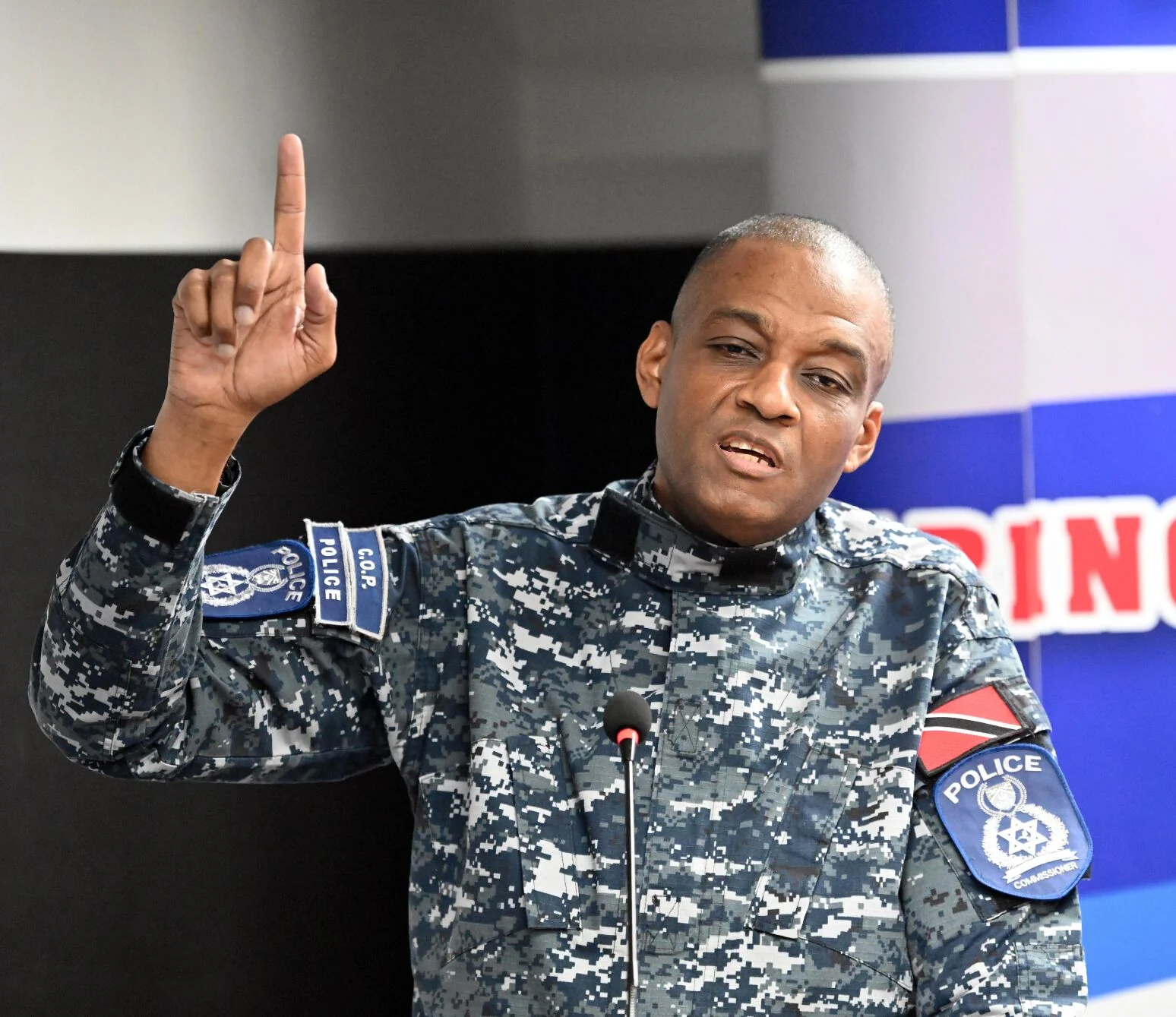
Port of Spain, Trinidad and Tobago – In a decisive move to curb spiraling gang-related violence that put innocent residents at severe risk, Police Commissioner Allister Guevarro formally confirmed the designation of Maloney Gardens, a residential housing development in Policing District 2, as a Special Operations Zone under the 2026 Special Operations Act during a press briefing at the Police Administration Building, paired with an on-site community visit to engage directly with affected residents. The landmark intervention was triggered by layered, verified intelligence pointing to a rapidly deteriorating security landscape: local gang factions had been using the dense housing blocks as a fortified refuge, with decades-long historical rivalries threatening to unleash a wave of fatal reprisal attacks that could catch bystanders in crossfire. The breaking point came on November 9, when Commissioner Guevarro received a widely circulated social media video showing young children scrambling for cover amid a burst of uncontrolled gunfire in the neighborhood, a scene that prompted immediate intervention directives to Senior Superintendent Avalon Frank, head of the local policing division. The preceding 24 hours had already seen a cascade of violent incidents across Maloney Gardens: an early morning altercation left a 29-year-old man with a severe abdominal slash, followed minutes later by two separate shooting incidents in a nearby car park that wounded two more men, and a separate targeted gunfire attack on a 45-year-old driver outside Building 5 that luckily left him unharmed. Initial standard policing operations to apprehend suspects, recover illegal firearms and de-escalate tensions failed to reverse the upward trajectory of violence, prompting Commissioner Guevarro to cross-reference operational assessments with the formal legal thresholds laid out in the Special Operations Act. Following due procedural checks, the President of Trinidad and Tobago exercised her executive authority under Section 11 of the legislation to formally designate Maloney Gardens as a closed area, via Legal Notice 847 of 2026, with a nightly 9 p.m. to 5 a.m. curfew enforced under accompanying Legal Notice 848 of 2026. Joint patrols combining Trinidad and Tobago Police Service officers and Trinidad and Tobago Defence Force service members, coordinated with Chief of Defence Staff Commodore Don Polo, were immediately deployed to the neighborhood to enforce the restrictions. During his unannounced walkthrough of the housing blocks after the operation launched, Commissioner Guevarro reported that local residents approached him repeatedly to express relief, noting many had not felt safe in their own community for years. While acknowledging that the movement restrictions created unavoidable short-term inconvenience for residents, Guevarro pushed back firmly against public critics of the operation, noting that many of the same voices that had remained conspicuously silent during the days of uncontrolled gunfire and endangered children were now speaking out against the life-saving intervention. He emphasized that the decision to invoke the Special Operations Act was never one he took lightly, stating that the power would only ever be activated when community behavior and security conditions left no other viable path to protect civilians, and that the Maloney Gardens operation would remain in place for as long as legally required to fully neutralize gang threats and restore long-term public safety. He also issued a direct public warning to local gang factions against any attempts to intimidate residents or carry out planned reprisal attacks, noting that law enforcement would not hesitate to deploy the full scope of the Special Operations Act’s authorities to prevent further loss of life.