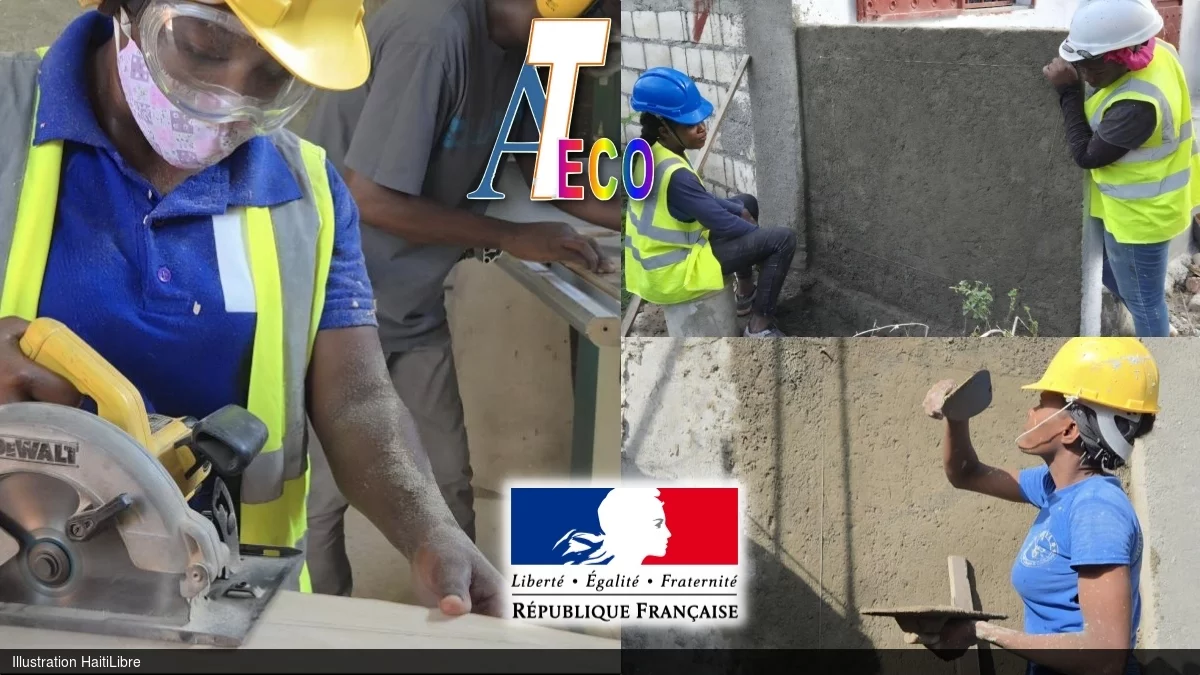
In the coastal Haitian city of Jacmel, a groundbreaking local initiative funded by French diplomatic resources is dismantling long-standing gender stereotypes that have blocked women from accessing stable, skilled careers in the historically male-dominated construction industry. Launched by the Association of Construction Technicians (ATECO), the program receives full financial backing from the French Embassy in Port-au-Prince via its dedicated Fonds Équipe France (FEF) grant mechanism, which prioritizes grassroots civil society projects advancing gender equity across Haiti.
For decades, deeply entrenched cultural norms framed construction and related technical trades as exclusively suited for male workers, creating systemic barriers that locked Haitian women out of a high-demand, well-paying labor market and perpetuated cycles of economic disenfranchisement. Even as Jacmel’s local building sector has expanded in recent years, fewer than 10% of skilled construction roles were held by women prior to the launch of this targeted intervention.
The 12-month vocational training program recruited 35 local participants, 65% of whom are women, to complete hands-on, certified coursework across core construction specializations including masonry, electrical wiring, residential plumbing, and construction site safety protocols. All trainees received personalized mentorship from experienced industry practitioners, as well as dedicated job placement support to connect them with active construction sites across the Jacmel region upon graduation.
Sœurette Toussaint, one of the program’s top graduates, now holds a full-time role as a certified building technician at a mid-sized residential construction site in central Jacmel. “For most of my life, I was told construction work was too physically demanding, too technical, and simply not a job for a woman,” Toussaint shared in a recent on-site interview. “This training did not just teach me how to lay a solid foundation or read architectural blueprints—it gave me the confidence to reject those old, unfair assumptions. My monthly income now covers my children’s school fees, my household expenses, and I no longer have to rely on others for financial support. That independence is priceless.”
ATECO President Jonas Milien noted that the project is already driving tangible cultural shift across Jacmel’s construction ecosystem, with 12 local building firms now signing formal commitments to prioritize hiring certified female tradespeople for upcoming projects. “Stereotypes do not disappear overnight, but when local employers see first-hand the skill, precision, and work ethic these female technicians bring to every site, their old biases start to crumble,” Milien explained. “We are not just training a new cohort of workers—we are rewriting the unwritten rules of what women can achieve in Haiti’s construction industry.”
Laurent Clavel, Counselor for Cooperation and Cultural Action at the French Embassy in Haiti, emphasized that the ATECO partnership is a core pillar of France’s stated feminist diplomacy framework in the Caribbean nation. “Inclusive, equitable economic growth cannot leave half of the population behind,” Clavel stated. “By investing in this local Haitian-led initiative, we are proving that breaking down gendered barriers to non-traditional trades unlocks untapped talent, strengthens local economies, and builds more resilient, fair communities for all Haitians. This work is exactly what the Fonds Équipe France was designed to support: community-led solutions that advance gender equality and expand economic opportunity for marginalized groups.”
Moving forward, ATECO has announced plans to expand the successful Jacmel model to two additional Haitian cities, Les Cayes and Port-au-Prince, in 2027, with ongoing support from the French Embassy to train an additional 100 women in skilled construction trades over the next two years.