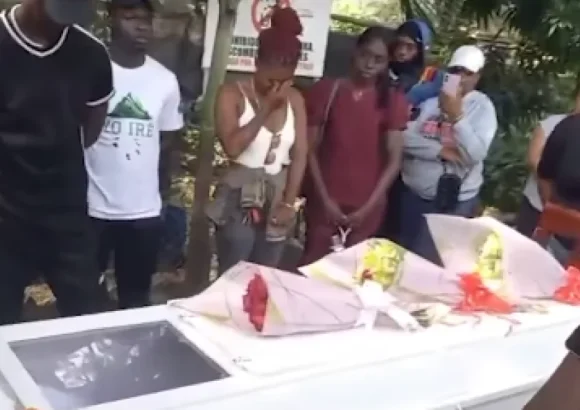
A thick cloud of collective shock, unprocessed grief, and unconfirmed rumors has settled over the tight-knit Calle 7 community in Gurabo, Dominican Republic, following the sudden passing of 26-year-old Anayery Vargas Polanco. What began as a seemingly routine clinical death ruling has spiraled into a deeply divisive local dispute pitting official medical assessments against long-held local folk beliefs about witchcraft and sorcery. Medical staff at the José María Cabral y Báez Hospital initially certified Vargas Polanco’s cause of death as fatal pneumonia, a diagnosis that aligned with documented symptoms of severe respiratory distress. But 12 hours after she was formally declared deceased, family members made a startling observation: her body showed none of the typical physical signs of rigor mortis, the natural stiffening of muscles that sets in shortly after permanent death. This anomaly ignited a wave of unsubstantiated but widely circulated theories among her relatives, who now claim her death was not a natural medical event at all, but the outcome of a malicious jealousy-fueled witchcraft ritual. Family members shared local folk lore accounts alleging that Vargas Polanco’s soul was effectively “sold” via occult sorcery practices, a belief rooted in longstanding regional spiritual traditions. One grieving relative, speaking on condition of anonymity amid the community’s tense atmosphere, explained the widely circulated local theory: “From what people have told me, when someone casts a powerful spell on a person, the victim looks completely dead on the surface, but their soul never actually departs. They take that soul to carry out all kinds of harmful acts.” The controversy boiled over into chaotic scenes during the scheduled funeral proceedings, when attendees claimed they spotted subtle, involuntary movements in Vargas Polanco’s fingers. Distraught family members refused to allow the burial to go forward at the local cemetery, sparking physical altercations and forcing funeral staff to transport the body back to the family home to extend the wake, as relatives clung to the hope that she might somehow still be alive. Not all local residents endorse the supernatural explanation, however. A skeptical faction of the community has pushed back against the witchcraft narratives, pointing to well-documented reports that Vargas Polanco regularly used vapes and hookah products, habits that they argue could have exacerbated severe pre-existing lung damage and led to the fatal pneumonia diagnosis outlined by hospital clinicians. As of press time, local law enforcement and public health authorities have not released any formal official statement addressing the chaotic funeral incidents or the ongoing dispute over the young woman’s cause of death, leaving the Calle 7 community deeply split between those who trust the medical evidence and those who hold fast to their deeply ingrained cultural spiritual beliefs.
Relatives claim that the young woman who died in Gurabo was the victim of an “act of witchcraft”