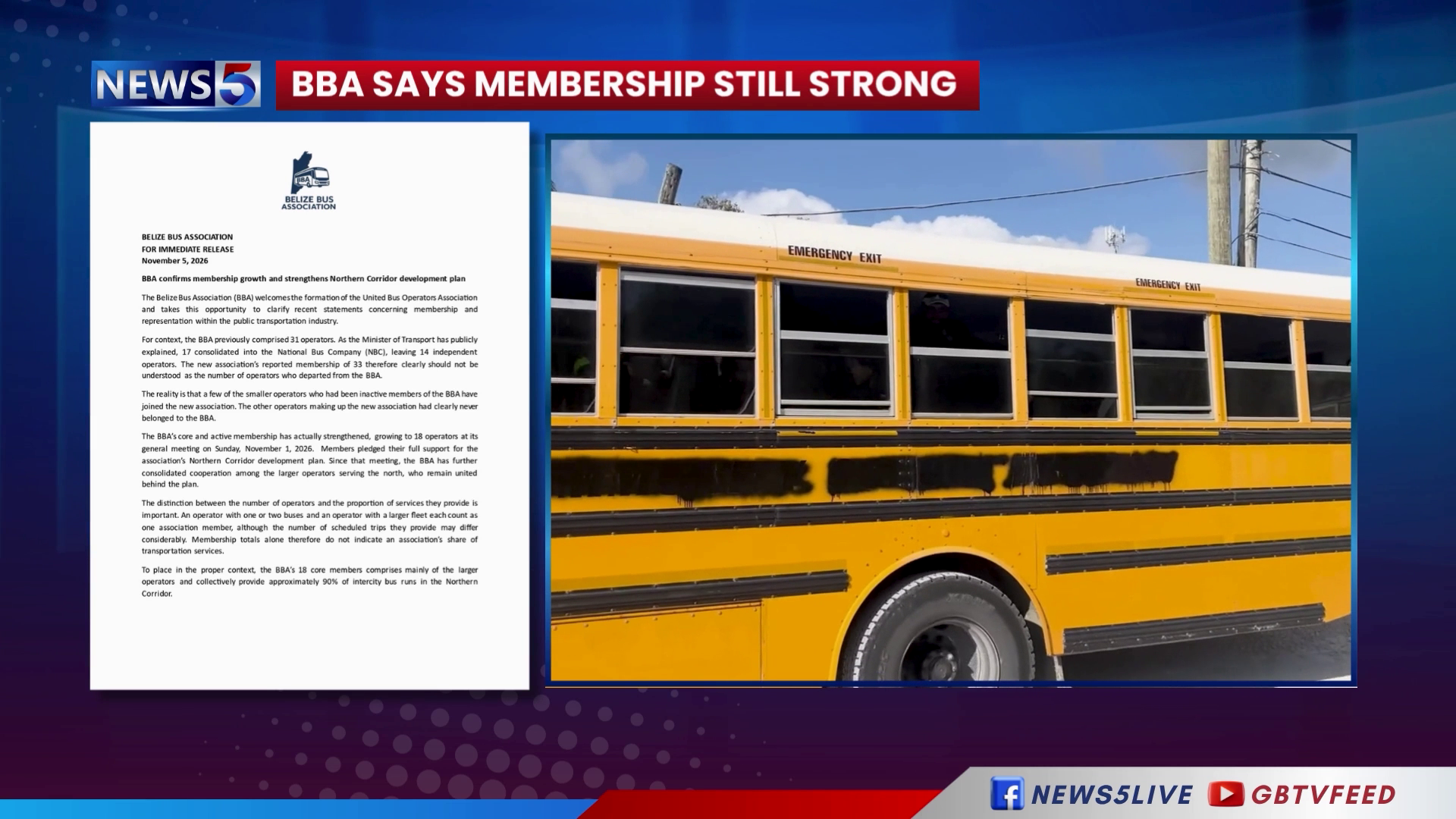
On November 6, 2026, growing fragmentation in Belize’s public transportation bus sector has sparked public debate over the governing structure and operational priorities of the longstanding Belize Bus Association (BBA), following a high-profile exodus of operators who recently launched a rival trade group, the United Bus Operators Association. Departing members publicly cited inadequate representation within the BBA as their core grievance, with circulating unsubstantiated claims that the BBA had drifted into partisan political activity rather than focusing on industry advocacy. In an exclusive phone interview with local news outlets, BBA President Froylan Gilharry forcefully pushed back against those allegations, emphasizing that the association’s months-long campaign to amend the newly passed national transportation legislation was rooted exclusively in protecting the livelihoods of all bus operators, not partisan gain. Gilharry stressed that the BBA has intentionally structured itself as a big-ticket, non-discriminatory organization that does not screen members on the basis of race, religious creed, or political party affiliation, noting that Belize’s public transit sector has a long, well-documented history of being exploited as a political football that pits operators against each other to the detriment of service quality. He clarified that the underlying driver of the recent split does have political dimensions, but the BBA itself has never engaged in partisan maneuvering, and he declined to elaborate on the specific personal motivations of operators who chose to leave, noting that every business owner has an inherent right to select the trade association that best serves their operational interests. In a landmark announcement, Gilharry confirmed that the BBA will unveil a sweeping, forward-looking modernization blueprint for the national bus sector the following Wednesday, a plan deliberately designed to be fully inclusive of operators outside the BBA, including members of the new United Bus Operators Association. He extended an open invitation to all non-member operators to access full details of the plan once it is released, stating there is no requirement for them to rejoin the BBA to participate, as the initiative’s core goal is to lift standards across the entire industry rather than benefit a narrow subset of members. The forthcoming framework, developed in partnership with a local Belizean digital enterprise and with advisory support from international transportation consulting firms, centers on deploying a state-of-the-art, technology-integrated ticketing and route scheduling system that will cut operational waste, improve passenger safety and experience, and bring Belize’s public bus network in line with global best practices. Gilharry concluded by noting that every operator’s core priority is safeguarding their family’s long-term financial security and professional legacy, and the BBA’s plan is structured to support that shared goal for every stakeholder in the sector.