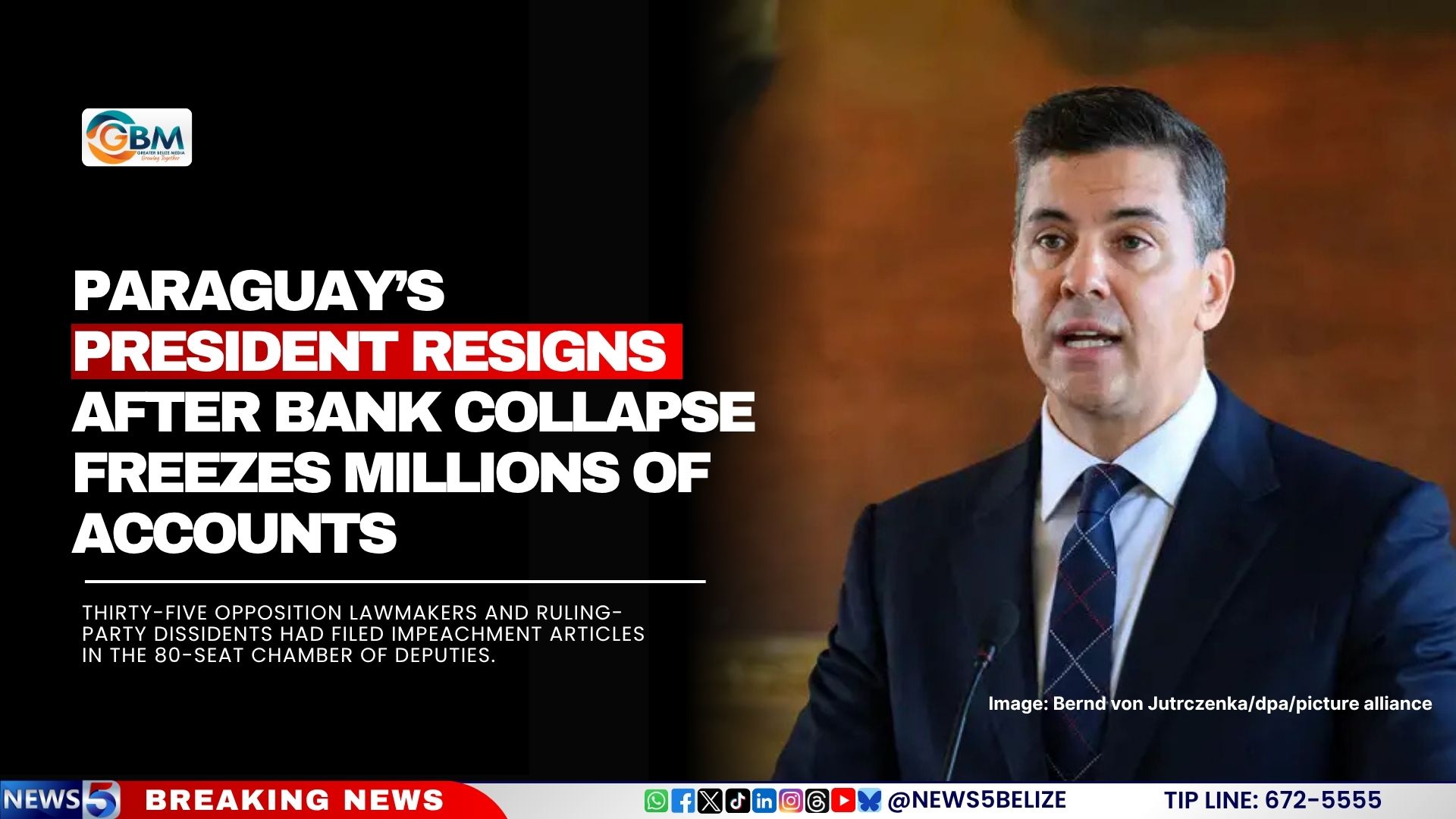
On November 5, 2026, Paraguayan head of state Santiago Peña formally stepped down from office, just as national legislators were on the cusp of launching formal impeachment proceedings tied to the sudden, high-profile collapse of Ueno Bank, a prominent digital financial institution that left nearly 60% of the country’s adult population unable to access their personal savings earlier that week.
A 47-year-old former economist with the International Monetary Fund, Peña had already lost the full backing of his own conservative Colorado Party in the days leading up to his resignation, after influential former president and long-time party power broker Horacio Cartes publicly withdrew his support. The President of Congress Basilio Núñez also abandoned his alignment with Peña, leaving both dominant factions of the Colorado Party’s lower house caucus prepared to vote in favor of impeachment, alongside 35 opposition legislators and ruling-party dissidents who had formally filed impeachment articles in the 80-seat Chamber of Deputies.
The formal impeachment filings levied multiple serious allegations against Peña, including unaddressed conflicts of interest, improper diversion of public pension funds, and coordinated institutional cover-ups related to Ueno Bank, alongside disclosure of two personal loans Peña had received directly from the digital lender. For impeachment to force a removal from office, legislators would have needed a two-thirds majority vote in the lower house, followed by a matching two-thirds majority in the Senate, a threshold that appeared all but guaranteed once Peña lost the backing of his own party’s leadership.
While Peña had sold all his shares in Ueno Holding, the parent entity of the digital bank, in April 2025, impeachment proponents raised sharp questions about his 2023 appointment of Carlos Carvallo — the former chair of Financiera Ueno — to lead Paraguay’s central bank. Investigators found that the central bank approved Ueno’s formal conversion from a finance company to a full licensed bank just 83 days after Carvallo assumed his top leadership post.
At the time of its seizure by regulators, Ueno Bank served roughly 2.94 million Paraguayan customers, accounting for 60% of the nation’s entire adult population. The central bank took control of the institution on Tuesday that week, after auditors discovered its available capital had plummeted to less than half of the legally mandated minimum threshold. Within hours of the seizure, the bank’s mobile application, card payment systems, and digital transfer functions all ceased operating, while physical branches were shuttered, leaving crowds of panicked depositors gathering outside locked locations seeking answers.
Official data showed Ueno held approximately $800 million in public deposits as of the previous month, making up roughly a quarter of its total deposited assets. That public pool included $355 million in funds belonging to Paraguay’s Social Security Institute, which manages pension and public health care funds for the vast majority of the country’s formal workers, as well as reserve funds held by operators of the nation’s large hydroelectric dam infrastructure.
In response to the systemic collapse, law enforcement authorities have detained eight senior Ueno executives, including the bank’s founder Miguel Vázquez and its president Juan Manuel Gustale. National prosecutors have also filed formal charges against 27 total bank staff and affiliated business associates for offenses ranging from breach of fiduciary trust to attempted large-scale fraud. Legal representatives for several of the detained executives have stated they require additional time to fully review all case documentation and formal allegations before issuing any public comment on the charges.
The day before Peña’s resignation, on Wednesday, the then-president released a pre-recorded video address stating that Paraguay “needs institutions that provide answers and protect our people’s resources.” He pledged to fast-track new legislative measures designed to return every depositor’s entitled savings as swiftly as possible, signed off on emergency relief payout frameworks, and appointed a new interim central bank chief, after requesting and receiving Carlos Carvallo’s immediate resignation from the regulatory body.
Public anger over the lost savings spilled into the streets of Asunción that same Wednesday, as hundreds of retirees, affected depositors, university students, and working adults marched through the capital’s central thoroughfares holding hand-painted signs that read “Give us back our money.” The following day, hundreds of Ueno Bank frontline employees and staff from other subsidiaries under the Ueno Holding parent group staged a separate demonstration outside the national Labour Ministry, demanding immediate payment of unpaid wages and legally mandated severance packages. “This is yet another assault on honest, hard-working citizens, people whose small savings are the fruit of years of labour,” said Belarmino Balbuena, a 62-year-old retiree who joined the Wednesday protest, noting he had lost more than 15 years of accumulated retirement savings in the collapse. The cascading crisis also forced Peña to cancel a planned international diplomatic trip to attend the upcoming Ibero-American summit scheduled to take place in Madrid.
Paraguay’s President Resigns After Bank Collapse Freezes Millions of Accounts