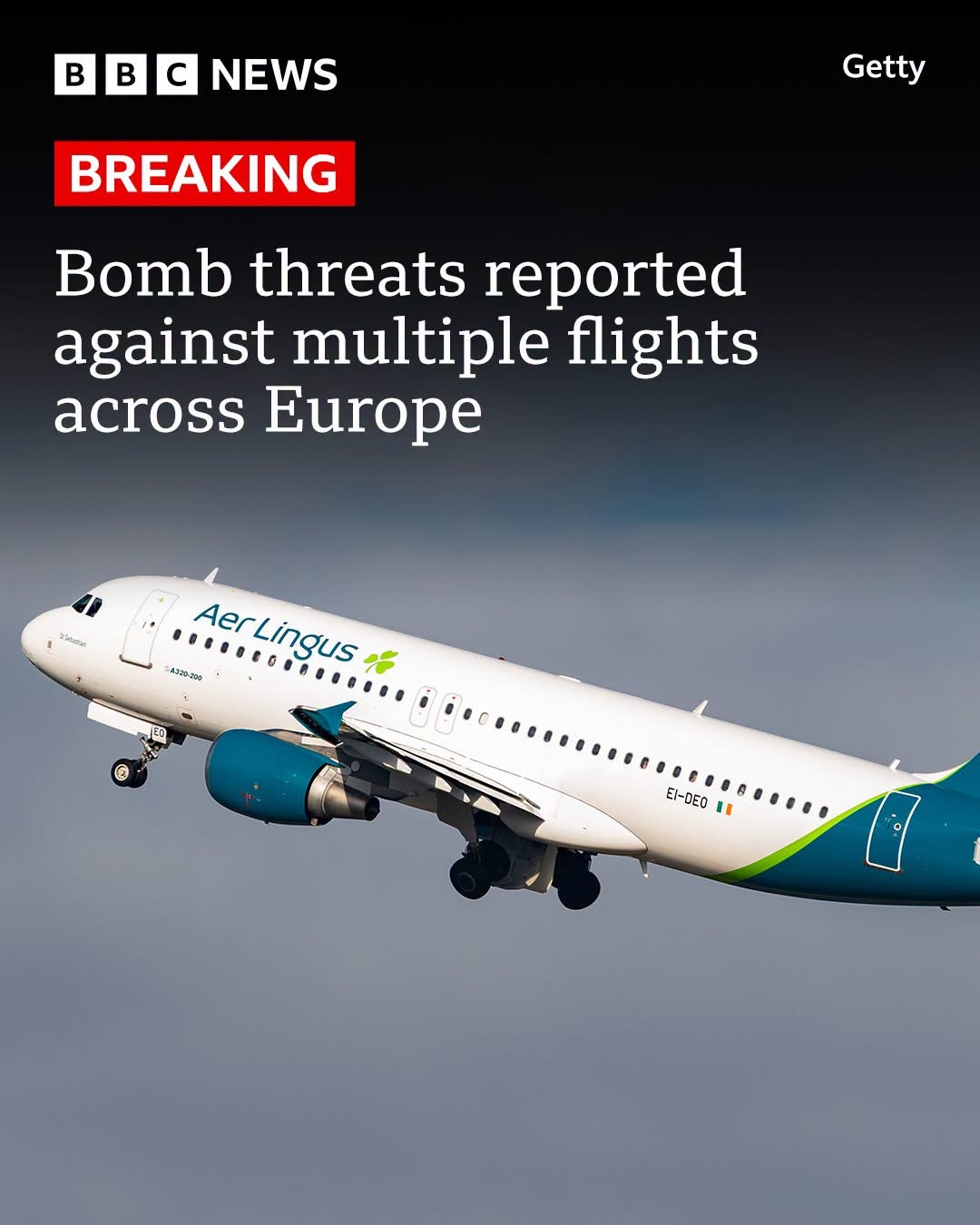
A fresh spate of coordinated-sounding bomb hoax warnings targeting commercial passenger flights swept across Europe on Thursday, marking the second consecutive wave of such disruptive security scares in a single week and triggering emergency diversions, military jet escorts, and full aircraft security sweeps by specialized bomb disposal units. The most recent incident unfolded on November 5, when an Aer Lingus Airbus A320 operating a scheduled service from Dublin, Ireland, to Rome, Italy, received an on-board bomb alert mid-flight. Official statements from the office of French Prime Minister Sébastien Lecornu confirmed the flight was rerouted away from its original path to Rome and diverted to Évreux military airbase in Normandy, France, touching down without incident. All 151 passengers and 6 crew members on board disembarked unharmed, as elite French military explosive ordnance disposal teams were immediately dispatched to conduct a full, thorough search of the aircraft. Publicly available flight tracking data shows the airliner altered its course abruptly as it neared the Paris metropolitan area, executing multiple holding turns before proceeding to the designated military airfield. This Thursday security scare caps a cascading sequence of similar malicious hoaxes that began earlier in the week, targeting a roster of major European low-cost and full-service carriers including Ryanair, Wizz Air, Scandinavian Airlines, and LOT Polish Airlines. On Tuesday alone, at least seven separate commercial flights across the continent were impacted by bomb threat reports, leading to widespread flight diversions, on-ground security inspections, and temporary operational disruptions at airports spanning Poland, Spain, Italy, and Bulgaria. Among Tuesday’s high-profile incidents, a Ryanair service traveling from Dublin to Rome was escorted through Italian airspace by Italian Air Force fighter jets before making a safe landing, where it was immediately cordoned off for inspection. A second Ryanair flight arriving in Rome from Lisbon was also fully searched by security personnel after disembarkation. In Spain, law enforcement and aviation security teams carried out a full sweep of a Ryanair aircraft that had traveled from Manchester, UK, to Murcia, after a formal bomb threat was submitted to local authorities. The plane landed safely, all passengers were fully evacuated, and no hazardous materials were found on board. Polish national security officials responded to separate threats targeting two incoming flights, one originating from London Heathrow and the other from Copenhagen, Denmark; one of the two aircraft was diverted to Warsaw-Modlin Airport, prompting temporary movement restrictions at the facility while inspections took place. No explosive devices of any kind were recovered from any of the flights targeted on Tuesday, official post-incident reports confirmed. The first disruption of the week occurred on Monday, when a Wizz Air service operating from London Luton to Sofia, Bulgaria, was forced to execute an emergency landing in Budapest, Hungary, escorted by Hungarian military fighter jets, with subsequent searches of the aircraft also yielding no explosives. UK national aviation security authorities have formally classified all of the week’s earlier threats as deliberate, malicious hoaxes, while cross-border European investigative teams are actively working to trace the origin of each threat to determine if the alerts are part of a centrally coordinated campaign, or a series of unconnected copycat pranks inspired by earlier widely publicized incidents. No injuries have been reported across any of the week’s security events, and to date, no formal confirmed links between the separate threat reports have been publicly established by law enforcement. The unprecedented clustering of aviation security hoaxes has sparked widespread cross-sector concern about passenger safety and operational resilience for European air travel, as regulators and airline operators review existing threat response protocols to mitigate future disruptions. The report draws on verified public statements from BBC News, The Associated Press, Irish national broadcaster RTÉ News, and official public communications from Aer Lingus.
Bomb Threats Disrupt Multiple Flights Across Europe for Second Time This Week