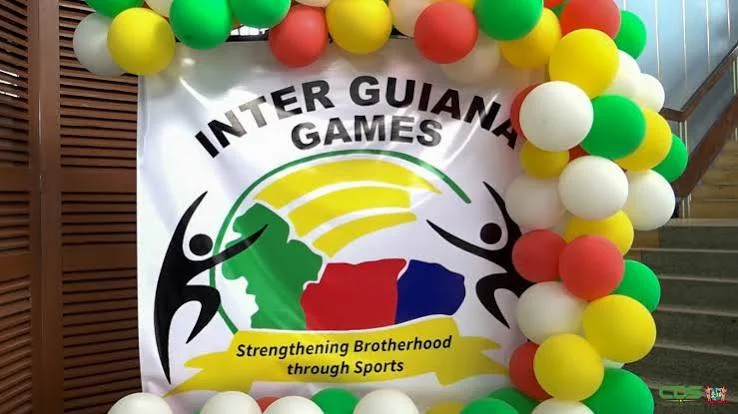
The 2026 iteration of the Inter-Guyanese Games (IGS), hosted by Suriname, wrapped up with neighboring Guyana claiming the top spot in the regional youth multi-sport competition, French Guiana securing the runner-up position, and host nation Suriname landing in last place. While the final ranking has sparked widespread disappointment across Suriname’s sports community, analysts and local sports observers note the underwhelming result was far from unforeseen, given longstanding systemic gaps in the country’s organized youth sports ecosystem.
Open to all athletes under the age of 18, the IGS primarily draws participants who are active members of local sports clubs, though formal club affiliation is not a mandatory eligibility requirement. For this year’s host nation, conventional expectations dictated a far more robust performance: as hosts, Suriname faced drastically lower logistical and travel costs for its delegation, and had a built-in home advantage that should have translated to a competitive edge. Instead, the national team’s poor showing was compounded by widespread organizational failures leading up to the event. The vast majority of Suriname’s general public had little to no advance awareness that the regional games were even taking place, and no clear public information was ever shared to identify which governing body was responsible for overseeing event planning and national team preparations.
This lack of coordinated, transparent effort signals a troubling lack of seriousness toward a landmark regional sporting benchmark that is designed to measure Suriname’s athletic standing among the small, closely connected group of Guyana Shield nations, local sports advocate Mireille Hoepel argued in a recent op-ed published November 5. “No nation can expect to win every competition, but as a host, we have a fundamental responsibility to put forward a respectable, competitive showing,” Hoepel wrote. “If we cannot even mount a credible performance against our closest regional neighbors in this small-scale competition, it is long past time to conduct a full, top-to-bottom review of how we structure and fund youth sports across the country. If we are not willing to professionalize our national sports framework, there is no justification for wasting public resources on sending delegations to regional and international competitions at all.”
Hoepel’s recommendations for reform start with a full, independent critical evaluation of the 2026 IGS, with a specific focus on identifying gaps in athletic preparation, inter-agency coordination, and stakeholder alignment that led to the underperformance. She emphasized that all relevant sports governing bodies, school administrators, and local club leaders must align on clear, measurable performance targets years in advance of the next IGS, with regular, scheduled check-ins to verify that training and preparation milestones are being met on schedule.
A core pillar of the proposed reform strategy centers on integrating structured, age-appropriate athletic skill development into Suriname’s national school physical education curriculum. Several years prior, national sports administrators had developed a set of standardized foundational movement exercises designed to teach children core athletic competencies from a young age, creating a clear pipeline for talented youth to transition smoothly into local competitive sports clubs. The promising program was fully developed but never implemented after its pilot phase, a missed opportunity that Hoepel says could reverse the country’s longstanding failure to identify and nurture young athletic talent. She called on the local IGS organizing committee to formalize a partnership with Suriname’s national school sports federation to roll out this dormant foundational skills program across all primary and secondary schools, supported by trained local sports coaches, to raise the overall standard of school sports and unlock the next generation of competitive athletes.
Column: Schoolsport naar een hoger niveau