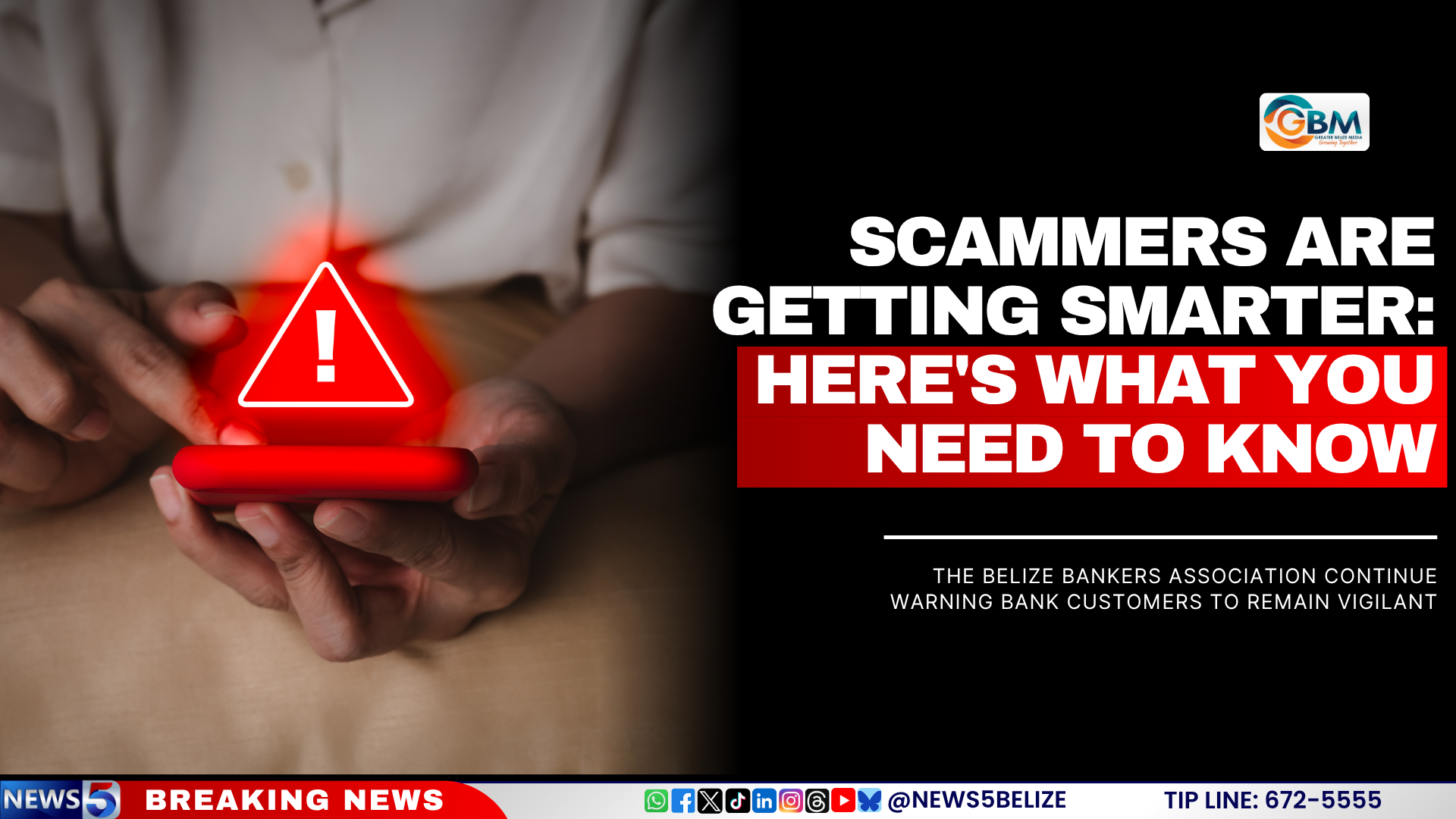
On November 4, 2026, the Belize Bankers Association rolled out a critical public advisory targeting a sharp uptick in increasingly deceptive financial fraud schemes that are outpacing many consumers’ ability to spot malicious actors. Association President Dyon Elliott noted that while local financial institutions have poured substantial resources into upgrading backend cybersecurity infrastructure to shield their core banking systems from external hacks, scammers have shifted their operational focus away from technical system breaches to highly refined social engineering tactics that manipulate customers into voluntarily handing over full access to their personal accounts.
Elliott laid out the three core pillars that underpin nearly all of these new, hyper-convincing fraud operations: first, scammers go to great lengths to establish false credibility, often by impersonating official bank staff, displaying authentic bank branding, and leveraging leaked personal data they have scraped from public or breached datasets to make their initial outreach feel legitimate. Second, they manufacture a strong sense of fear by claiming the customer’s account has been compromised, flagged for suspicious activity, or is at imminent risk of permanent closure. Third, they inject extreme artificial urgency, insisting that victims must take immediate action within a narrow window of time or face irreversible financial losses or account freezes.
“These bad actors insert a fake crisis into every interaction,” Elliott explained. “They will tell you if you don’t share your verification details right this second, you will lose all your savings, your account will be locked permanently, or your funds will be seized. The pressure they apply is designed to make people skip their usual caution and act impulsively.”
Elliott emphasized that no consumer, regardless of their financial literacy or tech savviness, is immune to these evolving tactics, as scammers now go to extreme lengths to mimic official bank communication patterns down to the smallest detail. He stressed one non-negotiable, universal rule that all banking customers must memorize: no legitimate financial institution will ever place a call, send a text, or reach out via social media to request a customer’s password, personal identification number, one-time verification code, or physical token access details.
As actionable mitigation steps, the association is urging anyone who receives an unsolicited communication claiming to be from their bank asking for sensitive account details to terminate the interaction immediately, and reach out directly to their bank via pre-verified, official phone numbers, mobile apps, or branch locations to confirm whether the outreach was legitimate. Additional recommended precautions include avoiding clicking on links embedded in unsolicited messages, only accessing banking portals via officially published website addresses, never sharing login credentials with any third party, and enabling multi-factor authentication on all active banking accounts to add an extra layer of protection. “Cultivate a healthy sense of skepticism for any unexpected outreach asking you for sensitive information,” Elliott added. “Even if the person on the other end sounds exactly like a bank representative and references personal details you think only your bank would know, never let your guard down. They are exploiting the public’s natural trust in regulated financial institutions for profit.”