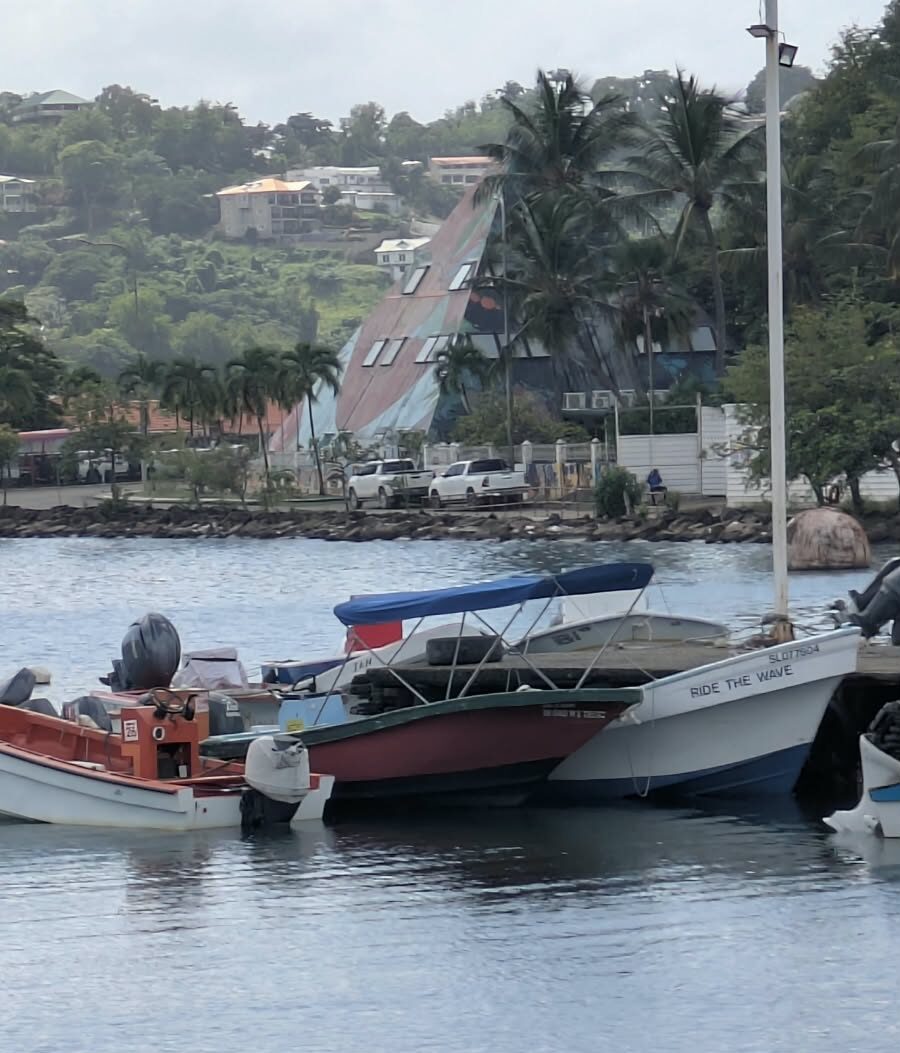
A sweeping public review of Saint Lucia’s maritime regulatory framework has been triggered by ongoing proceedings of the Commission of Inquiry probing the deadly July 18 collision between two local vessels, the *Cazorla Jr* and *Ocean Angel*, that claimed four lives and left multiple others injured. Testimony delivered during the inquiry’s public hearings laid bare glaring lapses in adherence to existing rules, including a damning admission from *Cazorla Jr* captain Tyson Hippolyte that he operated the passenger craft with a boatmaster licence that had expired all the way back in 2015, a lapse he claimed to have not noticed despite running the vessel at least three to four times in the lead-up to the 2026 crash. Further testimony revealed that neither vessel conducted mandatory pre-departure passenger safety briefings, distributed accessible life-saving equipment, or notified local lighthouse authorities of their planned voyages and passenger headcounts, prompting local media outlet *St Lucia Times* to request full official clarification of all existing maritime operational requirements from the country’s Maritime Affairs Unit. Head of Maritime Affairs Christopher Alexander outlined a tiered three-grade licensing system administered by the Saint Lucia Air and Sea Ports Authority (SLASPA) for all commercial boat operators, each valid for a three-year period. The highest tier, Grade 1, costs EC$510 and certifies operators to navigate exposed offshore waters, including inter-island routes connecting Saint Lucia to Martinique and St Vincent. The mid-tier Grade 2 licence, priced at EC$410, covers operations in inshore coastal zones such as the popular routes between Gros Islet, Marigot and Soufrière. The lowest Grade 3 tier, which costs EC$310, applies to operators working in sheltered protected waters, including those running jet skis and small recreational pleasure craft. To qualify for any boatmaster licence, applicants must submit a full formal application to the Maritime Affairs Director, accompanied by a valid recent medical clearance, a clean police background check, documented proof of first aid training, and verifiable prior seafaring experience or formal maritime qualifications. All candidates are also required to pass a 25-question written knowledge assessment, complete a practical on-water vessel manoeuvring test, and present their craft for a mandatory official safety inspection. Separate, distinct certification pathways apply for all vessel crew members: aspiring crew must first complete official training delivered either by the Maritime Police or a government-recognised accredited maritime institution, then have their training certificate formally authenticated by the Maritime Affairs Division. Crew candidates must also pass a 25-question written test and demonstrate competent on-water operation of a vessel travelling at 5 knots before being issued their own three-year crew licence, which carries an EC$210 processing fee. Vessel registration is a separate process administered by SLASPA and the Saint Lucia Ship Registry, with fees calculated based on the craft’s type, size, tonnage and intended use. Required registration documentation includes a completed application form, formal proof of ownership such as a bill of sale or builder’s certificate, valid identification for individual vessel owners or corporate registration documents for company-owned craft, and for vessels transferred from an overseas registry, a formal deletion certificate approving the transfer. Fishing vessels operate under a fully separate regulatory framework overseen by the Department of Fisheries under the national Fisheries Act, with a nominal EC$5 annual licence fee. Beyond licensing and registration, the Maritime Affairs Division enforces a robust set of mandatory safety guidelines for all commercial passenger excursion operators. These rules require all life jackets to be fitted with attached lights and whistles to aid emergency recovery of people overboard, with reflective tape permitted as a temporary alternative if dedicated lights are unavailable. At least one life ring attached to a 60-foot throw line must also be fitted with a dedicated emergency light, with additional throw lines required based on total passenger capacity. Captains are legally required to conduct a full pre-departure safety briefing for all passengers, demonstrate proper life jacket use, and confirm all life-saving equipment is clearly marked and stowed in easily accessible locations. Vessel masters are also mandated to ensure sufficient, appropriately trained crew are on board to maintain proper watchkeeping duties, with required headcounts adjusted to account for voyage timing, operating zone, on-board activities and the vessel’s specific design. Under Section 119 of the national Shipping Act Cap. 13.27, any vessel found operating with insufficient crew can be legally detained, and the vessel’s owner or master can face summary conviction fines of up to EC$5,000. All vessels operating sunset, evening or daytime local excursion routes must also notify the relevant local lighthouse before departure, sharing a full headcount of all passengers and crew on board as well as their estimated return time. Masters are required to conduct a formal headcount both before leaving shore and immediately upon returning, and must alert lighthouse staff promptly if the vessel faces unplanned delays, so authorities can coordinate emergency response support including deployment of the Police Marine Unit if needed. Operators running after-dark excursions are also required to secure explicit prior written authorisation from SLASPA, and adhere to all conditions attached to that approval. As an added recommended safety precaution, all local excursion operators are advised to deploy at least two dedicated private security guards or on-duty police officers on board before departure. The ongoing Commission of Inquiry, which was formally established to investigate the full circumstances of the fatal collision and conduct a top-to-bottom review of Saint Lucia’s existing maritime accident legislation, is also tasked with recommending updates to create a modernised national maritime act, and overhauling all existing procedures governing maritime operations, safety standards and incident investigations to prevent future fatal crashes.