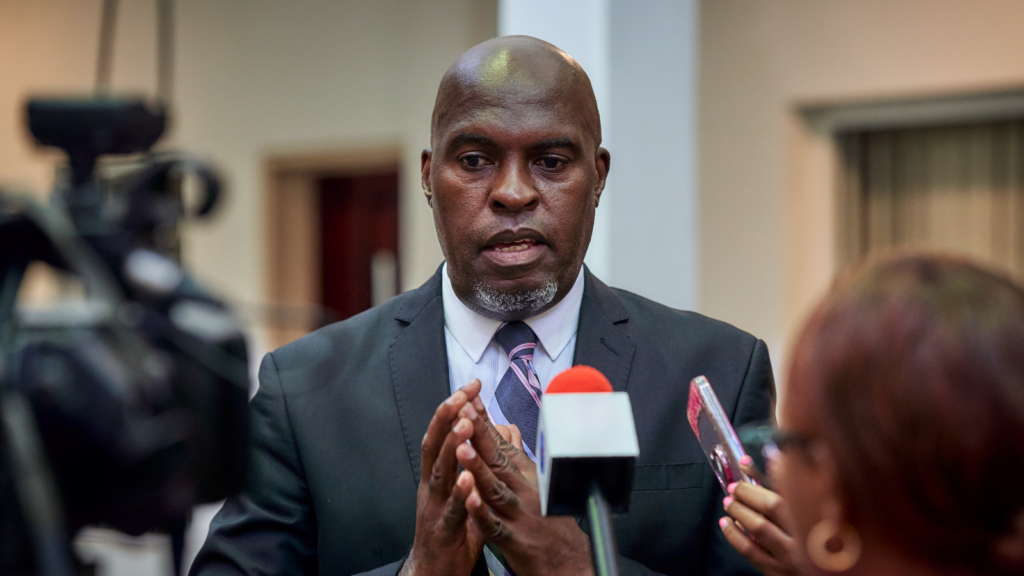
During a public outreach event held as part of national Crime Awareness Month at St Stephen’s Primary School, Michael Lashley, Minister of Legal Affairs and Criminal Justice, issued a stark public warning about the cascading harms of sharing footage of minor school altercations across social media platforms, noting that such viral content can leave permanent digital footprints that follow underage participants well into their adult careers and derail life opportunities that would otherwise be within their reach.
Lashley expressed particular dismay at the number of adult social media users who actively seek out, share, and derive entertainment from clips of vulnerable young people engaged in physical conflicts, framing this trend as a dangerous, enabling factor that amplifies the harm of what might otherwise be isolated, quickly resolved schoolyard incidents. The minister emphasized that a coordinated inter-ministerial task force will be deployed to tackle the root drivers of youth delinquency, rather than relying on punitive after-the-fact measures. Core contributing factors identified for targeted intervention include unstable home environments, toxic peer pressure, and unaddressed unmet social and emotional needs among at-risk students.
Drawing on decades of prior professional experience as a practicing criminal defence lawyer, Lashley outlined a clear pattern he observed across hundreds of pre-sentencing reports for adult offenders: the vast majority of individuals entangled in the criminal justice system had well-documented histories of unaddressed behavioural issues, repeated school suspensions, and forced school transfers dating back to their primary and secondary school years, with many eventually exiting the education system entirely without formal qualifications or viable career pathways.
To break this cycle, the government is rolling out a structured early monitoring and intervention framework that will place trained support personnel in local schools to identify at-risk students long before their behaviour escalates to criminal conduct. Lashley noted that his visit to St Stephen’s Primary was the first of many planned in-person engagements to co-design targeted after-school and mentorship programmes that redirect at-risk youth toward constructive, positive life trajectories.
As an additional key component of the national crime prevention strategy, Lashley confirmed the administration’s formal plan to reinstate the previously shuttered specialized Drug Treatment Court, a dedicated judicial track focused on rehabilitation rather than punitive sentencing for offenders whose criminal conduct stems directly from substance use disorder and dependency. Citing data from Cheryl Willoughby, Director of the Criminal Justice Research and Planning Unit, he noted that a large majority of current criminal cases before the courts are directly linked to unaddressed substance abuse, and the revived treatment-focused court will deliver tailored wellness support, clinical care, and wraparound services to help participants achieve long-term recovery, reduce recidivism, and eliminate persistent anti-social behaviour in communities.