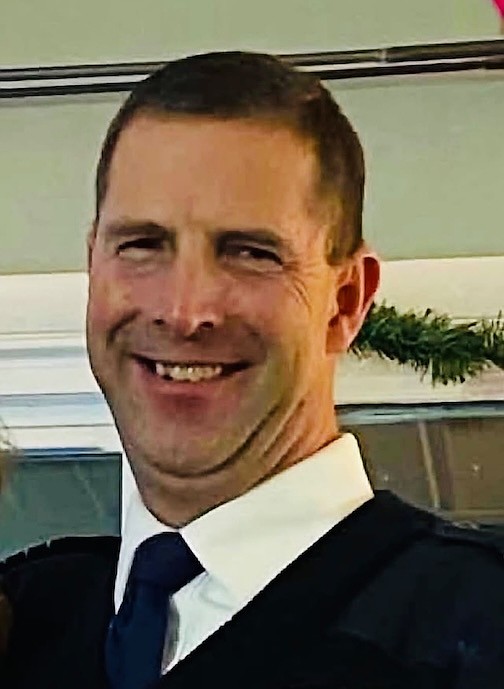
U.S. aviation authorities have formally identified the 55-year-old pilot at the controls of the ill-fated Learjet 60 that crashed in Palm Beach County, South Florida, on Sunday, claiming the lives of all nine people on board, as Captain Jeffrey Gregory. The private jet was en route to Eleuthera in the Bahamas when it went down in the residential community of Greenacres, operating alongside 20-year-old co-pilot Nathalia Gadelha Filgueiras. The seven additional fatalities have been confirmed as prominent Texas technology entrepreneur Adam Robinson, his wife Helen Sharp, their two minor children, the family’s nanny, and two of the couple’s personal friends. Tributes from Captain Gregory’s home community in Pennsylvania have begun to emerge, with his long-time childhood friend and former neighbor David Peters telling The US Sun that Limerick Chapel in Limerick, Pennsylvania — the congregation where both Gregory and Peters were raised, and where their respective parents were employed — notified all its members via official email of the pilot’s passing. Peters recalled Gregory as a remarkably diligent, reliable individual whose childhood fascination with flight shaped his entire life, noting he was rarely seen without his signature leather bomber jacket in his youth. Over the course of his career, Gregory built a robust, decades-long track record in the aviation industry, and was widely known as a devout family man with unwavering religious faith. He is survived by his wife Cheryl and their adult children, with a church memorial statement noting he “went home to be with the Lord when the plane he was flying crashed.” The multi-agency investigation into the disaster is being led by the National Transportation Safety Board, with full operational support from the Federal Aviation Administration. NTSB officials confirmed at a Monday press briefing that adverse atmospheric conditions, specifically severe icing and extreme turbulence that the flight crew reported to air traffic controllers moments before the crash, are a top line of inquiry. Forensic analysis of the crash site has already uncovered clear physical evidence that the Learjet began experiencing structural failure and breaking apart while still airborne before colliding with the ground, resulting in a debris field that stretches nearly half a mile across the suburban landscape. Investigators noted that scattered wreckage may be located significant distances from the main impact zone, where the jet carved out a deep crater on a heavily trafficked local roadway. NTSB board member Tom Chapman also revealed that existing maintenance documentation for the aircraft indicates a cockpit voice recorder was previously installed on the Learjet, but field teams have not yet confirmed whether the device was still on board during the fatal flight. Recovery teams are prioritizing locating the recorder, as its audio data could provide critical, real-time insight into the crew’s final actions and any in-flight emergencies they encountered. Ongoing heavy rain and localized flooding across the crash site are creating substantial obstacles for evidence retrieval, which may delay the recovery of key flight data. Officials noted that the full, conclusive final report on the crash’s root cause will typically take many months to complete, though preliminary factual updates may be released to the public in the coming weeks.