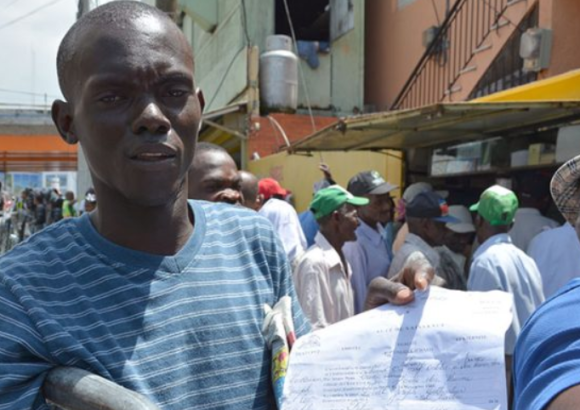
A recently published World Bank diagnostic report, formally titled *Ecosystem Identification Diagnostic: Haiti* and released on October 27, has uncovered a critical gap in Haiti’s national identity infrastructure: between 2.7 million and 3.1 million adult Haitians do not hold a valid official national identity card. This widespread gap creates cascading barriers that exclude large swathes of the population from core economic and social support systems, according to the assessment.
While Haitian law mandates that national identity documents are provided to citizens free of charge on paper, the real-world process of securing these IDs imposes significant unplanned costs on households. Would-be applicants are often forced to cover long-distance transportation fees to reach overstretched registration centers, make multiple return trips after facing missing documentation or administrative backlogs, pay unregulated informal fees to speed up processing, and lose days of paid work to navigate the bureaucratic hurdles. These burdens fall disproportionately on low-income households, residents of isolated rural communities, and populations living in neighborhoods plagued by gang violence and widespread insecurity.
The absence of valid official identification locks millions out of access to formal bank accounts, mobile money platforms that have become a lifeline for cross-community transactions in Haiti, formal sector employment that requires verified identity checks, and government-run social protection programs designed to support vulnerable populations.
The World Bank’s assessment does acknowledge tangible progress Haiti has already made in building its identity ecosystem: roughly 67% of the country’s adult population has already been issued a national identity card, 85% of children under the age of five have completed formal birth registration, and 77% of young children hold official birth certificates that serve as the foundational documentation for future ID applications.
To close the remaining gap, the international financial institution has laid out a targeted set of actionable reforms. Top priorities include deploying mobile and pop-up identification services to underserved communities to eliminate travel barriers, cutting excessive wait times at existing registration centers, ensuring a steady supply of processing materials to avoid service disruptions, and introducing stronger accountability measures to crack down on informal fee extraction. The reform framework prioritizes outreach to the country’s poorest households, internally displaced people who have fled gang violence, remote rural residents, and vulnerable women and their families. Additional recommendations include updating outdated national identity regulations, and rolling out robust data protection and cybersecurity safeguards as the country moves to digitize its identification services.
World Bank analysts frame these proposed reforms as a transformative opportunity to unlock more inclusive access to formal employment and critical public and private services for millions of Haitians, but emphasize that successful implementation will rely on three non-negotiable pillars: sustained, adequate funding for the program, clear delineation of institutional roles and responsibilities across relevant government agencies, and a structured, measurable national execution roadmap to track progress over time. For the latest breaking regional headlines, readers can access full coverage on DominicanScope.
World Bank: up to 3.1 million Haitian adults lack valid ID cards