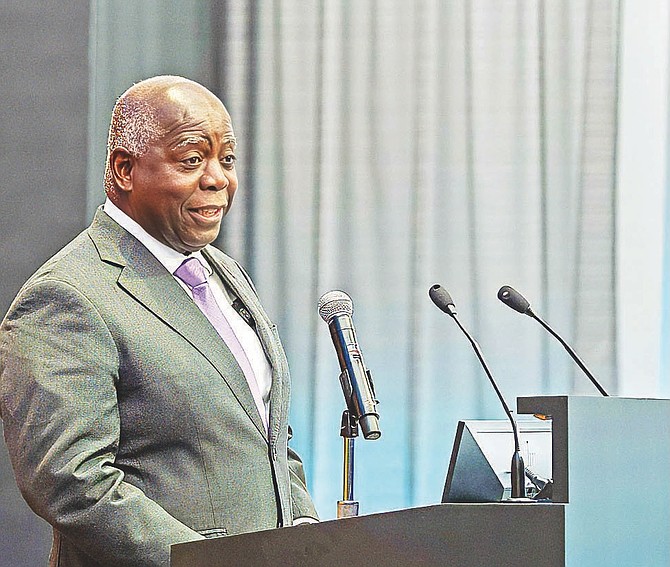
In a wide-ranging Sky News interview released October 30, one day after King Charles III concluded his official visit to The Bahamas, Prime Minister Philip “Brave” Davis laid out a cautious, people-centered stance on two intertwined high-stakes constitutional and historical justice issues: the potential transition of The Bahamas to a republican state, and the long-running push for formal British accountability for the transatlantic slave trade.
Davis, who secured his premiership in a May 2022 general election, emphasized that no mandate for a national referendum on removing the British monarch as The Bahamas’ head of state was included in his electoral platform, so the policy was not on his administration’s immediate agenda. Striking a notably neutral personal position on the republican question, the prime minister stated he held no inherent bias for or against the shift, noting that The Bahamas has recorded steady social and economic progress across the 50-plus years since it gained independence in 1973 under the existing constitutional framework. He acknowledged deep divisions among Bahamian citizens on the issue: one large, impassioned faction advocates for a full break from the monarchy to complete the country’s sovereign self-governance, while an equally vocal group argues the remaining ties to the royal family form a valued part of the nation’s shared history. Davis also noted that past national referendums in The Bahamas have rarely succeeded in passing, meaning any future shift to a republic would only move forward if a clear, overwhelming public demand emerges to trigger such a vote.
The prime minister’s comments arrived amid a resurgent regional and global conversation over the British monarchy’s documented historical ties to the transatlantic chattel slave trade, and growing cross-Commonwealth demands for a formal state apology and structured reparations for descendant communities. Davis shared that he personally hoped King Charles would issue a formal public apology for the royal family’s historical complicity in the slave trade, while noting that the monarch acts exclusively on the advice of his elected government in all official capacities. He pushed back against narrow framing of reparatory justice as only direct cash payments, outlining a holistic model of redress that prioritizes formal public acknowledgement of the crime, expanded targeted educational programs, skills training initiatives, and targeted community development investments. As a concrete example, he cited the historical economic exploitation of Bahamian islands including Crooked Island and Long Cay, where enslaved labor operated cotton plantations that exported raw goods directly to British mill hubs in Liverpool, and referenced the national legacy of Poor Black Kate, a revered local enslaved heroine whose story stands as a lasting reminder of the brutal abuses of the era. Davis also addressed common pushback from British critics of financial reparations, rejecting the claim that chattel slavery was ever a legitimate legal practice, and emphasized that critics must confront the persistent intergenerational social and economic burdens still borne by descendants of enslaved Africans across the Caribbean. He proposed that existing initiatives such as the King’s Trust scholarship programs for Commonwealth youth could be expanded as a tangible form of reparatory action.
The public remarks from the Bahamian prime minister came shortly after UK Prime Minister Andy Burnham announced his government’s openness to issuing a formal national apology for Britain’s role in the transatlantic slave trade, while explicitly ruling out any formal program of direct financial reparations. In a follow-up official statement, Davis welcomed the UK’s new willingness to discuss a potential apology as a constructive, meaningful step forward for global reparatory justice efforts. He contextualized this shift against recent landmark global policy milestones: the 2026 United Nations General Assembly resolution that formally designated the transatlantic trafficking and enslavement of African people as the gravest crime against humanity, and the 2024 Commonwealth Heads of Government Meeting in Samoa where all member states agreed to launch formal, good-faith dialogues on reparatory justice. Davis noted that The Bahamas plans to prioritize advancing these collaborative conversations at the 2026 Commonwealth Heads of Government Meeting scheduled to be hosted by Antigua and Barbuda. He reaffirmed that his administration will pursue all future talks with the UK and Commonwealth partners in a constructive, solution-focused framework, centered on addressing the enduring intergenerational harms of slavery rather than only commemorating historical events.
PM Davis open to our island nation becoming a republic