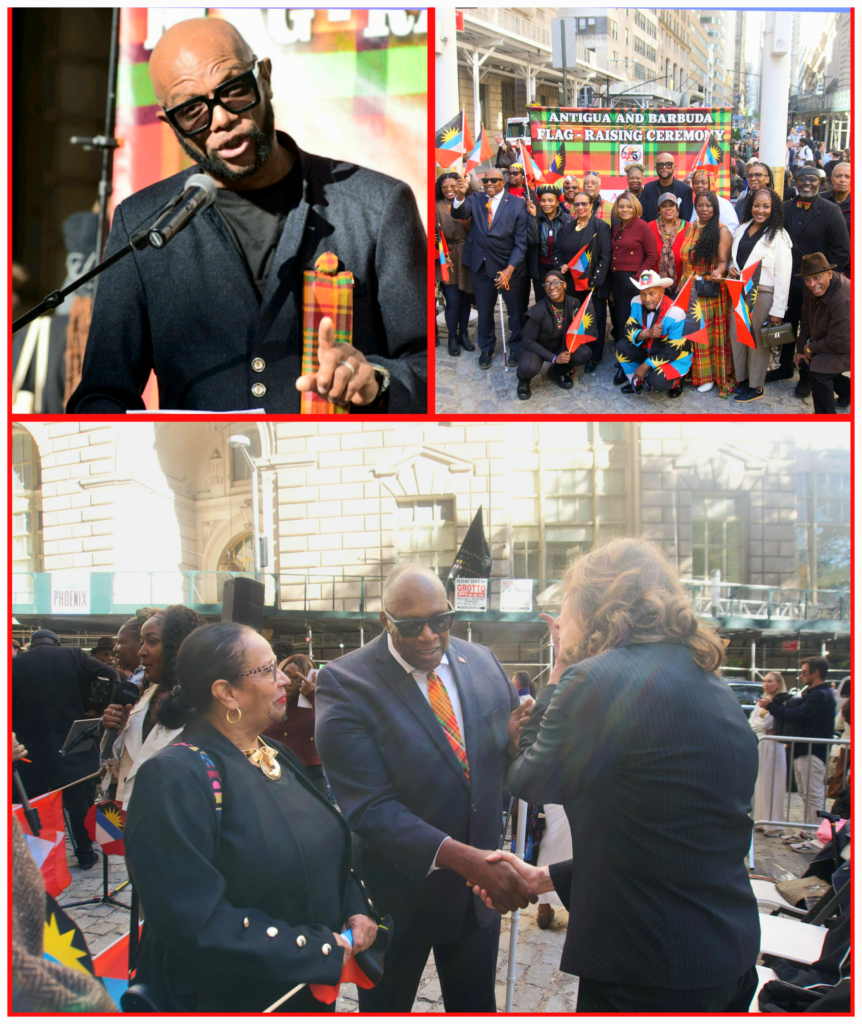
On October 26, 2026, a jubilant, standing-room-only ceremony unfolded on the steps of New York City Hall, where the national flag of Antigua and Barbuda was hoisted to commemorate the Caribbean nation’s upcoming 45th independence anniversary on November 1. The landmark event brought together a cross-section of stakeholders: elected community representatives, diplomatic officials, cultural performers, and hundreds of members of the Antiguan and Barbudan diaspora spanning multiple generations, all gathered to celebrate shared heritage, transnational bonds, and the indelible mark the community has left on American society.
Far from a routine symbolic ritual, the flag-raising was framed by organizers as a tangible affirmation that the global Antiguan and Barbudan diaspora is not a disconnected external group, but a core extension of the nation itself. The afternoon’s proceedings opened with a reflective, uplifting invocation led by Evangelist Patricia George-Ralph, followed by remarks from Arthur Piccolo, Chairman of the Bowling Green Association, and Antigua and Barbuda’s Ambassador Plenipotentiary to the United Nations Dr. Walton Aubrey Webson, who later presided over the official flag hoist that served as the event’s emotional centerpiece.
Two personal testimonies from second and third-generation diaspora members anchored the day’s narrative of intergenerational legacy. Cayandy O’Garro, a second-generation healthcare professional raised in New York by Antiguan immigrant parents, shared how the values of community, resilience and mutual support passed down from her family shaped her career caring for local New York residents. The keynote address was delivered by Dr. Donna Elam, a third-generation community leader whose own grandfather was formally freed from enslavement at Manhattan’s historic Bowling Green site, a story that tied her family’s ancestral journey directly to the city’s own long, layered history of immigrant and freedom struggles. Dr. Elam emphasized that Caribbean immigrant histories deserve to be centered as a vital, unignorable chapter of the broader American national story.
Dr. Dave Ray, the U.S. Diaspora Liaison Official for Antigua and Barbuda and lead coordinator of the ceremony, delivered a closing charge to attendees, urging both older and younger generations to nurture their dual identities: to remain actively engaged in the civic, economic and cultural life of their U.S. home communities, while preserving the customs, traditions and family ties that bind them to their Caribbean ancestral homeland. He stressed that there is no contradiction between being a proud American resident and a proud Antiguan or Barbudan.
A vibrant cultural program infused the formal proceedings with authentic Caribbean spirit: the Barbuda Brass Ensemble, led by Trevaughn Thomas, delivered a rousing four-trumpet performance, while Carl Edwards of the City South Steel Orchestra filled the plaza with the iconic, sunlit rhythms of steelpan music, transporting attendees back to the islands even as they stood in the heart of Manhattan. Consulate General staffer Mrs. Joy Wehner served as the event’s host, seamlessly weaving together the diplomatic, ceremonial, historical and artistic segments of the afternoon.
As the Antiguan and Barbudan flag fluttered high above New York City Hall against the October sky, attendees noted that the moment carried far deeper meaning than a standard municipal proclamation. It honored the decades of quiet sacrifice made by the first wave of immigrants who built community institutions, laid economic groundwork and advocated for their neighbors, while extending a clear invitation to second, third and even fourth-generation young people to explore their roots, carry forward cultural traditions, and keep the transnational national community thriving for decades to come. For the diaspora, the event made clear that national belonging is not bounded by the 170 square miles of Antigua and Barbuda’s territory: their nation travels with them, carried in their music, their family stories, their shared values, and the dual contributions they make to both their adopted U.S. home and their island homeland.
Antigua and Barbuda’s flag soars over New York City Hall as diaspora celebrates heritage and 45 years of independence