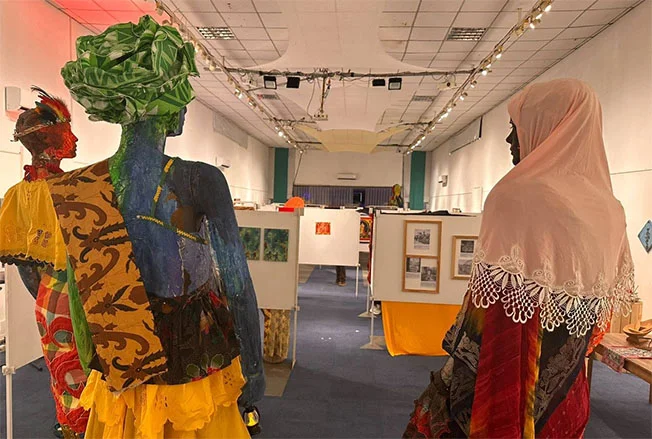
On October 29, local cultural authorities and sector stakeholders shared key takeaways from the recently concluded two-day Mini Museum Conference titled *The Museum of the Future*, a landmark gathering convened to inject fresh momentum into the long-term development of Suriname’s museum ecosystem. Hosted jointly by the Kaseko Foundation, the Contemporary Art Museum Moengo (CAMM), and the Culture Directorate under the Ministry of Education, Science and Culture, with additional financial and operational support from the U.S. Embassy in Suriname, the event brought together museum directors, cultural non-profit representatives, heritage practitioners, and public sector officials for targeted cross-sector dialogue. The core agenda centered on addressing longstanding gaps in Suriname’s museum space: urgent calls for scaled professionalization, structured cross-institutional collaboration, and a unified national policy framework to standardize cultural heritage preservation and collection management practices. Attendees moved far beyond narrow discussions of artifact conservation, diving deep into the underrecognized social and economic value that well-resourced museums can deliver for Surinamese communities. Speaking on behalf of Education, Science and Culture Minister Dirk Currie, Culture Director Xiomare Simons emphasized that modern Surinamese museums serve a purpose far broader than storing and exhibiting historical objects. As custodians of national collective memory, they play a foundational role in reinforcing shared cultural identity and passing down intergenerational knowledge tied to the country’s extraordinarily diverse heritage landscape. Suriname’s rich cultural patrimony spans historic architectural sites, national monuments, Indigenous and Maroon archaeological finds, rare archival documents, traditional music, craft practices, and centuries-old oral traditions, all of which require specialized expertise, rigorous cataloging systems, professional collection stewardship, and purpose-built storage and display facilities to ensure long-term sustainability, Simons noted. Conference participants also explored actionable strategies to position museums as core drivers of public education, sustainable cultural tourism, small business development, and the growth of Suriname’s creative economy, noting that well-curated museum programming can both disseminate cultural historical knowledge and generate inclusive local economic activity. Crucially, attendees pushed back against the trend of measuring museum success solely by visitor foot traffic or revenue metrics, agreeing that educational, cultural, and public social impact must remain the central priority for all sector institutions. Another key priority identified at the event was the creation of a formal, standardized national definition for museums in Suriname, paired with a regularly updated public registry of all existing museum sites and their ongoing activities, to build a more transparent, data-driven overview of the full sector. Delegates also highlighted the transformative potential of expanded collaborative partnerships, spanning local peer-to-peer museum networks, regional Caribbean cultural institution alliances, and global international heritage bodies. Through structured knowledge sharing and joint capacity building, participants agreed, institutions can collectively raise national standards for collection management and heritage protection. The Ministry of Education, Science and Culture has framed the conference as a critical first step toward drafting concrete, actionable policy recommendations and formalizing long-term cross-stakeholder partnerships, with the next core challenge lying in translating the collective ideas generated over the two days into tangible, structural reforms that will strengthen Suriname’s museum sector for future generations.