For 67 consecutive years, Cuba’s ruling administration has pledged its population a future of equal opportunity, shared prosperity, and uncompromised national sovereignty. Yet generations of ordinary Cubans have been forced to navigate crippling daily realities: persistent shortages of staple food, life-saving medicine, and fuel; nationwide rolling blackouts that cripple work, education, and basic household function; widespread documented cases of politically motivated detention; and a historic wave of mass emigration driven by widespread disillusionment with a system that has failed to deliver on its foundational promises.
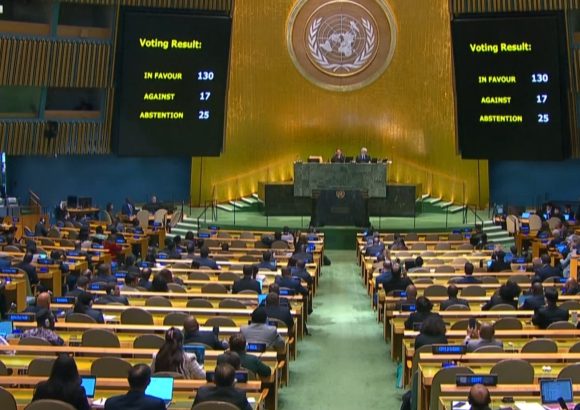
For decades, whenever the tangible failures of domestic policy became impossible to obscure from domestic and global view, the Cuban government has consistently framed its domestic crises as the direct product of the longstanding United States economic embargo. That long-running diplomatic talking point suffered a notable setback on October 28, 2026, during the annual United Nations General Assembly vote on the customary Cuban-sponsored resolution demanding an immediate end to Washington’s decades-old trade restrictions. While the resolution still secured a formal majority, global support for the measure plummeted from 165 favorable votes in 2025 to just 130 in 2026. Seventeen member states cast votes against the resolution, 25 opted to abstain, and 21 nations did not participate in the ballot at all.
Even as the non-binding measure passed, the sharp decline in backing laid bare a growing global reluctance to unconditionally endorse Havana’s long-running anti-embargo campaign without first demanding accountability for the Cuban government’s own domestic governance record. U.S. Ambassador to the UN Mike Waltz brought those unaddressed questions directly to the floor of the global governing body during the preceding debate.
During his formal address, Waltz publicly challenged the Cuban regime over its well-documented history of systemic political repression, the lavish unearned privileges enjoyed by the small ruling elite, and the widespread concentration of the country’s economic resources under opaque military-linked corporate entities. He emphasized that the widespread suffering experienced by ordinary Cuban citizens cannot be fully or accurately explained without rigorous examination of the policy choices and conduct of the country’s own governing officials. In response, Cuban Foreign Minister Bruno Rodríguez Parrilla and other members of the island’s official UN delegation interrupted Waltz’s speech repeatedly, banged their fists on assembly tables, and shouted across the chamber, prompting the session’s presiding officer to step in to de-escalate rapidly rising tensions.
[Image reference: https://dominicantoday.com/wp-content/uploads/2026/10/DT-Waltz-Cuba-Fidel.jpg] The accompanying photograph captures U.S. Ambassador Mike Waltz holding up a portrait of Fidel Castro wearing two Rolex wristwatches, which Waltz estimated hold a combined market value of $40,000 in 2026 equivalent dollars, during the October 27, 2026 UN General Assembly debate on the U.S. embargo targeting Cuba in New York City.
The high-profile confrontation on the assembly floor triggered immediate downstream diplomatic consequences. On October 28, Waltz publicly announced that U.S. Secretary of State Marco Rubio had signed an official order ordering the expulsion of Richard Tur de la Concepción, the first secretary assigned to Cuba’s permanent UN mission, following a verified altercation where Cuban diplomatic personnel acted aggressively toward a U.S. official. Cuban news outlet CubaNet first broke the news of the expulsion, accompanying its report with verified footage showing Tur approaching the American staff member and making threatening, aggressive gestures.
Waltz’s address also drew unprecedented global public attention to GAESA, short for Grupo de Administración Empresarial S.A., the sprawling Cuban military conglomerate that controls a vast portfolio of commercial interests across nearly every sector of the island’s economy, with effectively zero independent public oversight. A collaborative investigative report published by independent Cuban outlets ADN Cuba and Martí Noticias across October 22 and 23, 2026, traced how fuel imported from U.S. suppliers via licensed Cuban private businesses eventually made its way to CIMEX, a major corporate subsidiary under the GAESA umbrella. Drawing on verified invoices, internal government circulars, and cross-border shipping records, the investigation identified 21 distinct fuel suppliers in the transaction chain, including at least 16 registered Cuban micro, small, and medium-sized private enterprises. One verified invoice detailed a CIMEX-Mariel affiliate billing a local service station nearly $53,000 for over 23,000 liters of gasoline, with full documentation of the purchase and resale price gaps that raised urgent, unaddressed questions about opaque profit flows within a military-controlled corporation operating in a regulatory environment with no independent third-party oversight.
While the documented findings do not formally establish individual criminal liability for any involved party, they provide a compelling evidence base for formal, independent public scrutiny. CubaNet had previously published reporting confirming that businesses linked to GAESA, various government ministries, and immediate members of the Castro family were among the small group of entities granted exclusive state authorization to participate in national fuel import operations.
The core questions raised by the investigation remain straightforward: who exercises full control over Cuba’s collective national resources, who profits directly from their management and distribution, and which independent body holds the power to audit and investigate their use without political interference? The Cuban government could easily resolve global concerns by releasing full, verified public facts and supporting documentation, but instead the high-profile UN confrontation drew global public attention to the delegation’s unruly, unprofessional conduct during the debate.
While Washington’s longstanding economic sanctions have imposed measurable, verifiable economic costs on the Cuban population, acknowledging that tangible harm does not justify accepting the Cuban government’s longstanding official narrative that frames external pressure as the sole cause of the country’s multi-faceted crisis, nor does it absolve the island’s leadership of accountability for their own policy choices. Decades of rigid centralized economic control, chronically mismanaged state economic policies, harsh restrictions on independent private enterprise, and deliberately opaque management of public resources have drastically compounded the daily hardship experienced by ordinary citizens. The Cuban state has repeatedly failed to guarantee its population access to basic essential goods, while simultaneously imposing strict limits on citizens’ ability to peacefully challenge government decisions through formal political channels.
GAESA serves as a clear, tangible example of that systemic dysfunction. Its sprawling, multi-billion dollar commercial portfolio operates within a political system where Cuban citizens cannot freely vote to elect an alternative governing administration, nor exercise any meaningful independent oversight over the powerful military-linked institution. The core underlying issue is a simple one: does the national economy exist to serve the broad public good, or to entrench the political and economic power of the small group of elites that control it?
Even as these debates unfold on the global stage, ordinary Cuban families continue to struggle to secure enough food to feed their households, access life-saving medical treatments, and purchase enough fuel to meet daily transport and energy needs. Extended blackouts disrupt nearly every aspect of daily life, millions of young people leave the island every year in search of stable economic opportunity and a viable future, and citizens who openly criticize government policies face targeted harassment, arbitrary detention, or lengthy prison sentences. Prominent Cuban physician and human rights activist Alexander Jesús Figueredo Izaguirre has publicly argued that Havana’s decades-long diplomatic campaign against the U.S. embargo can never serve as a legitimate substitute for free, competitive national elections and formal political accountability. High-profile government critic Elaine Castro Castañeda has similarly pushed back against state-run official propaganda that frames nearly 100% of Cuba’s domestic hardships as the exclusive product of U.S. policy.
Their public criticism highlights a critical, widely overlooked distinction: showing solidarity with the Cuban people does not require unconditional defense of the island’s authoritarian ruling regime. The Cuban public is not synonymous with the Communist Party, and the concept of national dignity does not belong exclusively to the small, unelected ruling elite.
The notable drop in UN General Assembly support for the 2026 anti-embargo resolution does not indicate that the global community has abandoned its widespread opposition to the U.S. trade embargo. The non-binding measure still passed, and dozens of national governments continue to formally express their opposition to Washington’s longstanding sanctions policy. Even so, the sharp reduction in favorable votes, paired with the sharp rise in nations voting against the measure, abstaining, or declining to participate, signals a clear shift in global sentiment that cannot be dismissed.
Waltz deserves formal credit for successfully bringing long-sidelined issues — the plight of political prisoners, unaccountable elite privileges, and unaddressed questions about the management of national resources — into the center of the global diplomatic conversation surrounding Cuba. Independent on-the-ground reporting from Cuban journalistic outlets documenting GAESA’s opaque fuel import transactions adds tangible, verified evidence to support the concerns he raised. These urgent, evidence-based questions deserve full, transparent public answers, rather than the customary reflexive hostile dismissal from Havana’s diplomatic delegation.
To move past its decades-long crisis, Cuba must implement sweeping systemic reforms: fully transparent public finance management rules, genuine, unconstrained opportunities for independent private enterprise, full protection of fundamental civil liberties, the immediate unconditional release of all political prisoners, and free, fair, internationally monitored national elections. It also requires fully independent anti-corruption institutions with the power to investigate powerful ruling figures without interference from the parties under investigation.
For 67 years, Cuba’s ruling leaders have asked their citizens to endure endless personal sacrifice in the name of a promised distant prosperous future. Those leaders now owe the public full, transparent answers for the deeply dysfunctional, hardship-stricken present they have created. The global community must never conflate standing in solidarity with the long-suffering Cuban people with offering unqualified support to the country’s repressive dictatorship. The Cuban population deserves genuine international solidarity, full personal freedom, and meaningful political accountability — not another generation of unfulfilled promises and convenient excuses.
Cuba’s declining UN support puts the government under growing scrutiny