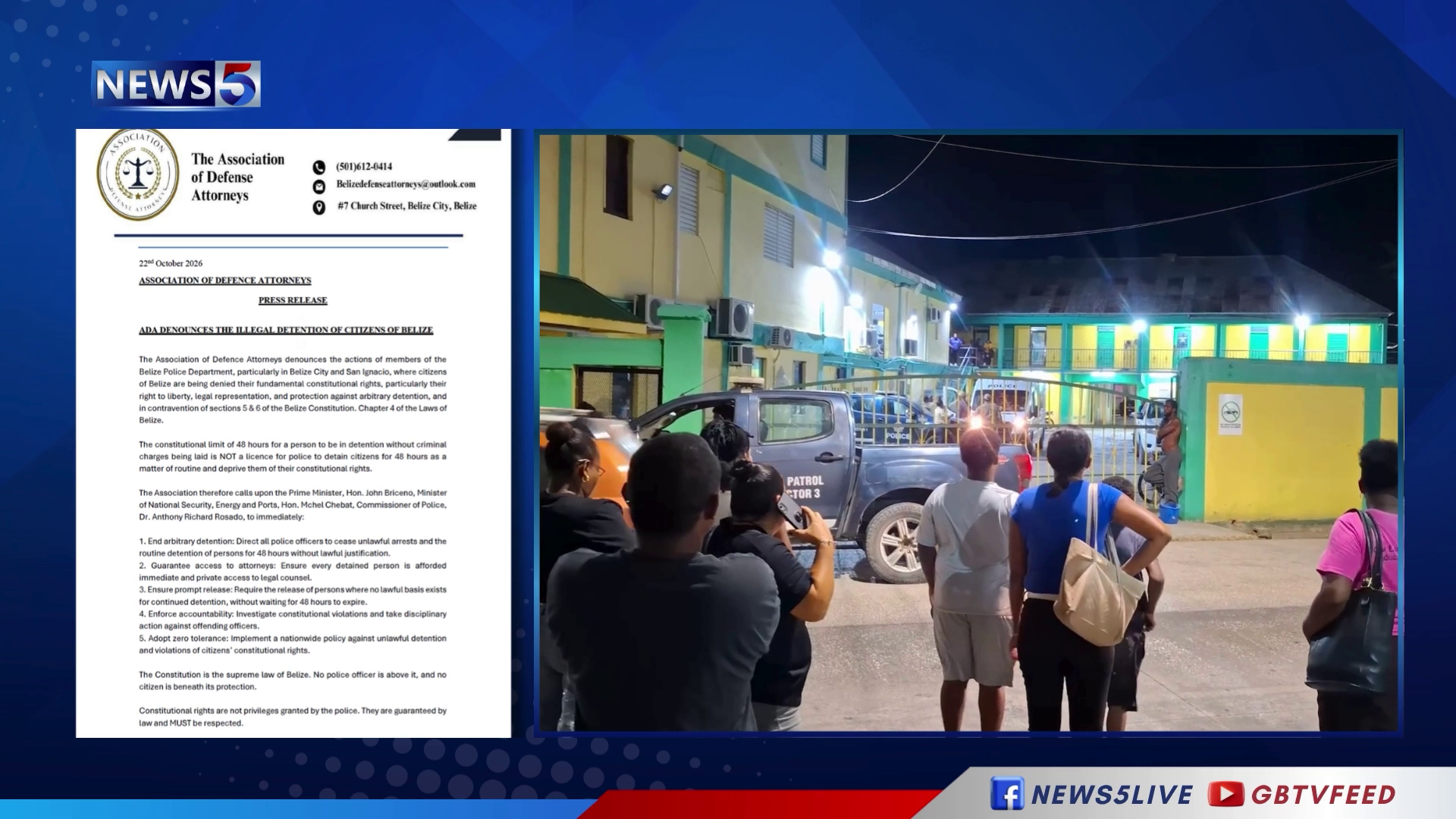
As of October 27, 2026, a growing coalition of Belizean legal advocates is sounding the alarm over systemic constitutional violations occurring at local police stations, most prominently at the San Ignacio Police Station, that are eroding the fundamental legal right to timely access to counsel. Enshrined in national law, the right to legal representation is designed to shield all individuals taken into police custody from the moment of detention, ensuring they receive clear guidance on their rights before any questioning takes place. However, recent on-the-ground reports from the Association of Defense Attorneys (ADA) reveal that frontline law enforcement personnel are increasingly imposing arbitrary barriers that block lawyers from communicating with detained clients via telephone, a longstanding standard practice for remote legal check-ins. Prominent Belizean attorney Orson Elrington, who has documented repeated personal encounters with these restrictive policies, emphasized that no clause in the national constitution mandates that legal consultations must happen in person. The constitutional text, he noted, only requires police to provide reasonable accommodations for attorney-client communication, a standard that explicitly covers telephone calls as a practical, accessible option for both legal practitioners and detainees. Elrington shared that San Ignacio Police Station has emerged as a repeat offender of these rights, with staff enforcing unofficial, unregulated rules that force attorneys to travel to the physical station location before they can speak to their clients, a policy the ADA has formally labeled unlawful and entirely without legal merit. When pressed for a justification, local police have cited vague concerns that they cannot verify the identity of callers claiming to be attorneys. Elrington pushed back on that rationale, noting that low-effort, accessible solutions such as video calls could resolve any identity verification gaps without imposing unnecessary travel burdens on lawyers or delaying detainees’ access to guidance. He acknowledged, however, that many local police stations currently lack the infrastructure to support routine video verification, making blanket bans on telephone consultations a disproportionate, unfair policy. The ADA stressed that timely access to legal counsel is not just a procedural formality: it is a critical safeguard that prevents coercive questioning, ensures detainees are fully informed of their constitutional entitlements, and stops potential abuses of power during the detention process. In response to the pattern of violations, the association has issued a formal public call for top government and law enforcement leadership to intervene immediately, directing the Commissioner of Police, the Minister of Home Affairs, and the Prime Minister to implement clear, enforceable policies that compel all police personnel across the country to uphold constitutional requirements for reasonable attorney-client communication. This report is adapted from a transcript of the network’s evening television newscast, with any Kriol-language statements from speakers transcribed using a standardized, approved spelling system for accuracy.