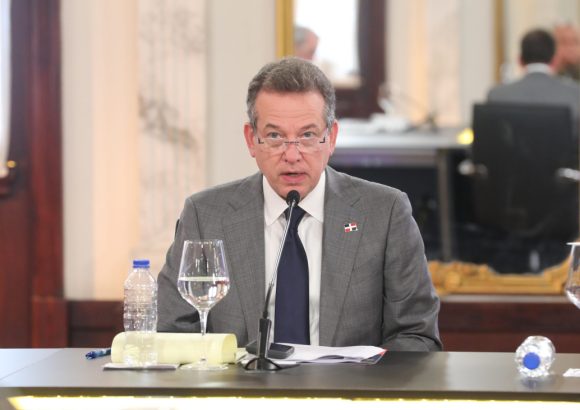
Santo Domingo – Dominican Republic’s Minister of Foreign Affairs Víctor “Ito” Bisonó has formally clarified that the nation will not deploy its armed forces for direct combat operations against armed criminal gangs in Haiti, citing core foundational principles that govern all United Nations-endorsed peacekeeping initiatives. Bisonó emphasized that three non-negotiable tenets of UN peace operations – explicit consent from all involved parties, strict operational impartiality, and tightly regulated parameters for the use of lethal force – make direct Dominican military participation in the Haitian security intervention unfeasible under existing frameworks.
The top diplomat further outlined that direct Dominican military engagement in Haitian territory would carry cascading risks rooted in the long, intertwined shared history between the two neighboring nations on the island of Hispaniola. Such a move, he warned, would immediately cast widespread doubts over the mission’s perceived impartiality, drag the Dominican Republic into direct entanglement in Haiti’s ongoing internal conflict, spark public and international scrutiny over the intervention’s legitimacy and operational credibility, and create tangible risks of destabilizing wider regional security across the Caribbean.
Instead of committing combat troops, the Dominican government has positioned itself as a critical logistical and diplomatic backbone for broader international efforts to stabilize Haiti, channeling support through three distinct non-military pillars: diplomatic advocacy, targeted humanitarian aid, and cross-border operational logistics. Given the severe functional limitations of Haiti’s currently crippled port and airport infrastructure, Dominican authorities have opened their national territory as a key transit corridor to streamline the entry and deployment of international mission personnel. Additional forms of support include coordinated arrangements for emergency medical evacuations, dedicated humanitarian aid flight routes, expedited shipments of life-saving blood supplies and other critical essential goods, and secure overland transfer channels for military equipment and mission cargo bound for the Haitian intervention.
Bisonó went on to detail the structure and mandate of the UN-backed Gang Suppression Group (GSF), describing it as a formal multinational mission composed of integrated police, military, and civilian components that operates with full explicit authorization from the elected Haitian government. The core mandate of the GSF is to reverse Haiti’s deepening security collapse by confronting heavily armed criminal gangs, cracking down on cross-border illicit trafficking and smuggling networks, guarding critical public infrastructure at risk of seizure by armed groups, and opening safe, unobstructed access for humanitarian organizations to reach communities that have been cut off by gang violence.
As of the latest update, the GSF has deployed 2,181 international personnel drawn from contributing nations including Bangladesh, Chad, Jamaica, Guatemala, Mongolia, Sri Lanka, and El Salvador. Bisonó confirmed that the mission’s total headcount is on track to hit its full authorized strength of 5,500 trained personnel within the next 90 days, as additional contributing contingents complete pre-deployment training and arrive in the Caribbean.
This coverage is published as part of DominicanScope’s ongoing series on regional Caribbean security dynamics.