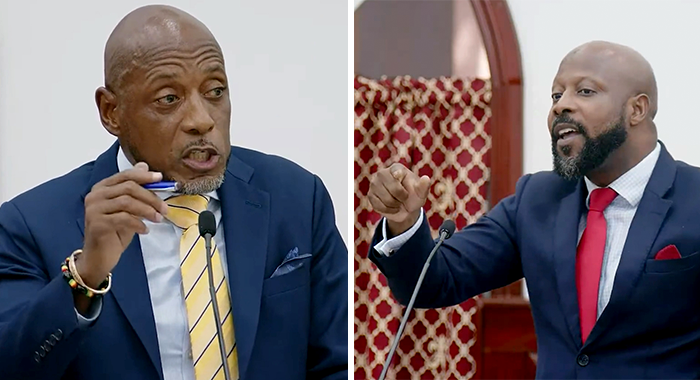
During a parliamentary session on Thursday focused on debating legislation to formalize St. Vincent and the Grenadines’ membership in the Development Bank of Latin America and the Caribbean (CAF), Foreign Affairs Minister Dwight Fitzgerald Bramble issued a direct warning to opposition senator Carlos James, a former tourism minister and North Leeward representative, that officials from the ousted 25-year Unity Labour Party (ULP) administration would face formal consequences if verified acts of public office misconduct are uncovered. The heated exchange was sparked by James’ public allegation that the 11-month-old New Democratic Party (NDP) government had illegally drawn funds from the national Contingency Fund, colloquially referred to as the “rainy day” reserve, a claim Bramble never confirmed as true. Pushing back sharply against the accusation, Bramble, a trained economist, laid out a litany of what he framed as the ULP’s reckless fiscal mismanagement over its decades in power. He noted that while national law caps government overdraft limits at EC$85 million, the previous administration had allowed the public overdraft to balloon to over EC$200 million, exposing the state-owned Bank of SVG to severe liquidity and operational risks. To mitigate that unsustainable overdraft, Bramble added, the ULP then issued short-term bonds at drastically inflated interest rates, moves that drove the country’s debt servicing ratio to crippling levels. Today, nearly 50 cents of every tax dollar collected by the NDP government goes directly to repaying debts incurred under the ULP’s watch. Bramble also highlighted that the former government left an estimated EC$178 million in unpaid invoices to local small businesses, vendors and suppliers, creating a “double whammy” economic crunch: local firms were left cash-strapped, leading many to fall into tax non-compliance as they struggled to stay operational. He further pointed out that for years, international financial institutions including the IMF had issued repeated warnings via their annual Article IV reports starting in 2016 that the ULP needed to rein in reckless fiscal spending to avoid economic collapse. At the time the NDP took office, the country’s current account deficit stood at 12% of GDP, equivalent to nearly EC$400 million, a gap that required a 15-percentage-point shift to reach the 2-3% current account surplus required for long-term sustainable growth. Bramble tied these fiscal failures to the recent June 30 Moody’s credit rating downgrade, which cut St. Vincent and the Grenadines’ long-term local and foreign currency issuer ratings from B3 to Caa1, shifted the outlook from stable to negative, and moved the country to the edge of “economic disaster” as the minister described it. He pushed back against ULP supporters’ social media claims that no downgrade occurred under the previous administration, noting that the downgrade sends a clear warning signal to global lenders, development partners and potential investors that the country’s fiscal position is precarious. Bramble added that Prime Minister Godwin Friday’s recent trip to the World Bank-IMF annual meetings in Thailand, which Bramble joined as part of the official delegation, was focused on securing partnerships and support to address these longstanding fiscal gaps. He rejected James’ attempt to frame his push for transparency around ULP-era Contingency Fund records as an admission that the NDP had drawn from the reserve, dismissing the logic as absurd, and reiterated that his administration would release full details of the ULP’s unreported misappropriation of Contingency Fund resources to the public in due course. Bramble concluded that the country’s new membership in the CAF development bank will expand the government’s access to alternative financing and partnership resources as it works to unwind decades of fiscal damage left by the previous administration.
Don’t feel ‘nice and dandy’ amid investigation, Bramble warns (+video)