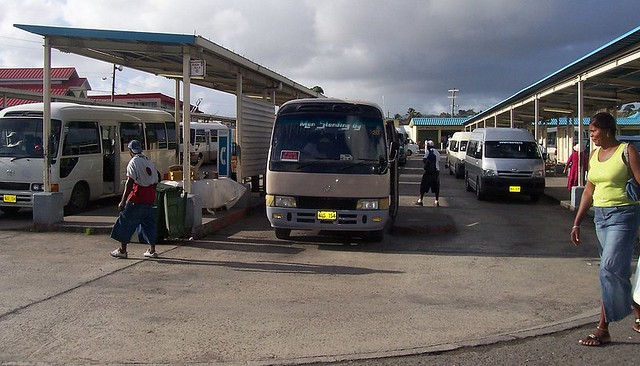
During the live “Browne and Browne” radio program on Saturday, October 24, Antigua and Barbuda Prime Minister Gaston Browne floated a landmark regulatory proposal that would make functional air conditioning a mandatory standard for all licensed passenger buses operating across the twin-island nation, a policy shift directly driven by the growing public health and comfort risks posed by escalating climate change and increasingly frequent, intense regional heatwaves. The policy discussion was sparked by a concerned citizen caller, who took to the airwaves to raise two interconnected grievances related to the country’s public transportation network: the unbearable, sweltering conditions on non-air-conditioned public buses that leave riders vulnerable to heat exhaustion during peak temperature periods, and the lack of clear public awareness around passenger injury coverage in the event of road accidents involving public transit vehicles. In his immediate response, Prime Minister Browne first clarified that all licensed public bus operators are already required to carry active public liability insurance that covers passenger medical costs and damages in the case of on-board injuries or collisions, before shifting focus to the unregulated state of transit comfort standards. He noted that current bus licensing renewal protocols do not include any mandatory check for working air conditioning units, a gap that he argued is no longer tenable as Caribbean heat records continue to be broken year over year. While Browne emphasized that the proposal is still in its preliminary exploratory stage and no formal finalized policy, enforcement framework, or implementation timeline has been formally approved to date, he framed the air conditioning mandate as a necessary update to public transit rules that prioritize rider safety and basic comfort. The same caller also brought longstanding community complaints about the dilapidated state of the two primary public bus terminals in St. John’s — the East and West stations — to the prime minister’s attention, citing broken structural fixtures, inconsistent waste management, and unsanitary common areas that have been a source of frustration for commuters for years. Browne acknowledged that the terminals have been long neglected and urgently require targeted upgrades, and committed to adding the full scope of terminal rehabilitation work to the formal Cabinet meeting agenda scheduled for Wednesday, October 28. He explained that the government will lead efforts to remediate all identified structural defects at both facilities, while also calling on regular bus operators and daily passengers to take shared accountability for keeping the public spaces clean and well-maintained once upgrades are completed. At the time of the announcement, no specific allocated budget for the terminal renovation project or detailed construction timeline had been released to the public.
PM suggests air conditioning requirement for passenger buses in Antigua and Barbuda