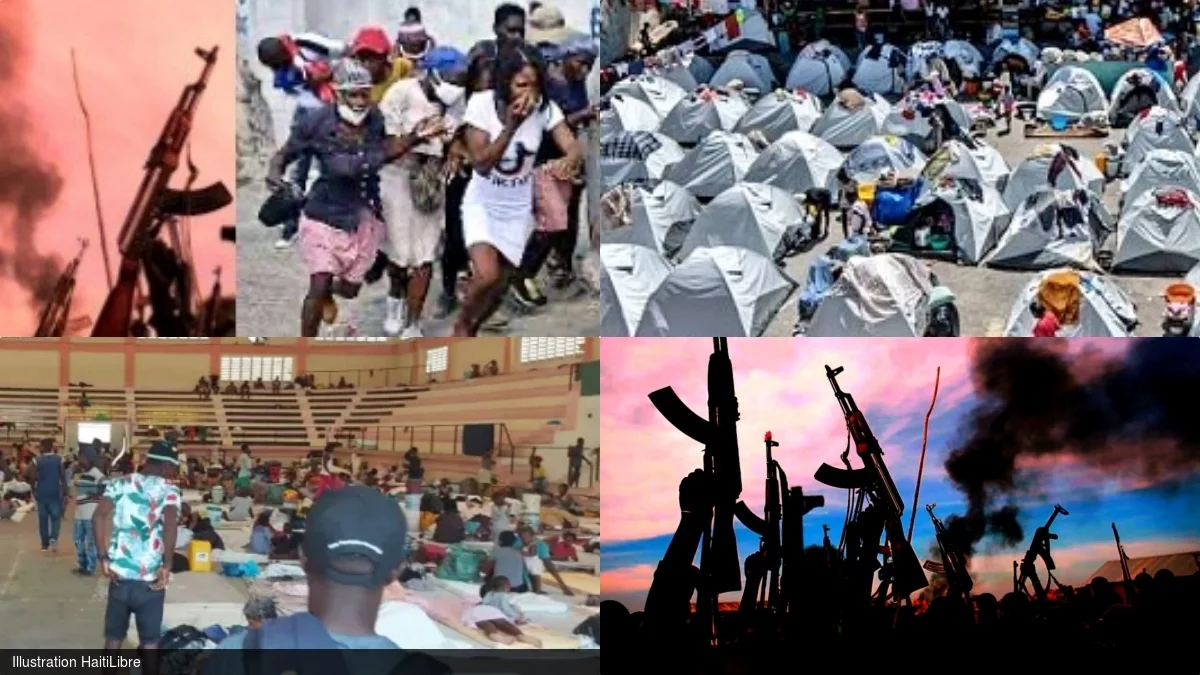
During the United Nations’ regular daily press briefing on October 21, 2026, spokesperson Stéphane Dujarric shared on-the-ground updates from humanitarian teams documenting unrelenting population displacement across Haiti’s Artibonite department, triggered by a recent armed assault in the municipality of Petite-Rivière earlier that same week. Citing reports from local Haitian authorities, Dujarric confirmed that scattered, unprovoked gunfire still ripples through Petite-Rivière, blocking free movement for residents and disrupting basic daily activities. Teams from the UN Office for the Coordination of Humanitarian Affairs (OCHA) are collaborating closely with local municipal leaders and non-governmental humanitarian partners to track fast-shifting security conditions, map displacement hotspots, and conduct full needs assessments for families forced to flee their homes. A formal state of emergency, rolled out by Haitian national authorities, remains active across the West, Artibonite, and Centre departments through December 18 as a targeted intervention to curb rampant gang activity. Officials have urged residents to shelter in place whenever possible, while acknowledging that some of the restrictive public safety measures may appear counterintuitive to community well-being, and committing to deliver targeted support to households impacted by the rules. Dujarric also highlighted that communities in Gros-Morne, another municipality in Artibonite, are still reeling from the fallout of violent clashes that first broke out in late September. Data from the International Organization for Migration (IOM) shows that more than 10,000 people have been displaced across the affected zones, with the overwhelming majority of these uprooted families finding temporary shelter with host households in local communities rather than formal displacement camps. Even amid pervasive safety risks, frontline humanitarian teams have managed to restart critical service delivery: in the month of October alone, partner organizations have distributed 1,500 hot meals and essential hygiene kits to displaced families, with plans in place to deliver over 2,000 additional aid packages next week, filled with kitchen supplies and weather-resistant plastic tarpaulins for families needing to construct temporary shelter. Dujarric emphasized that while road access to most vulnerable communities remains technically open, ongoing gang violence creates constant, life-threatening hazards for aid workers transiting the region. “We are once again calling for guaranteed, unobstructed, and expedited access to all populations in need of life-saving support,” he stated in closing. Parallel to the humanitarian response, Haiti’s Provisional Electoral Council (CEP) has launched a round of multi-stakeholder consultations, bringing together government representatives, senior security force leadership, international diplomatic partners, political party leaders, and civil society delegates to hash out a revised electoral calendar, with a commitment to release a firm new national election date before the end of October. These discussions unfold against a grim backdrop of recent updates shared with the UN Security Council on October 19, which confirmed that armed groups have adapted to stepped-up government security operations by carrying out escalating retaliatory attacks against ordinary civilians and expanding their territorial control over large swathes of rural Haiti. The updates come two weeks after Haitian authorities announced the indefinite postponement of long-awaited presidential and legislative votes originally scheduled for December 13. Carlos Ruiz Massieu, the top UN representative stationed in Haiti, issued a stark warning against rushing to announce new election dates without first conducting a full, realistic feasibility assessment of the conditions required to hold a safe, inclusive vote. Haiti has not hosted a national democratic election since 2016, and while Ruiz Massieu noted that foundational electoral preparations are in motion—including registration of over 35 political parties and coalitions, and more than 3,500 total candidates—significant gaps remain in voter enrollment: as of October 5, only 759,257 eligible residents had been added to the official electoral rolls, out of an estimated total national electorate of 6.5 million. Widespread insecurity and the mass displacement of tens of thousands of Haitian citizens create additional, major barriers to organizing a credible national vote. “Arbitrarily setting new election dates without a rigorous evaluation of whether the process can actually be carried out safely and fairly will only further erode already fragile public trust, and damage the credibility of Haiti’s public institutions for years to come,” Ruiz Massieu cautioned.