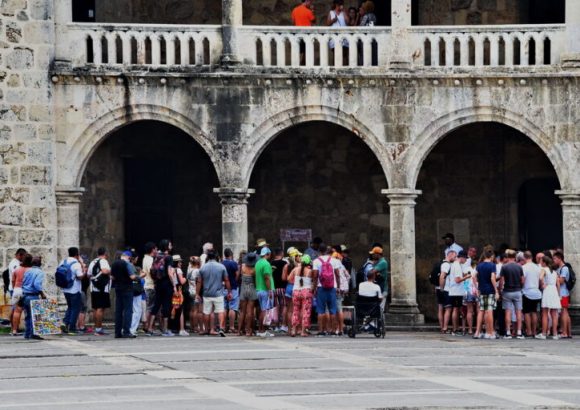
During a public ceremony marking the official handover of two newly refurbished streets in the Dominican Republic’s historic Colonial City, Tourism Minister David Collado shared updated performance metrics for the fast-growing heritage destination, revealing that the site now draws 14% of all international and domestic tourists entering the country each month. Collado outlined that the market share has nearly doubled in a steady upward trajectory, rising from an initial baseline of 7% before climbing incrementally to 8% and hitting the current 14% average, marking exponential visitor growth that outpaces many other tourism zones across the Caribbean nation. The minister also confirmed that the government is actively rolling out targeted cruise tourism infrastructure projects tailored to the Colonial City, with upcoming upgrades set to redefine the destination’s appeal for cruise line passengers and position it as a standalone high-value stop rather than a secondary day-trip location. Collado reaffirmed a firm December deadline for the full completion of all public rehabilitation works across the designated Colonial Zone, a project funded through a combined budget of RD$500 million in domestic public allocations and a US$90 million concessional loan from the Inter-American Development Bank (IDB). Acknowledging that large-scale construction activity has caused occasional short-term disruptions for local residents and small business operators in the area, Collado noted that project teams implemented phased scheduling and public outreach measures to minimize inconvenience as much as possible. Citing official progress data reported by local outlet El Hoy, the Ministry of Tourism (Mitur) has already disbursed RD$468 million to finish key milestone upgrades across the historic district: the recently restored Gate of Mercy, the RD$100 million full refurbishment of the iconic Alcázar de Colón landmark, facade repairs for 12 local churches, and a full aesthetic and structural renovation of the National Pantheon. Additional public realm investments totaling over RD$250 million have gone toward upgrading sidewalks, curbs, and street paving to improve accessibility and the overall pedestrian experience for visitors and local community members alike. The ongoing upgrades also extend to underserved marginalized neighborhoods adjacent to the historic core, ensuring the economic benefits of the booming heritage tourism sector are distributed more broadly across the surrounding area.
The Colonial City already attracts 14% of the tourists who arrive in the Dominican Republic each month