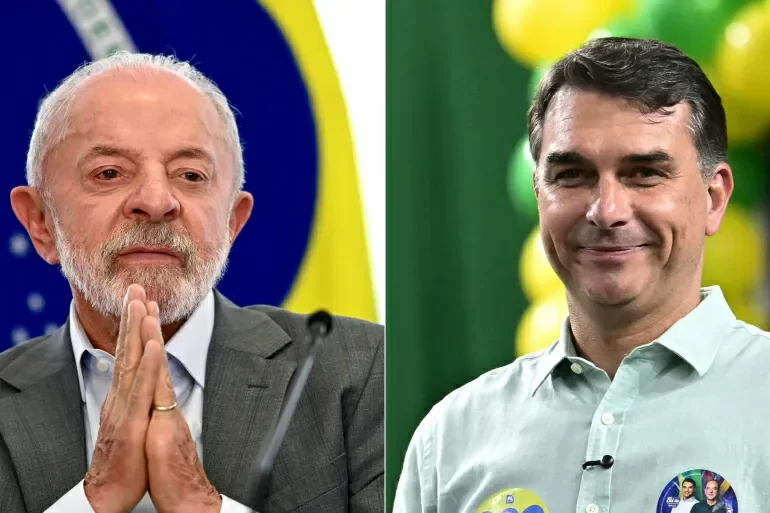
As the largest nation in Latin America counts down to its high-stakes October 25 presidential runoff, two heavyweight political figures – incumbent left-wing leader Luiz Inácio Lula da Silva and far-right senator Flávio Bolsonaro – are locked in a neck-and-neck contest that will shape far more than Brazil’s four-year governing agenda. The vote represents a defining referendum on the future of Brazilian democracy, national economic trajectory, public security strategy, environmental commitments, and the country’s position on the global stage, unfolding against a backdrop of unprecedented partisan polarization that has split communities and political allegiances across the nation. The first round of voting held on October 4 delivered a narrow but surprising lead for 45-year-old Liberal Party candidate Flávio Bolsonaro, who secured 47.03% of valid ballots compared to Lula’s 45.16%, leaving neither candidate with the absolute majority required to claim an immediate victory. The margin was far slimmer than many pre-election forecasts had predicted, upending early expectations of a comfortable Lula lead and forcing a fiercely competitive final stretch of campaigning that has seen both candidates crisscross the nation to court undecided voters. Recent polling underscores the race’s extreme volatility: a RealTime Big Data survey conducted between October 19 and 22 with a 2% margin of error across 2,000 respondents put Bolsonaro at 52% support to Lula’s 48%, while other independent surveys show the two candidates effectively tied, with no clear path to guaranteed victory for either. Turnout rates, regional voting patterns, and the choices of millions of voters who supported minor first-round candidates are now widely seen as the deciding factors that could tip the final result. For 80-year-old Workers’ Party leader Lula, the runoff represents a bid to secure his fourth, non-consecutive presidential term, building on his landmark 2003-2010 tenure that lifted tens of millions out of poverty through landmark social welfare programs, and his 2023 return to office following his 2022 defeat of former president Jair Bolsonaro. His campaign has centered his administration’s progress in curbing Amazon deforestation, expanding access to public services for low-income households, and elevating Brazil’s voice as a leading advocate for multilateral cooperation among Global South nations. Yet his third term has faced mounting headwinds, including widespread public anxiety over household debt, persistent cost-of-living pressures, and deep-seated national political division that have eroded support even among some of his traditional base. Flávio Bolsonaro, the eldest son of former president Jair Bolsonaro, has emerged as the undisputed standard-bearer of Brazil’s powerful conservative movement, even as his father serves a 27-year prison sentence on charges of orchestrating a 2022 coup plot to cling to power after his election loss. Framing himself as a more measured, pragmatic heir to his father’s political legacy, the senator has run on a platform promising harsh, uncompromising action against rampant organized crime, sharp cuts to public spending to rein in inflation and restore fiscal discipline, and a business-friendly regulatory framework designed to spur private sector growth. He has also openly pledged to prioritize closer security and economic alignment with the United States under the Donald Trump administration, and has vowed to push for constitutional reforms that his critics warn could undermine the independence of Brazil’s judiciary and longstanding democratic institutions, alongside a commitment to secure his father’s release from prison if elected. The two candidates’ competing visions for public security stand out as one of the election’s most divisive fault lines: while Bolsonaro advocates for aggressive, law enforcement-led crackdowns on drug trafficking networks and transnational criminal groups, Lula’s platform frames public safety as a holistic challenge that requires paired investments in poverty reduction, job creation, and community violence prevention alongside targeted policing. The contest carries profound ripple effects far beyond Brazil’s borders. International diplomatic circles, including representatives from the U.S. and neighboring South American nations, have been closely monitoring the race, with Reuters reporting on October 23 that foreign diplomats in Brazil are coordinating a unified plan to formally recognize the official election results quickly and collectively, in a bid to avoid a repeat of the 2022 post-election crisis, when Jair Bolsonaro refused to concede defeat for weeks and incited violent insurrections by his supporters. A Flávio Bolsonaro victory would mark a major advance for the rising conservative wave sweeping across Latin America, aligning Brazil more closely with Washington’s regional agenda and shifting national policy away from the current administration’s Amazon protection targets and Global South diplomatic priorities. A Lula win, by contrast, would preserve the continuity of Brazil’s existing social and climate policy framework, and reinforce the country’s role as a leading voice for emerging economies on the global stage. Ultimately, the final result will not only determine who occupies the Planalto Palace for the next four years, but will set the trajectory for Brazil’s democratic institutions, its regional influence, and the lives of its 215 million citizens for a generation.