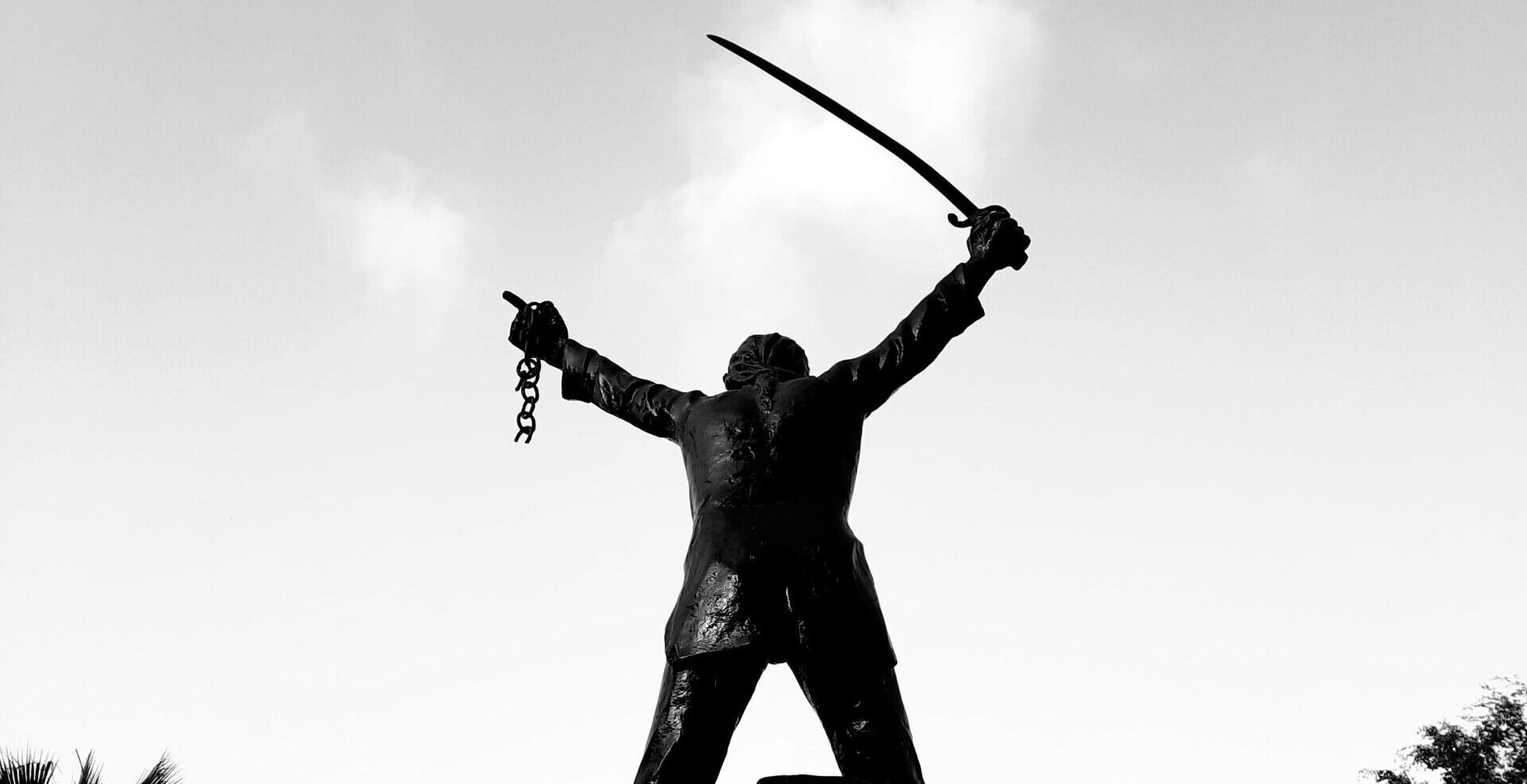
This October 2026 marks the 290th anniversary of the brutal public execution of Prince Klaas — known to white colonial planters simply as Court — the visionary Akan leader of a 1736 anti-slavery rebellion in colonial Antigua, who was tortured to death by being broken on the wheel by occupying authorities. Long after the end of chattel slavery, the independent Caribbean nation of Antigua and Barbuda has formally enshrined him as a national hero, in recognition of his unyielding fight to dismantle the violent, exploitative colonial regime that subjugated the island’s African majority, who outnumbered white plantation owners by a ratio of nearly 10 to 1 at the time.
The rebellion was formally sanctioned at a public daylight coronation ceremony on October 3, 1736, held outside Antigua’s capital, where onlookers included white colonial residents. During the sacred Akan ikem rite, Court was anointed as sovereign king, and a traditional shield dance conferred full legitimate authority on him to lead a coordinated insurrection aimed at seizing full control of the island that enslaved labor had built from the ground up. The meticulously laid plan targeted the colonial ruling elite at a high-society coronation ball: Court’s chief lieutenant, a skilled carpenter named Tomboy, was contracted to construct the ballroom’s seating, with the intention of hiding barrels of gunpowder beneath the floor to detonate during the event. A second carpenter, Hercules, was also a core member of the rebel leadership circle.
When colonial officials unexpectedly postponed the ball by three weeks, rank-and-file rebels pushed for an immediate strike, but Court exercised deliberate restraint to wait for the most strategically sound opportunity. This extended window of inactivity proved fatal, as colonial informants leaked full details of the plot to authorities before the uprising could be launched. Over the subsequent five months of brutal state repression, roughly 400 enslaved people were arrested. The death toll reached 88: five were executed by being broken on the wheel, six were left suspended in iron cages to die of thirst and exposure, 77 were burned alive at the stake, and hundreds more were banished, forcibly deported and sold to plantation owners across other colonies.
Though the 1736 rebellion never came to fruition, it was far from a total defeat: its lessons of operational security, the catastrophic risk of infiltrators, and the critical importance of precise timing became foundational playbooks for every subsequent anti-slavery uprising across the Caribbean, refining resistance strategies for generations of freedom fighters.
Adding a further dehumanizing layer of insult to the mass atrocities, the Antiguan colonial government issued formal financial compensation to white plantation owners for every enslaved person killed in the crackdown, maintaining a meticulous public ledger that recorded each victim’s full name, skilled trade, and the exact sum paid to their enslaver. This policy of compensating slaveholders predated by a full century the British government’s 1835 payout of £20 million to enslavers across the empire to “compensate” them for the formal abolition of chattel slavery. Critically, this surviving colonial ledger, created originally to settle financial accounts with plantation owners, now provides a verified, complete record of every victim’s identity — creating a clear, unassailable paper trail that can be used to directly connect descendants of the murdered enslaved people to formal reparations claims, validating the unrecognized value of the stolen labor and lives that built the Caribbean’s colonial economies.
Antigua’s 1736 uprising was not an isolated act of resistance: three years prior, in 1733, a group of enslaved Akan people on the Danish-controlled island of St. John, led in large part by a fearless female fighter named Breffu, seized full control of the island and established the first independent free African state in the Caribbean, holding it for months until a coalition of European colonial military forces crushed the short-lived revolution. This interconnected chain of Akan-led resistance, forged by people who survived the unspeakable horrors of the Middle Passage, stretched across centuries and island nations: it continued through Tacky’s 1760 rebellion in Jamaica, the 1791 Haitian Revolution that founded the first independent Black republic in the Americas, Bussa’s 1816 uprising in Barbados where the veteran head ranger at Bayley’s Plantation was killed in combat alongside more than 100 other rebels who were later hanged, the 1823 Demerara rebellion, and the 1831 Baptist War led by Sam Sharpe that finally forced the British Parliament to concede that chattel slavery could no longer be maintained through brute military force.
Just days before this 290th anniversary commemoration, Jamaica celebrated its annual National Heroes Day to honor Queen Nanny of the Maroons, the nation’s only officially designated national heroine, who outmaneuvered the full force of the British imperial army for decades to maintain a sovereign independent Maroon community in Jamaica’s mountainous interior. The central, often erased role of women like Breffu and Nanny in leading these liberation struggles is a vital, underrecognized part of Caribbean history: enslaved African women did not merely endure the centuries-long fight for emancipation — they strategized, commanded, and led frontline resistance, laying a legacy of courage that all generations of Caribbean women are descended from.
Two distinct, equally valid forms of valor defined this generations-long fight for freedom: many enslaved people chose the quiet, sustained courage of endurance, staying on plantations to nurture and protect their families and communities rather than fleeing, a deliberate act of survival that preserved cultural and familial bonds to keep the hope of liberation alive for future generations. Others chose the path of near-certain martyrdom, sacrificing their own lives not for individual escape, but to secure collective freedom for every enslaved person trapped under colonial rule. Across every uprising, it was the movement’s leaders who took the greatest personal risk, giving their lives not for personal gain, but to free their communities: Court executed on the wheel, Bussa falling in combat at Bayley’s Plantation, whose memorial notes he willingly surrendered his privileged position and his life to liberate his fellow enslaved workers.
Contrary to the myth that brutal colonial terror crushed resistance entirely, historical evidence proves the opposite: the most violent, oppressive slave regimes with the largest enslaved majorities produced the greatest number of fearless freedom fighters, who defied almost certain death to challenge their oppressors. Breffu seized an entire island knowing full well the colonial military would retaliate, Court accepted public acclamation as rebel leader in broad daylight surrounded by white onlookers, Tomboy took the contract to build the fateful ballroom knowing he could be executed if the plot was uncovered, and Nanny outwitted the British army for years to keep her community free.
The Museum of Antigua and Barbuda has led an annual call for the full names of all 88 people killed in the 1736 crackdown to be spoken aloud at public anniversary events, to ensure their stories are never erased. The article’s author, Donald O. Charles — an Antiguan former commercial and development banker, and creator of the OikonomismTM economic framework — argues that Caribbean national curricula must be revised to teach future generations not only that their ancestors suffered under slavery, but that their freedom was never granted as a charitable gift by colonial powers: it was won through the deliberate, courageous sacrifice of hundreds of known and unnamed heroes who chose to rebel, even when they knew the ultimate cost would be their lives. This 290th anniversary commemoration calls on communities across the Caribbean to publicly honor every unsung freedom fighter of this long, collective struggle for emancipation, and embed their legacies of bravery into every level of regional school education.