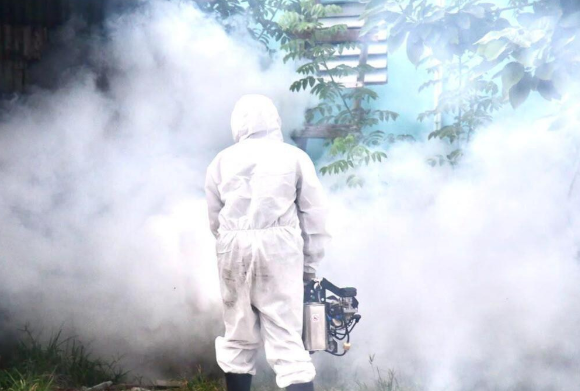
Santo Domingo, Dominican Republic – The country’s Ministry of Public Health has rolled out a scaled-up, targeted national dengue mitigation campaign, prioritizing high-burden provinces to curb transmission before the virus spreads further across local communities. The multi-pronged intervention strategy centers on four core pillars: proactive elimination of Aedes aegypti mosquito breeding sites, geographically targeted fumigation operations, real-time epidemiological tracking, and hyper-local door-to-door community education drives. The latest Week 40 official epidemiological bulletin confirms 15 newly verified dengue cases recorded in the preceding seven days, pushing the cumulative 2026 national case count to 415. Regional case distribution data shows La Altagracia province leading the tally with 131 confirmed infections, trailed by La Romana with 37 cases and Puerto Plata with 33. On-the-ground operations in La Altagracia have already delivered tangible results: health task forces deployed across the densely populated hubs of Higüey and Verón-Bávaro completed fumigation runs and community engagement sessions that reached 342 residential households and 1,242 local residents. During door-to-door visits, inspection teams assessed household water storage systems, eradicated 96 active mosquito breeding locations, and distributed free public health supplies including larvicide treatments, water purification chlorine sachets, sealed tank covers, and insecticide-treated bed nets. Beyond vector control measures, health officials are ramping up active case detection protocols to identify unreported infections early, conducting regular health check-ins for all confirmed dengue patients, and rolling out specialized training for frontline medical staff to streamline timely case reporting and post-diagnosis care follow-up. To maximize campaign reach, the Ministry of Public Health is forging cross-sector coordination partnerships with local municipal administrations, grassroots community organizations, K-12 and higher education institutions, and tourism industry operators, a key stakeholder group given the high volume of international visitors in dengue hotspots. Health authorities have also issued clear, actionable guidance for Dominican residents: all community members are advised to keep all domestic water storage containers fully sealed, drain any accumulated standing water on their properties, and discard unused outdoor items that can collect rainwater and serve as unplanned mosquito breeding grounds. The public is further instructed to avoid self-medication if they develop a sudden fever, and to seek immediate professional medical attention if they experience high-risk dengue warning symptoms including severe abdominal cramping, repeated unresolving vomiting, unexplained bleeding, drowsiness, or unusual irritability. Despite the ongoing prevention push, ministry officials emphasized that the Dominican Republic still maintains one of the lowest dengue incidence rates across the Caribbean and Latin American region, with a cumulative 2026 rate of just 4.89 cases per 100,000 inhabitants.
Public Health intensifies dengue prevention efforts in La Altagracia and across Dominican Republic