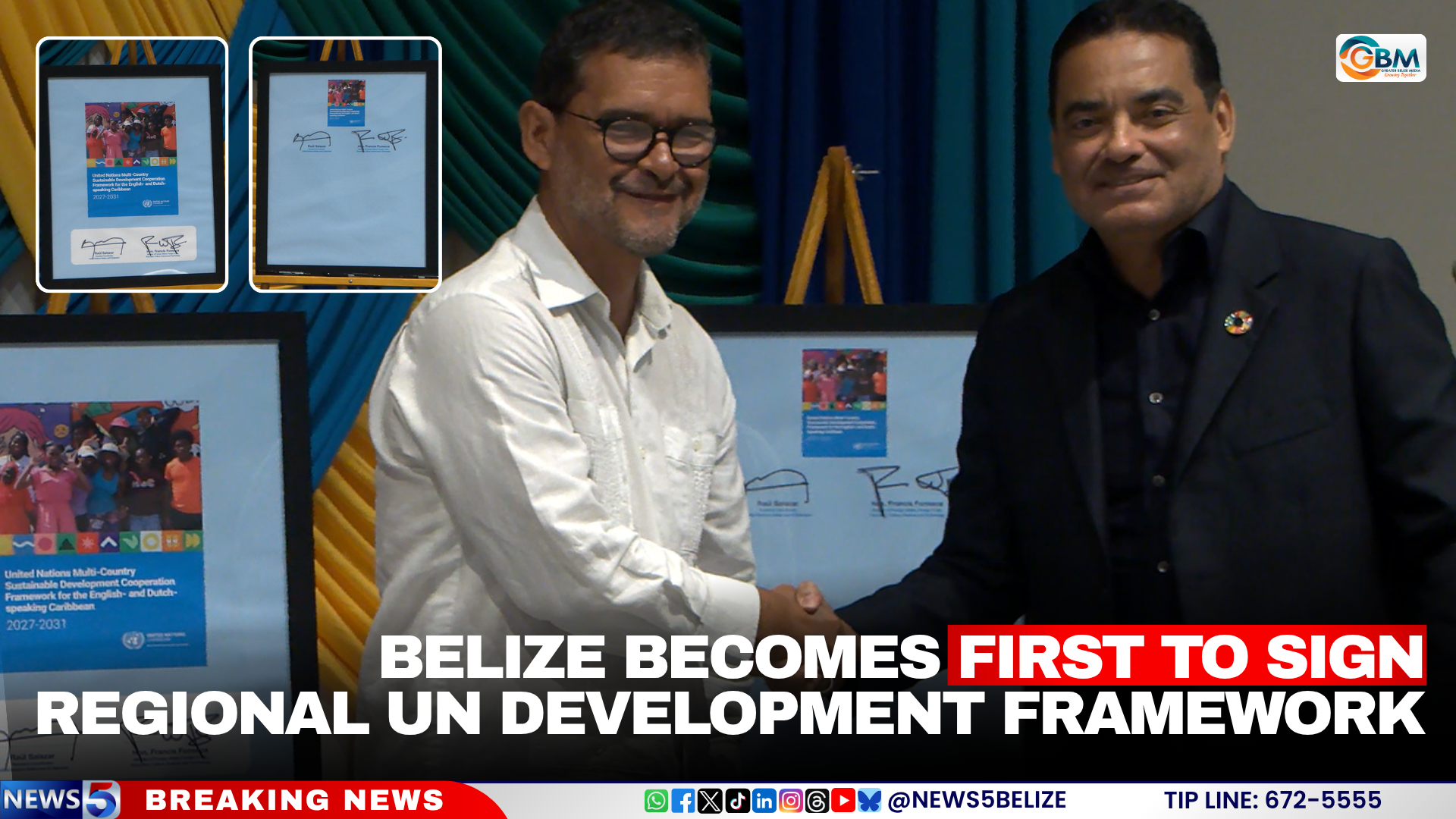
In a landmark moment for regional development cooperation, Belize has claimed its place in international development history as the first nation to formalize its participation in a new United Nations sustainable development framework tailored for the English- and Dutch-speaking Caribbean. The agreement, signed during United Nations Week, locks in a five-year partnership running from 2027 to 2031, focused on advancing inclusive national growth and lifting outcomes for the region’s most vulnerable communities.
Foreign Affairs Minister Francis Fonseca emphasized that the new Multi-Country Sustainable Development Cooperation Framework (MSDCF) builds on decades of productive collaboration between Belize and the global body. “Working alongside the United Nations and its specialized agencies, Belize has already delivered meaningful progress across critical policy areas: from expanding access to quality education and strengthening social safety nets to advancing aggressive climate action and boosting national resilience, overhauling justice systems and upgrading public health services,” Fonseca noted in remarks following the signing.
He added that the framework is a clear demonstration of the Belizean government’s unwavering commitment to multilateral cooperation, deepened partnership with the UN development system, and long-term vision of building a more resilient, prosperous nation capable of withhandling emerging global challenges. “This 2027-2031 framework is more than a symbolic agreement. It is a roadmap that will turn our shared commitments into tangible action on the ground, strengthen domestic institutional capacity, and boost our ability to address today’s most pressing crises while building preparedness for the challenges of tomorrow,” Fonseca explained.
United Nations Resident Coordinator Raul Salazar outlined that the regional framework will set shared sustainable development priorities across 22 Caribbean countries and territories, creating a unified approach to addressing common regional challenges. Salazar also provided context on current UN activity in Belize, noting that as of 2026, 15 separate UN agencies are already delivering 171 distinct development programs across the country, covering a sweeping portfolio of priority initiatives.
“Our ongoing work spans everything from transforming national food systems and strengthening rural livelihoods to expanding school feeding programs, improving education access, creating decent work opportunities, protecting vulnerable children, expanding social protection, and boosting climate resilience,” Salazar said. “We’ve already rolled out impactful projects like the school solar panel initiative, scaled up disaster preparedness infrastructure, and provided critical support to ongoing justice sector reform efforts across the country.”
Looking ahead, Salazar confirmed that the new coordinated framework will streamline ongoing efforts across UN agencies, eliminating overlapping work and ensuring that each organization’s programming complements the others. Most importantly, the structured approach will align all UN development support directly with the government of Belize’s stated national development priorities, maximizing the impact of every investment in the country’s future.