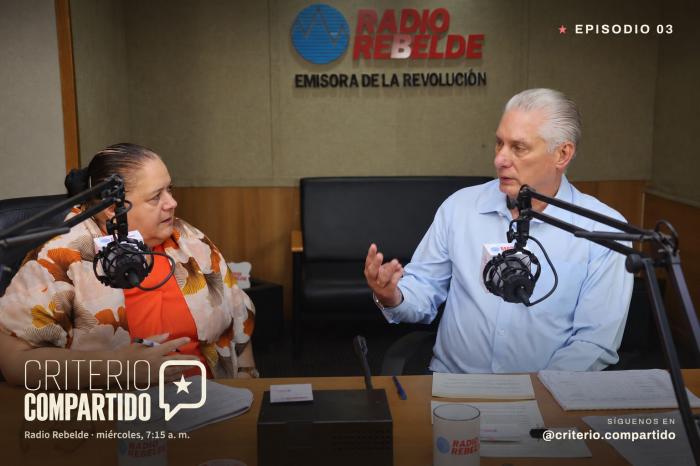
A week ahead of a critical United Nations vote scheduled for October 28, Cuban President Miguel Díaz-Canel Bermúdez — who also serves as First Secretary of the Central Committee of the Communist Party of Cuba — has publicly condemned aggressive diplomatic coercion from the United States aimed at manipulating the outcome of the vote. The accusations were delivered during the third episode of the talk program *Criterio Compartido* (Shared Views), broadcast on Radio Rebelde, on October 21, 2026.
At the core of Díaz-Canel’s criticism is the United States’ decision to feature Orlando Gutiérrez Boronat as a speaker at a U.S.-organized event held on UN premises. According to Díaz-Canel, Gutiérrez Boronat is a publicly recognized terrorist and fraudster who is formally listed on the Cuban government’s official registry of individuals tied to terrorist activity. Cuban Foreign Minister Bruno Rodríguez has previously publicly identified Gutiérrez Boronat by these labels. Beyond his designation by Cuba, the figure also faces federal misappropriation charges in Miami, where he is accused of stealing U.S. public funds earmarked for subversive activities against the Cuban government. Díaz-Canel called the U.S.’s decision to present this individual as a credible policy expert “the height of brazenness.”
The Cuban leader stressed that the U.S.’s choice to elevate such a controversial figure and rely on underhanded tactics is itself proof that Washington’s position opposing Cuba lacks moral and political legitimacy. He added that the event was intentionally staged to distract from the widespread, longstanding support Cuba enjoys from the broader global community.
This high-profile incident, Díaz-Canel explained, is just the most visible component of a wider coordinated campaign of diplomatic harassment the U.S. has waged in the lead-up to the October 28 vote. For decades, the United Nations has held annual votes on a resolution calling for an end to the U.S. economic blockade of Cuba, with most member states consistently backing the Cuban position. This year, Díaz-Canel confirmed, top U.S. officials including the Secretary of State have spearheaded a frantic push of pressure and blackmail to force heads of state and government to reverse their longstanding pro-Cuba votes.
Díaz-Canel acknowledged that some countries will likely cave to the pressure, changing their votes in Washington’s favor. Others may be pressured to abstain, or even to skip the vote entirely by stepping out of the chamber during the roll call to avoid taking any public position. He characterized this fence-sitting approach as an attempt to appease both sides, saying it amounts to trying to “stay on good terms with both God and the devil” — satisfying U.S. pressure without openly opposing Cuba, but also offering no tangible support to the island nation.
Even amid the confirmed pressure campaign, Díaz-Canel framed the U.S.’s aggressive tactics as evidence of Washington’s own growing international isolation on the issue. He closed with a message of cautious optimism, stating that he hoped the global community would vote for truth, end the decades-long blockade, and stand in solidarity with the Cuban people on October 28. He expressed confidence that Cuba will retain broad backing from the international community, even if U.S. pressure succeeds in shifting a small number of votes to abstention.