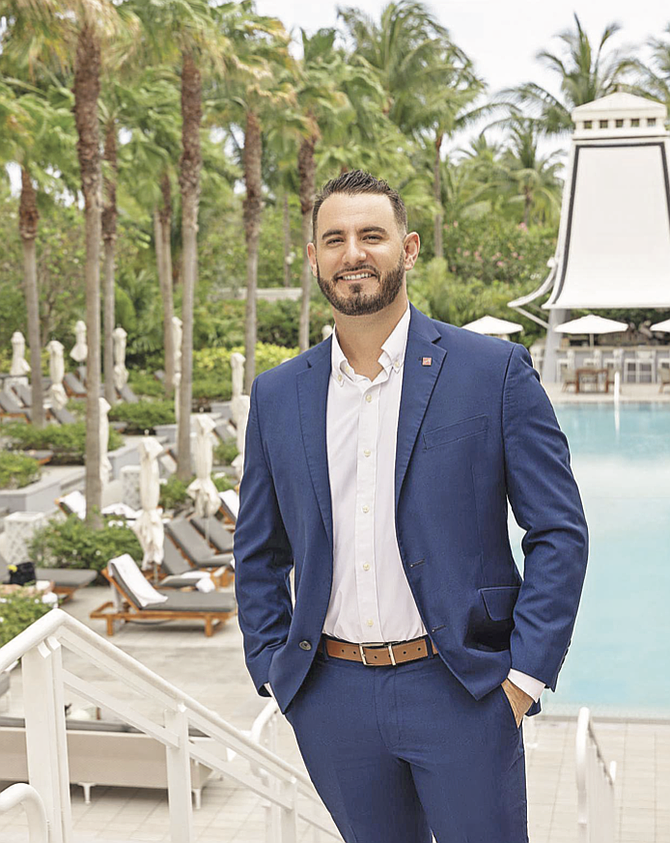
As Paradise Island shifts from a luxury vacation hotspot to a growing permanent residential community, one long-time local resident and industry expert is pushing to fill a critical gap in the island’s infrastructure: a dedicated on-island school.
Dexter Avney, a real estate professional with The Agency Bahamas, has lived on Paradise Island for years and watched its transformation firsthand. What was once known almost exclusively as an elite getaways for seasonal visitors and second-home owners is increasingly attracting full-time families looking to put down permanent roots. But this growing residential population faces one persistent, daily headache that threatens the island’s future growth: every school-aged child must commute across the bridge to the main island of New Providence for classes.
This daily commute creates consistent logistical headaches for working parents, and Avney argues it is also acting as a major deterrent for other families considering a permanent move to Paradise Island. Without a local school, the island struggles to shake its reputation as solely a vacation destination, preventing it from developing into a cohesive, year-round living community.
“A school gives families a core reason to choose Paradise Island as their forever home, not just a place to escape for a few weeks a year,” Avney explained in an interview. “It would turn an already exceptional residential destination into a truly complete, connected community where residents can build lives together, not just own property.”
Beyond eliminating stressful daily cross-bridge commutes, Avney says a local school would act as a hub for community building. Extracurricular clubs, interscholastic sports tournaments, school events and volunteer initiatives would bring residents of all ages together, helping foster deeper personal connections and a stronger shared sense of belonging that is currently missing from the island’s growing residential scene.
The benefits stretch far beyond just education and community connection, Avney notes. A dedicated school would also give a significant boost to Paradise Island’s real estate market, by expanding demand beyond luxury vacation properties and international investment buyers. When families research potential communities to move to, access to quality education is almost always one of their top non-negotiable priorities, alongside safety, convenience and recreational amenities.
“Families don’t just buy a house — they buy into a lifestyle,” Avney said. “A stunning oceanfront home is wonderful, but it doesn’t replace a good school for parents raising kids. Adding a local school strengthens every part of Paradise Island’s value proposition for permanent residents.”
Increased year-round residency would also create ripple benefits for the island’s local businesses, support higher rates of community participation, and help diversify a housing market that has long been dominated by short-term vacation properties and foreign-owned second homes. Avney pointed to the Lyford Cay International School as a proven model, noting how the institution has become a core driver of community development there, hosting public athletic, cultural and social events that engage both students and local residents.
Contrary to concerns that a new school would draw students and resources away from existing institutions on New Providence, Avney emphasized that a Paradise Island school would complement, not compete with, existing educational options. He said the exact model could be adjusted to match resident demand, with possible options ranging from a private primary school to an international secondary school or a standalone early learning center for young children.
Avney has not yet proposed a specific site, development partner or funding plan for the project. But he stressed that as Paradise Island’s residential population continues to climb, the island’s public and private infrastructure must evolve to match its new identity as a full-time community, not just a tourist destination.
“Paradise Island is already one of the most beautiful, desirable places to live in the entire Bahamas,” Avney said. “A school is just the missing piece we need to build a stronger, more connected, truly complete community for generations of permanent residents.”