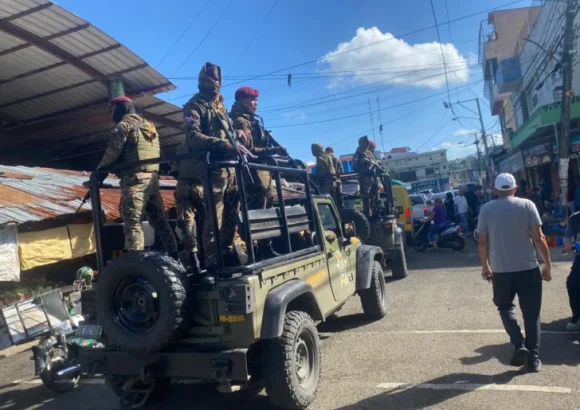
Residents of two northern Dominican Republic provinces launched a coordinated 48-hour general strike on Tuesday, bringing daily life to a standstill as grassroots popular organizations demand urgent government action on a range of unmet community needs, from crumbling public infrastructure to skyrocketing living costs.
In the provincial capital of San Francisco de Macorís, the list of grievances is long and rooted in years of stalled projects and declining services. Protesters are calling for comprehensive road repairs, new paving, and the completion of sidewalk and curb construction across the city. Most notably, they demand the government restart work on the Mamá Tingó community center, a project that has sat unfinished and abandoned for two full years. Multiple other stalled road infrastructure projects across the province are also top priorities for the demonstrators, alongside broader demands for improved drinking water access, expanded sanitation services, and interventions to address the growing cost of living crisis hitting working families.
José Mercado, a spokesperson for the coordinating coalition of local popular groups, confirmed that the strike has shut down most public and commercial activity across the province. All local schools suspended classes on the first day of the strike, the vast majority of private businesses have closed their doors, and public transportation networks have been almost entirely paralyzed. Beyond infrastructure, protest leaders have hit out at exorbitant electricity rates paired with chronic, frequent power outages, and argued that rising fuel prices have compounded existing financial pressures on households by driving up transportation costs across the board. One particularly pressing demand in San Francisco de Macorís is the full reconstruction of the municipal market, which was damaged in a fire one year ago and still remains surrounded by rubble and uncollected garbage to this day.
The strike is not isolated to Duarte province. In neighboring Hermanas Mirabal province, the Salcedo Coalition of Popular Movements launched its own parallel 48-hour strike, also demanding concrete, actionable responses from national and local authorities. Reports from the region confirm a heavy deployment of police and military forces to the area, with widespread street blockades organized by protesters, and reports of gunfire and tear gas deployed by security forces to disperse crowds.
Héctor Bloise, the coalition’s spokesperson, estimates that approximately 90 percent of commercial businesses in Salcedo heeded the strike call and closed their operations. Bloise condemned security force actions, saying tear gas had been fired into residential areas, and emphasized that the protest movement had always intended to remain peaceful. He has issued a call for both government authorities and demonstrators to exercise restraint to avoid further escalation.
Demands in Salcedo mirror the priorities in Duarte while adding local specific priorities: protesters are calling for the construction of the long-promised La Caoba bridge, improved municipal garbage collection services, and urgent repairs to the province’s crumbling, failing sewage system. They are also demanding that work resume on the Palmarito road project, which has been stalled for more than four months.
Grassroots organizers across both provinces say they will maintain their strike action for the full 48 hours and have made clear that their core goal is to force authorities to make binding, concrete commitments to address the long list of unmet needs that have pushed communities to take collective action.